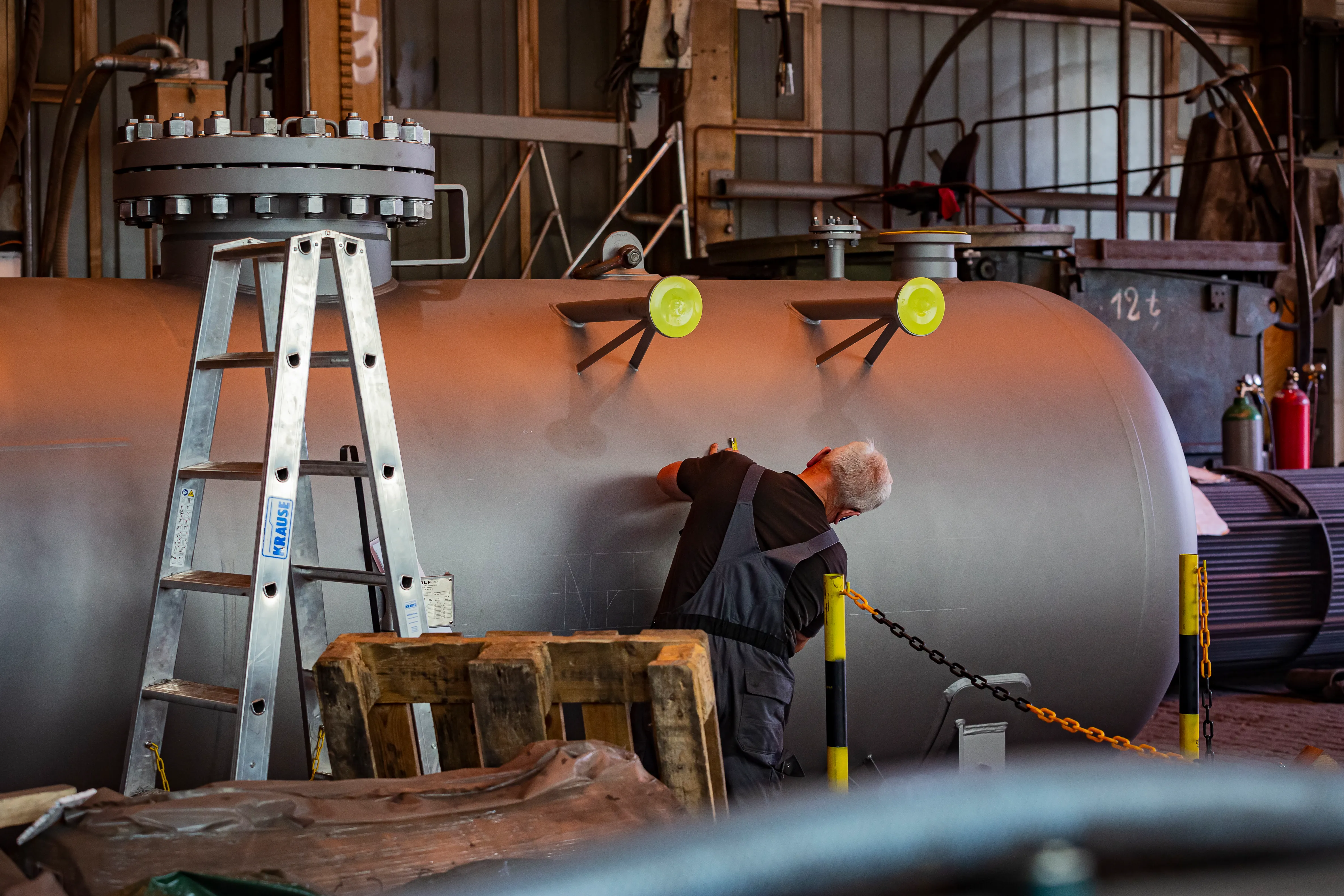
Pressure vessel / storage tank
We design and manufacture stationary H₂ pressure storage vessels and storage tanks for the hydrogen industry. Our standard designs cover pressures from 50 to 400 bar and volumes up to 190 m³. For design pressures up to 500 bar, we manufacture tube-bundle hydrogen storage systems. Each vessel is designed for the specified cyclic loads and manufactured and tested in accordance with AD 2000, EN 13445 or ASME.
Leak tightness and strength are verified under operating conditions
For pressure vessels in hydrogen service, we select materials and welding procedures based on the calculated load cases and the relevant process conditions. Pressure-retaining welds undergo the non-destructive examinations specified in the inspection and test plan. Leak-tightness and strength are verified in accordance with the applicable design code.
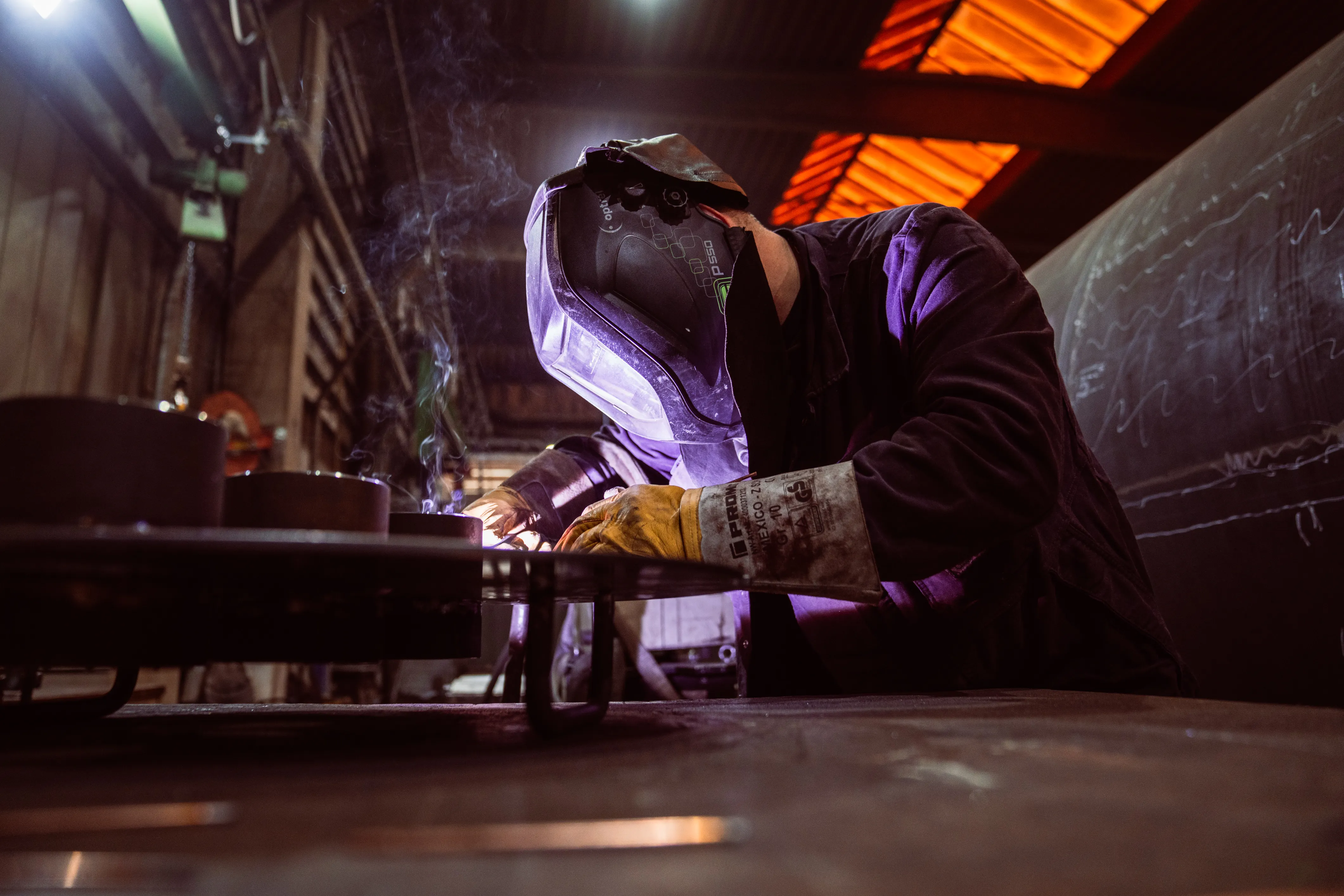
Design types and pressure ranges of our hydrogen storage systems
From buffer storage downstream of an electrolyzer to the high-pressure stage of an H₂ fueling station, we manufacture hydrogen storage vessels in standard volumes and pressure classes from 50 to 400 bar, as well as project-specific designs. Above 400 bar, a different vessel concept is used: tube-bundle hydrogen storage systems are available for design pressures up to 500 bar.
Standard volumes up to a design pressure of 50 bar
Available in vertical or horizontal configurations, manufactured in accordance with AD 2000, EN 13445, or ASME. Standard volumes: 10, 20, 33, 50, 75, 95, 100, 115, 130, 160, and 190 m³. The 10- and 20-m³ tanks typically serve as buffer storage behind PEM and alkaline electrolysers, while the larger volumes are used as bulk and seasonal storage for H₂ industrial parks.
WOLF Safety Technology
A hydrogen pressure vessel is an investment spanning 20 to 30 years. WOLF Safety Technology combines periodic inspections in accordance with BetrSichV with accompanying NDT and a remaining service life assessment. This reduces life-cycle costs by up to 30 percent.
In-house quality assurance (QA)
Our quality assurance team inspects production in-house. The specified testing procedures and 3D measurements are defined on a project-by-project basis. Our documentation team compiles material certificates, manufacturing records, and test results into comprehensive project documentation.
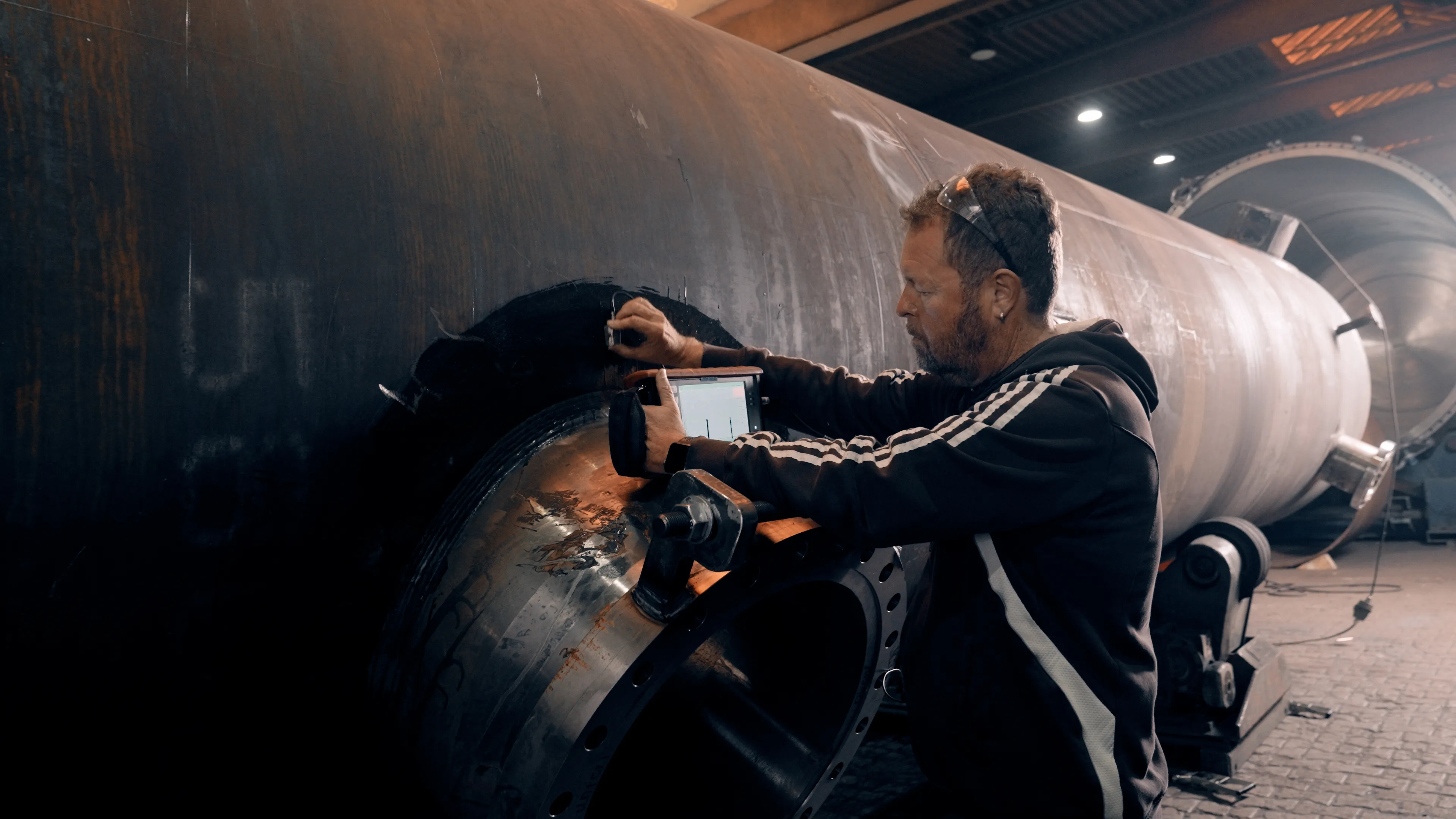
Design in accordance with standards
Our engineers calculate every hydrogen storage system using Dimy6, Compress 2025 (ASME), and Sant’Ambrogio NextGen 2025 (AD 2000, EN 13445), supplemented by ANSYS Mechanical for FEM analyses, Nozzle-Pro 15 for nozzle structural analysis, and TEMESfcal for flange design according to EN 1591-1. Design is performed in PTC Creo. We evaluate the fatigue strength of tanks subjected to cyclic loading in accordance with EN 13445-3, Section 17 (simplified) or Section 18 (detailed), or in accordance with ASME Section VIII Div. 2; upon request, we can perform “Design by Analysis” using nonlinear FEM.
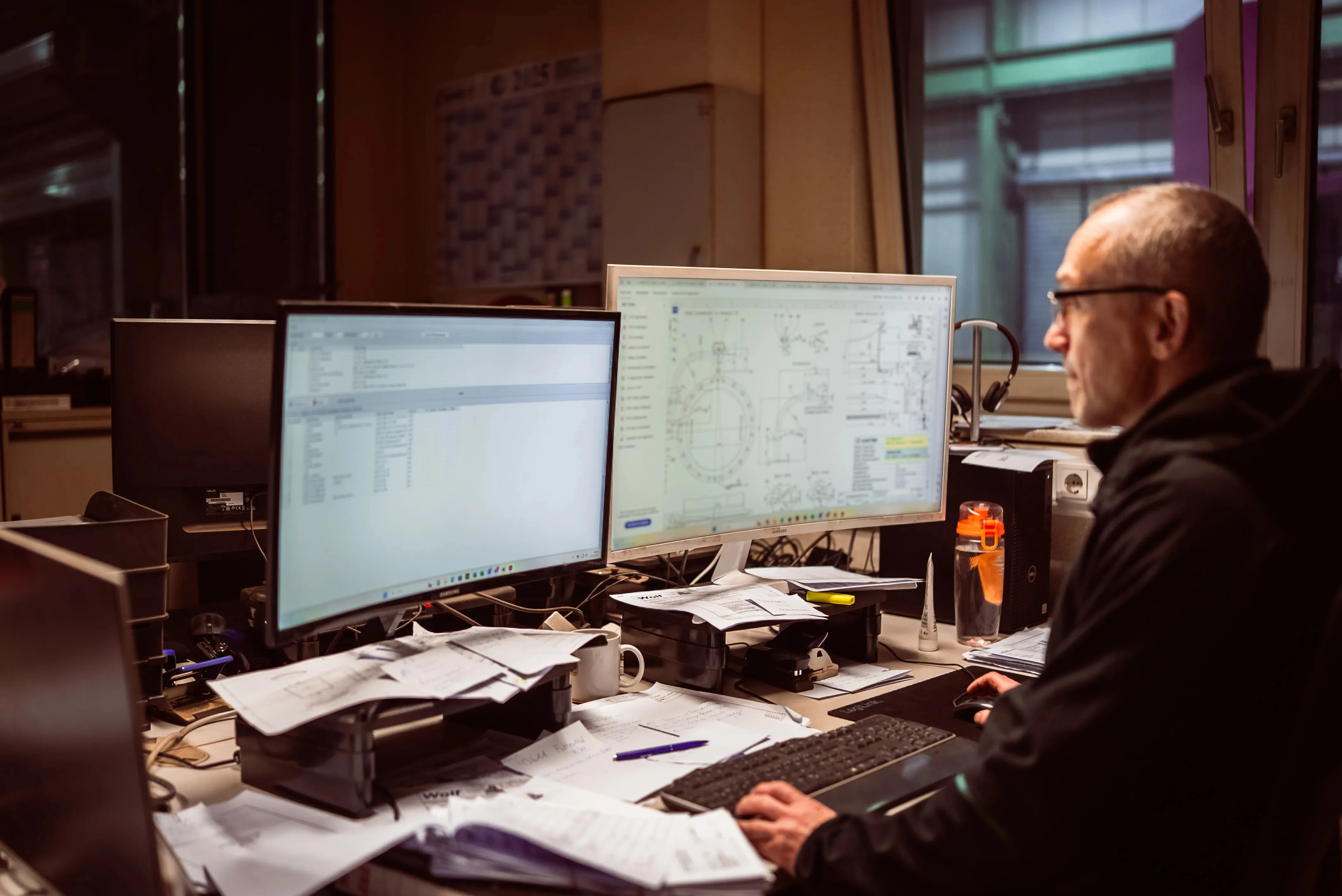
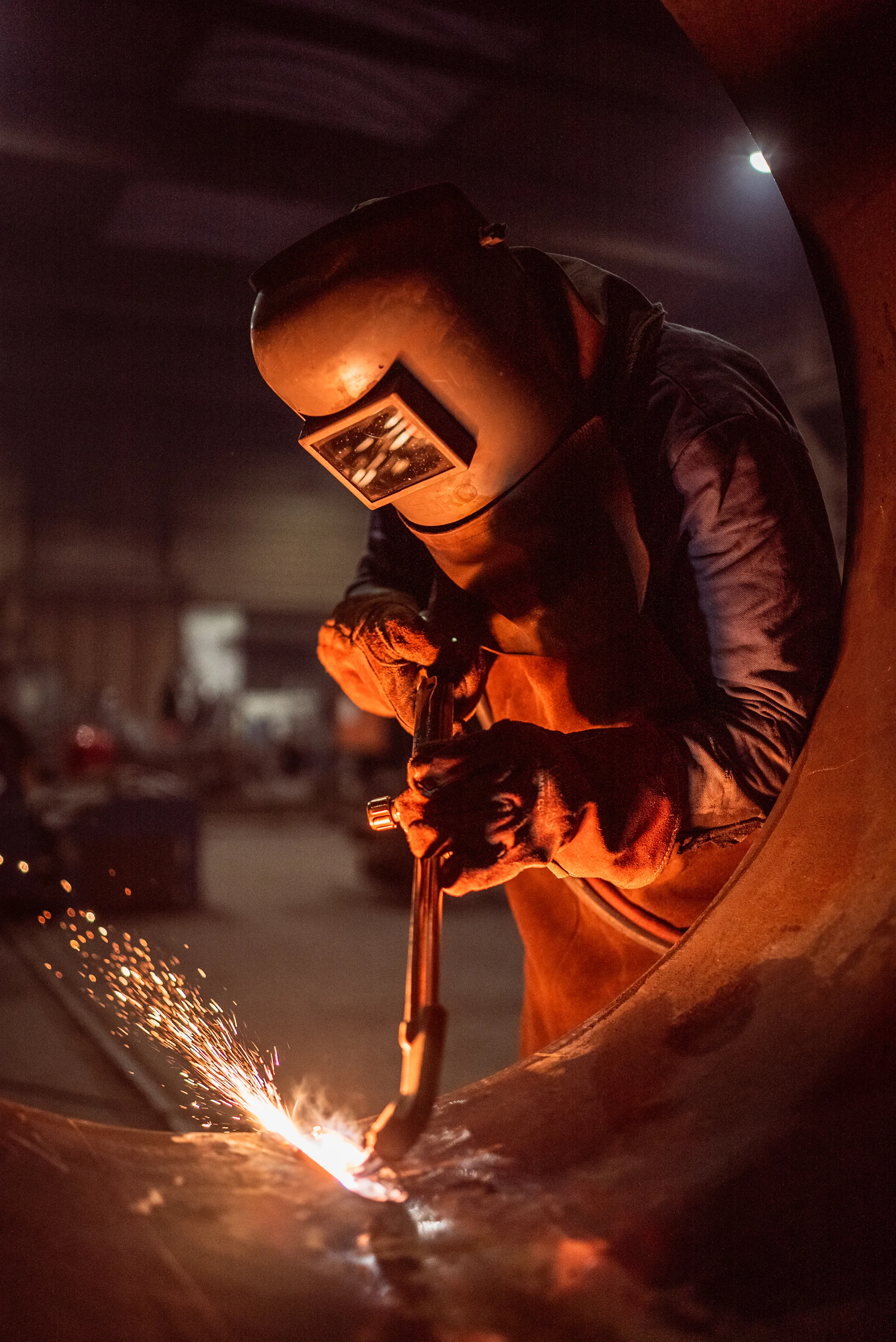
P355 as the standard for H₂ pressure vessels
Approximately 95 percent of our H₂ storage tanks are made from fine-grained carbon steel of grade P355 (P355NH, P355NL1). The material offers a high yield strength combined with good weldability and is fully covered by the AD 2000 and EN 10028-3 standards. With qualified welding and consistent stress relieving heat treatment, hydrogen embrittlement is technically controlled. This makes P355 the more economical choice in most applications compared to stainless steel specified reflexively. We supply stainless steels as well as duplex and nickel-based alloys where the application actually requires them.
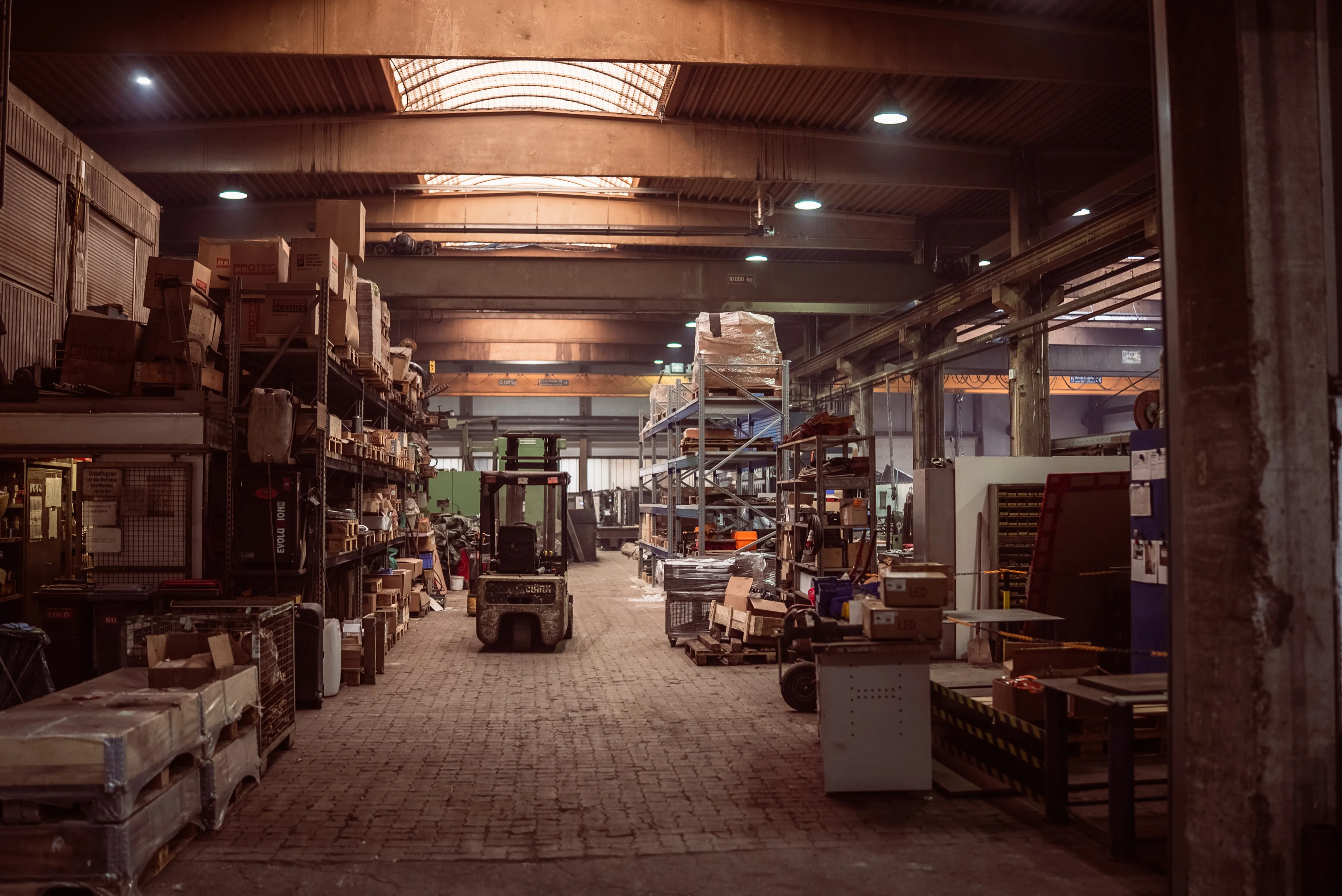
Certificates and Approvals
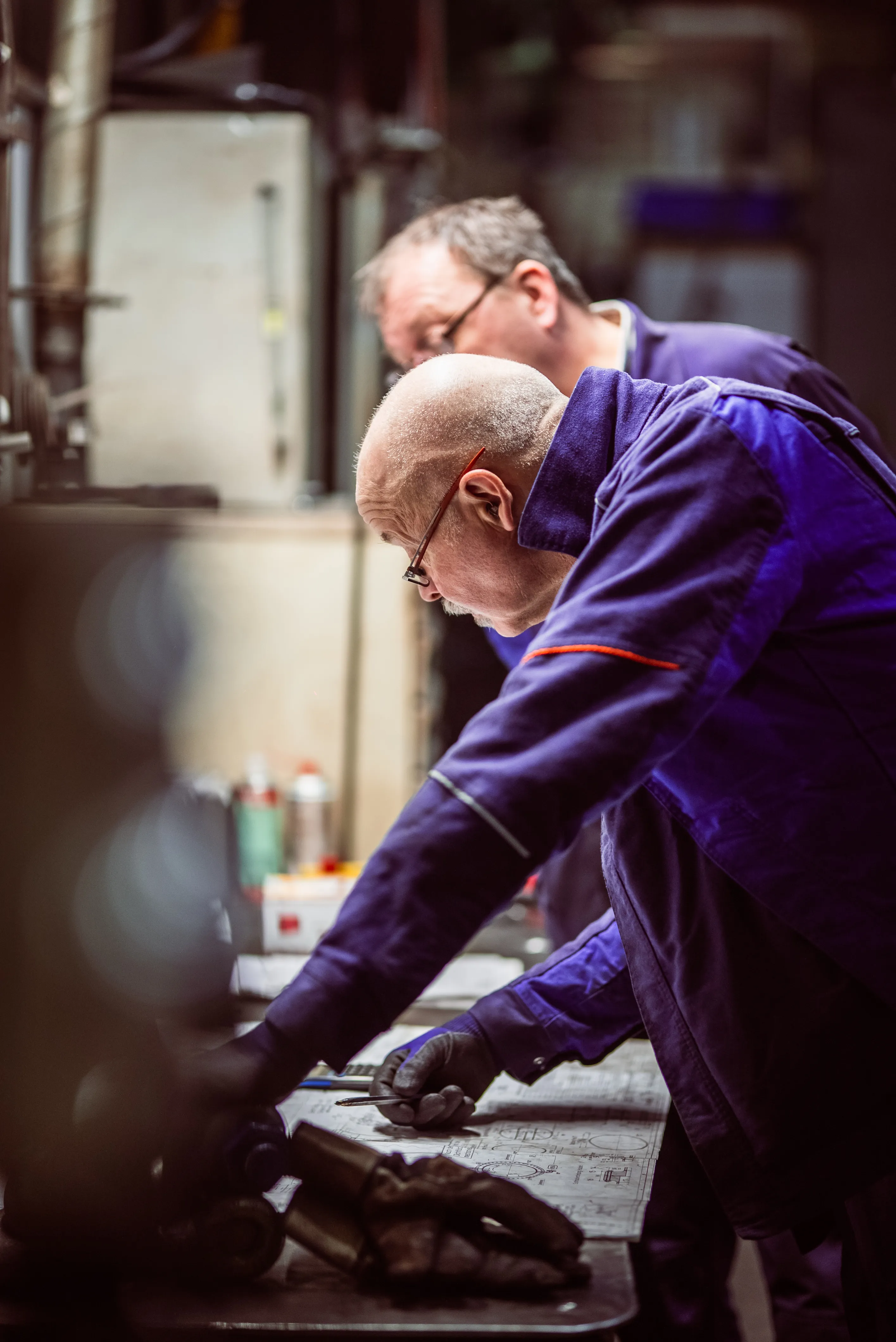
Technical questions about your storage project
If you have any questions regarding the design or manufacture of your hydrogen storage system, please contact our project team directly. We will work with you to clarify the necessary details.
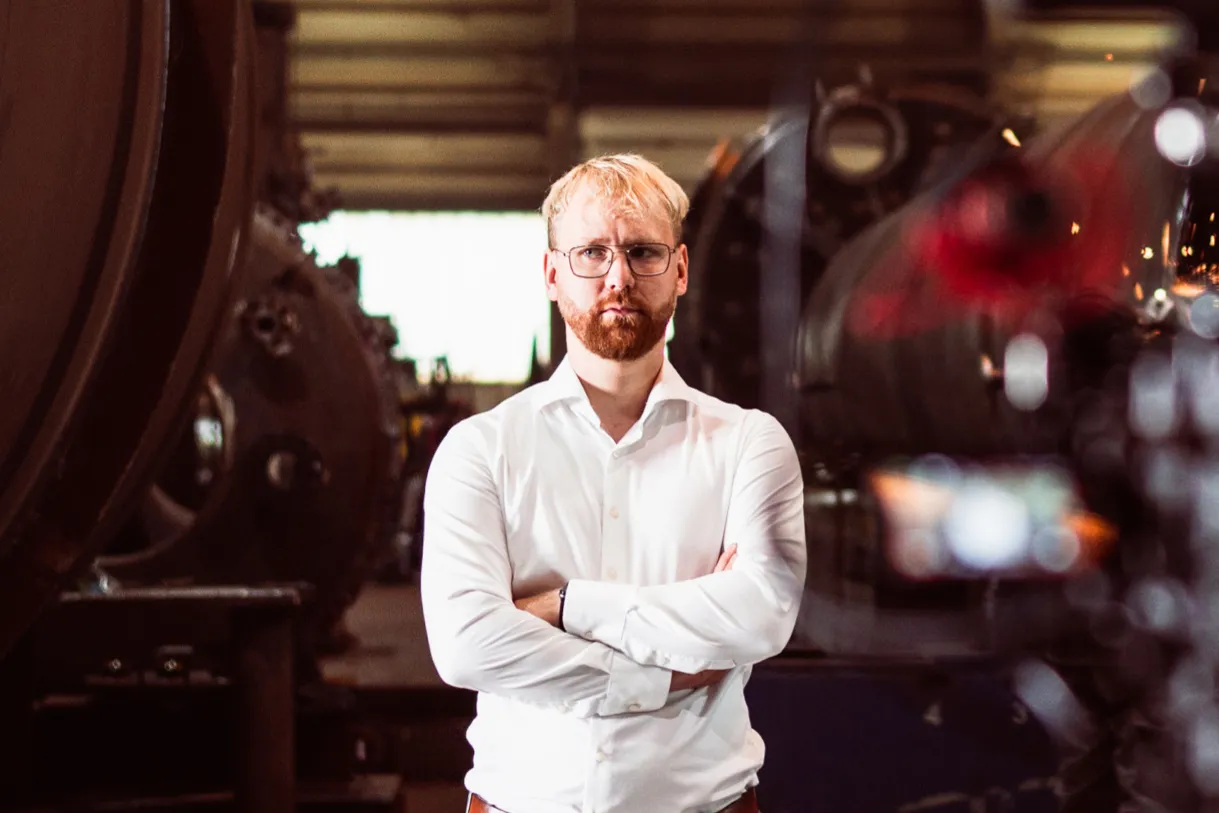
Daniel Wolf
CTO & Wasserstoff-Experte
Frequently Asked Questions About Our H₂ Pressure Storage Tanks
The following answers explain important technical requirements for stationary hydrogen storage systems and their operation.
How long does it take to deliver a hydrogen pressure storage vessel? + − Standard volumes up to 400 bar: If capacity is available, the delivery time is 12 to 20 weeks from the date of order, provided the required material is in stock. If new material must be procured, the delivery time is 8 to 12 months.
Custom-made high-pressure products, such as tube bundle hydrogen storage vessels up to 500 bar: The delivery time, including material procurement, manufacturing, testing, and documentation, is 9 to 13 months.
A binding delivery commitment will be provided after the technical specifications have been clarified.
Standard volumes up to 400 bar: If capacity is available, the delivery time is 12 to 20 weeks from the date of order, provided the required material is in stock. If new material must be procured, the delivery time is 8 to 12 months.
Custom-made high-pressure products, such as tube bundle hydrogen storage vessels up to 500 bar: The delivery time, including material procurement, manufacturing, testing, and documentation, is 9 to 13 months.
A binding delivery commitment will be provided after the technical specifications have been clarified.
Do you offer complete packages that include steel construction and insulation? + − Yes. Upon request, we supply the storage tanks with platforms, ladders, and pipe supports in accordance with EN 1090, along with heating systems, coatings, fire protection, insulation, and preservation. This eliminates the need for you to coordinate with multiple suppliers.
Yes. Upon request, we supply the storage tanks with platforms, ladders, and pipe supports in accordance with EN 1090, along with heating systems, coatings, fire protection, insulation, and preservation. This eliminates the need for you to coordinate with multiple suppliers.
What maintenance measures are required for a hydrogen storage system? + − Hydrogen pressure vessels are subject to periodic inspections in accordance with BetrSichV. Typical examples include:
- Internal inspection every 5 years, depending on the inspection plan
- Strength testing or pressure test, in most cases every 10 years
- External inspection every 2 years
- Replacing gaskets on flange and nozzle connections
- Functional testing of pressure safety valves and pressure measurement points
As part of WOLF Safety Technology, we proactively plan these measures and coordinate with the notified body. We perform the associated work that is not subject to testing ourselves.
Hydrogen pressure vessels are subject to periodic inspections in accordance with BetrSichV. Typical examples include:
- Internal inspection every 5 years, depending on the inspection plan
- Strength testing or pressure test, in most cases every 10 years
- External inspection every 2 years
- Replacing gaskets on flange and nozzle connections
- Functional testing of pressure safety valves and pressure measurement points
As part of WOLF Safety Technology, we proactively plan these measures and coordinate with the notified body. We perform the associated work that is not subject to testing ourselves.
What is a tube-bundle hydrogen storage system, and when is it suitable? + − A tube-bundle hydrogen storage system consists of seamless, thick-walled tubes connected through common manifolds. The smaller diameter of each tube keeps the required wall thickness manageable at design pressures up to 500 bar. This configuration is suitable for pressures above approximately 400 bar, for example as the high-pressure stage of an H₂ fueling station. On request, the tubes can be supplied as seamless, quenched-and-tempered large-volume steel cylinders in accordance with ISO 11120, with water capacities from 150 to 3,000 liters.
A tube-bundle hydrogen storage system consists of seamless, thick-walled tubes connected through common manifolds. The smaller diameter of each tube keeps the required wall thickness manageable at design pressures up to 500 bar. This configuration is suitable for pressures above approximately 400 bar, for example as the high-pressure stage of an H₂ fueling station. On request, the tubes can be supplied as seamless, quenched-and-tempered large-volume steel cylinders in accordance with ISO 11120, with water capacities from 150 to 3,000 liters.