
Ladles
We manufacture and repair ladles for steel mills and metallurgical plants. Support pins, shells, and weld seams are designed to withstand the intended load conditions. We perform 3D measurements of existing ladles as needed.
The load-bearing structure and weld seams are tested for the load case
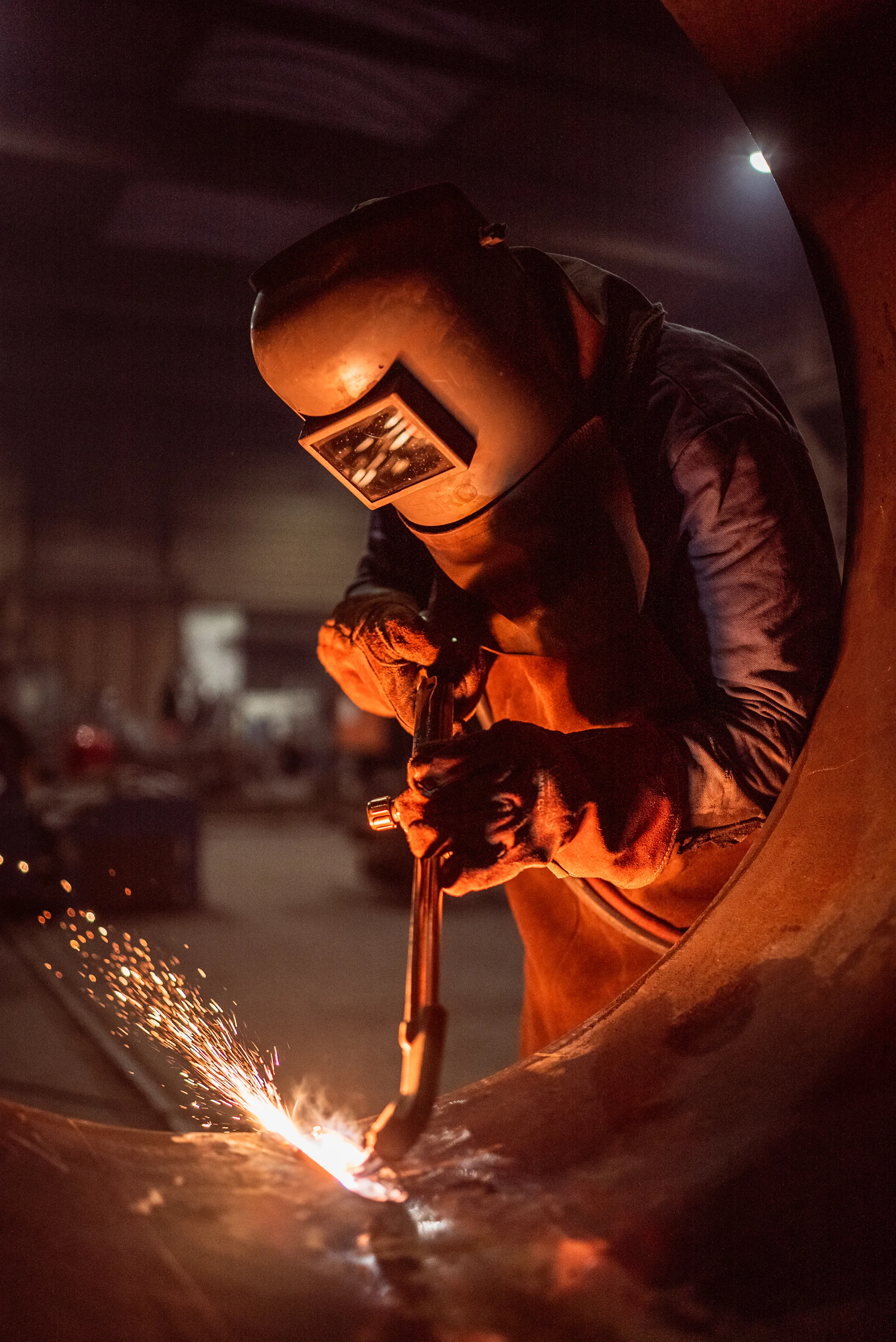
Ladles are subjected to high loads and extreme temperature fluctuations. We design the shell and support trunnions for the existing handling concept and inspect the safety-critical weld seams according to the agreed-upon inspection specification. Preparation for the refractory lining can be incorporated into the design.
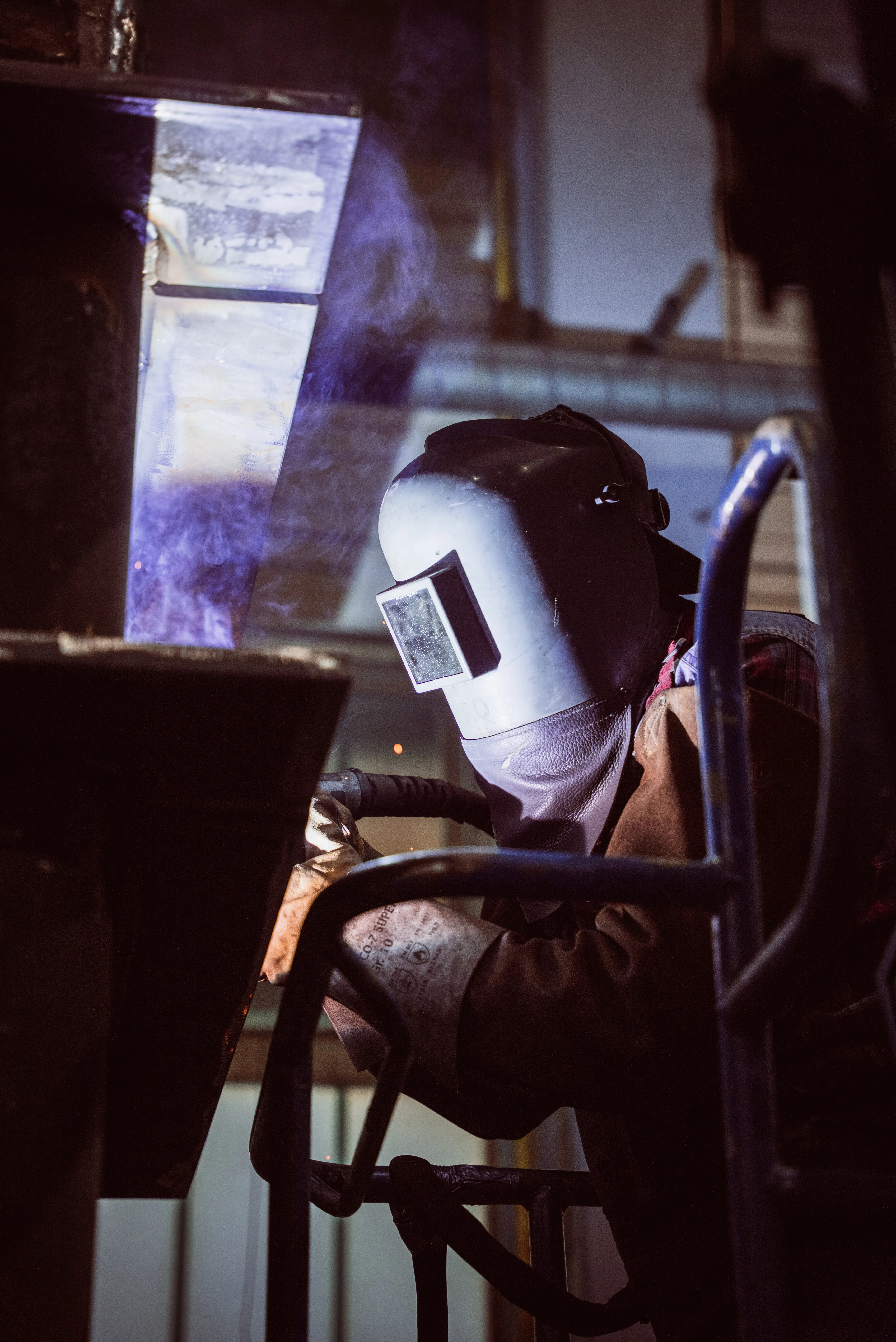
Casting ladles based on drawings or 3D measurements
We manufacture new casting ladles according to customer drawings and repair existing ladles. Material traceability, dimensional inspection, and the agreed-upon tests are documented throughout the entire order.
Dimensions up to 5 m in diameter and 150 t
Ladle pans can be manufactured with diameters of up to 5 m and heights of up to 6 m in a single piece. Individual weights of up to 150 t and wall thicknesses of up to 100 mm are possible. Multi-piece construction can be provided for transportation or assembly. We evaluate non-standard dimensions and special materials on a project-by-project basis.
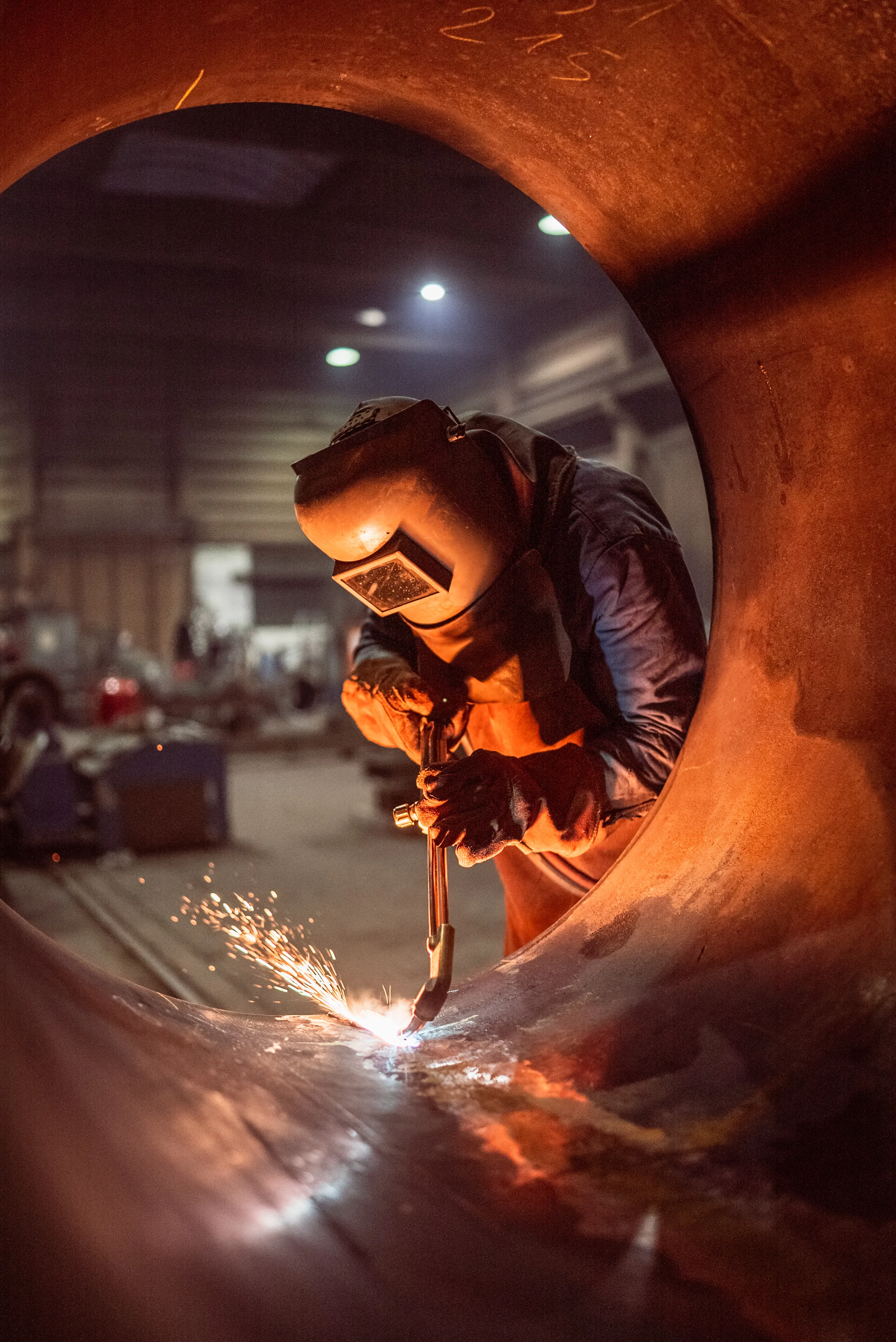
Additional services for casting ladles
We handle the blasting and coating of the ladle surface. Structural reinforcements can be designed based on 3D measurements. We adapt the support pin geometry and attachment points to existing handling systems. If necessary, we prepare the shell for refractory lining.
In-house quality assurance (QA)
Our quality assurance team inspects manufacturing and repairs in-house. The scope of testing for load-bearing pins and load-bearing weld seams is determined based on the load case. Material certificates, repair records, and test results are compiled in the project documentation.
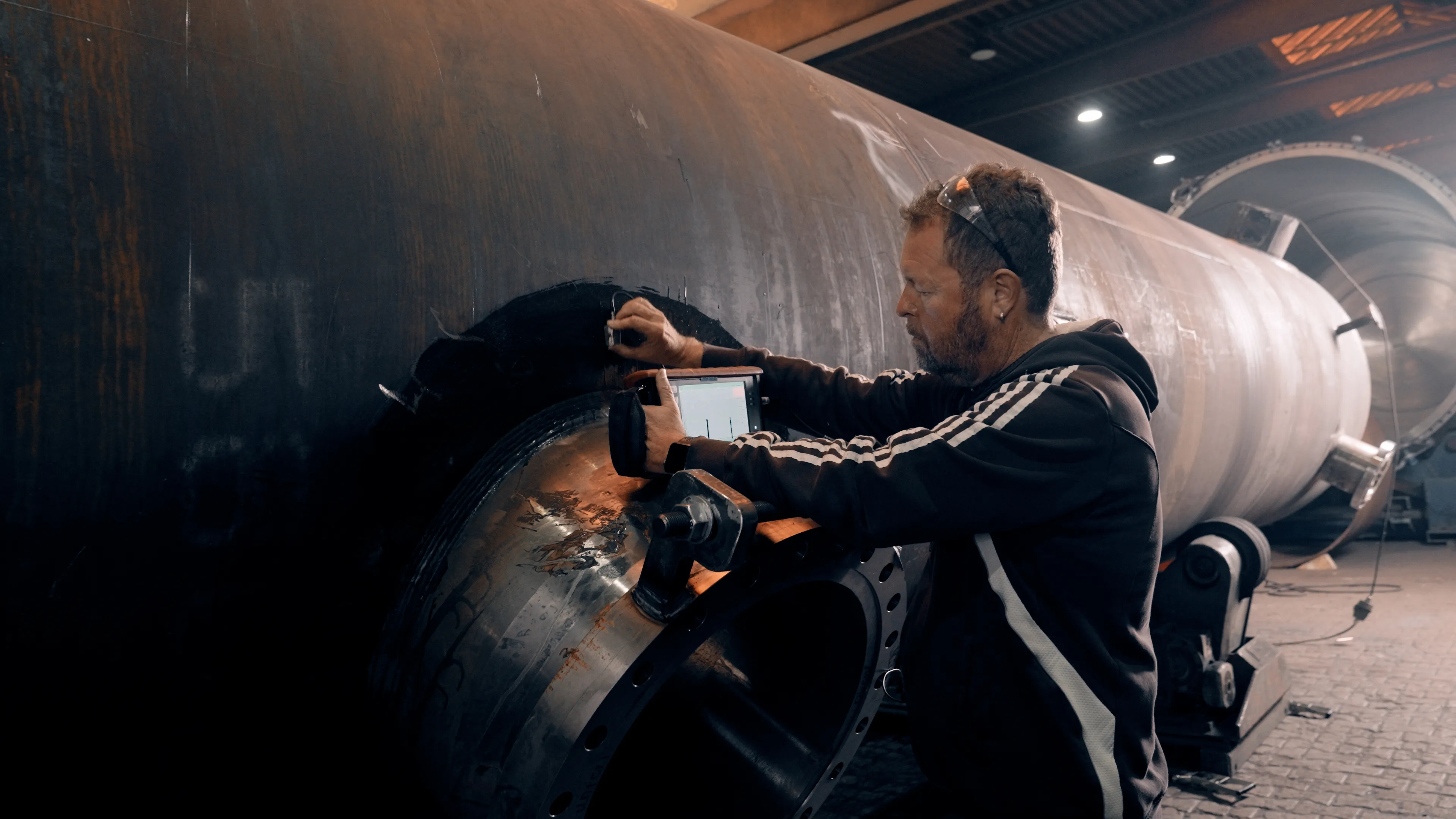
Calculation of high-stress areas
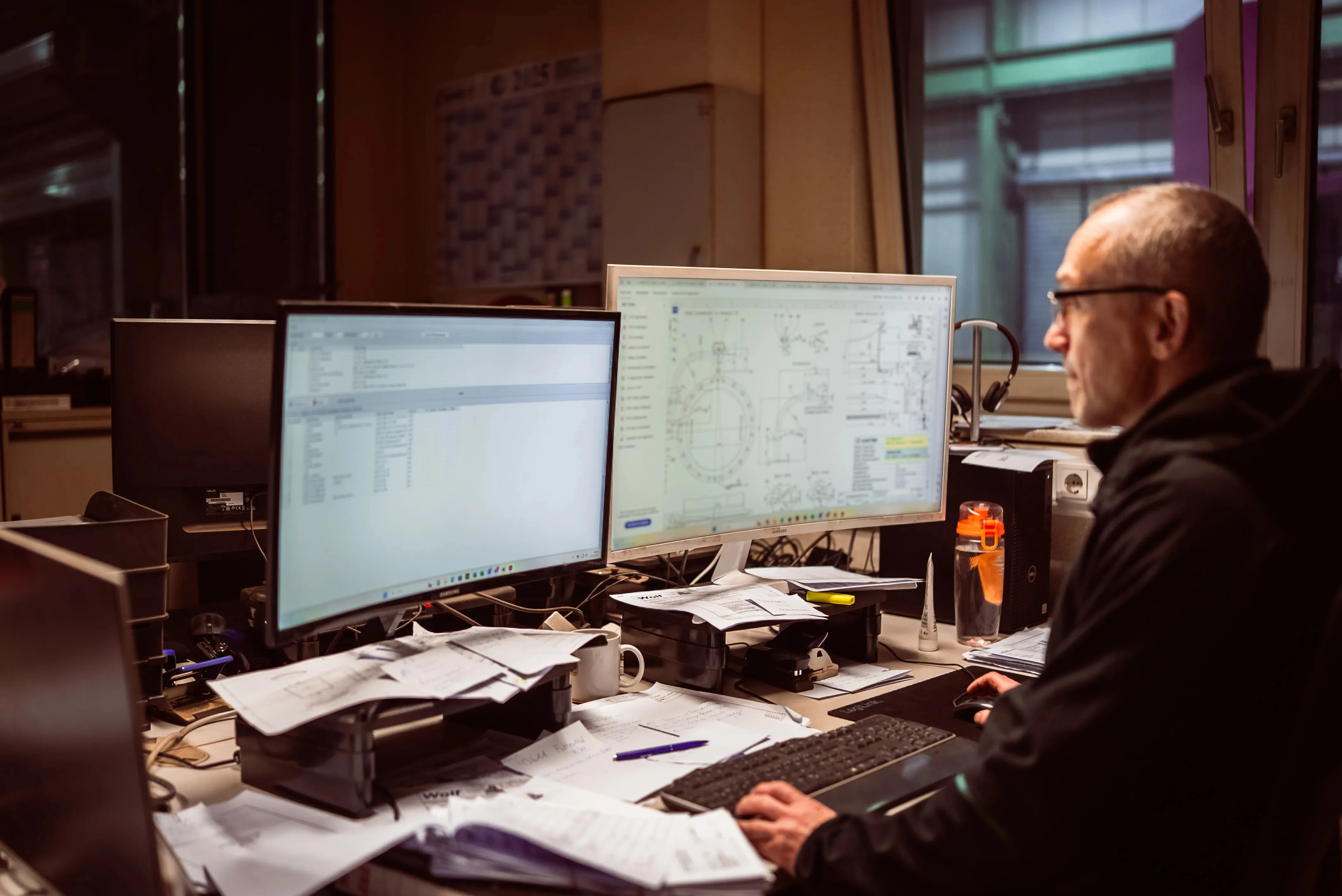
We manufacture load-bearing welded structures in accordance with EN 1090-1/-2 and DIN EN ISO 3834. Loads from cranes, ladle cars, and tilting mechanisms are taken into account in the design. For load-bearing pins and other high-stress areas, we perform FEM calculations using ANSYS Mechanical as needed.
Materials for the shell and support structure
For the load-bearing furnace shell, we use heat-resistant and tough steels such as P265GH, P355NH, or 16Mo3, depending on the load case. The choice of material is based on temperature fluctuations and mechanical stress. We will evaluate other steels based on your specifications.
Certificates and Approvals
Technical questions about your casting ladle
If you have questions about new construction, repairs, or 3D surveying, please contact our project team directly. We’ll work with you to determine the necessary existing data.
Kai Jaspert
Leiter Vertrieb
Questions about our casting ladles
Here we answer technical questions regarding load capacities, support pins, and testing of casting ladles.
According to which regulations does WOLF manufacture and test ladles? + − Ladle bodies are manufactured as load-bearing welded structures in accordance with the project-specific set of standards. For load-bearing steel components, EN 1090 and DIN EN ISO 3834 may apply. Areas subject to high stress are analyzed mathematically as needed. The type and scope of non-destructive testing (NDT) are specified in the test plan.
Ladle bodies are manufactured as load-bearing welded structures in accordance with the project-specific set of standards. For load-bearing steel components, EN 1090 and DIN EN ISO 3834 may apply. Areas subject to high stress are analyzed mathematically as needed. The type and scope of non-destructive testing (NDT) are specified in the test plan.
Can casting ladles be adapted to existing cranes and handling systems? + − Yes. The geometry of the support pins, attachment points, and tilting mechanism can be tailored to existing cranes or ladle cars. For replacement ladles, we use existing drawings or our own 3D measurements. The interfaces are defined jointly before production begins.
Yes. The geometry of the support pins, attachment points, and tilting mechanism can be tailored to existing cranes or ladle cars. For replacement ladles, we use existing drawings or our own 3D measurements. The interfaces are defined jointly before production begins.
Does WOLF perform repairs on existing casting ladles? + − Yes. Used ladles are first surveyed using 3D measurement technology. We then assess any deformations and the condition of the load-bearing welded joints. Damaged areas can be replaced. After repairs are completed, the agreed-upon inspections are conducted and the work performed is documented.
Yes. Used ladles are first surveyed using 3D measurement technology. We then assess any deformations and the condition of the load-bearing welded joints. Damaged areas can be replaced. After repairs are completed, the agreed-upon inspections are conducted and the work performed is documented.
How is the safety of the support pins verified? + − Support pins and their connections are designed for the intended loads. We inspect the welds according to the agreed-upon inspection plan using appropriate non-destructive testing (NDT) methods. These may include ultrasonic or TOFD testing as well as surface inspections. Results and traceability are documented.
Support pins and their connections are designed for the intended loads. We inspect the welds according to the agreed-upon inspection plan using appropriate non-destructive testing (NDT) methods. These may include ultrasonic or TOFD testing as well as surface inspections. Results and traceability are documented.