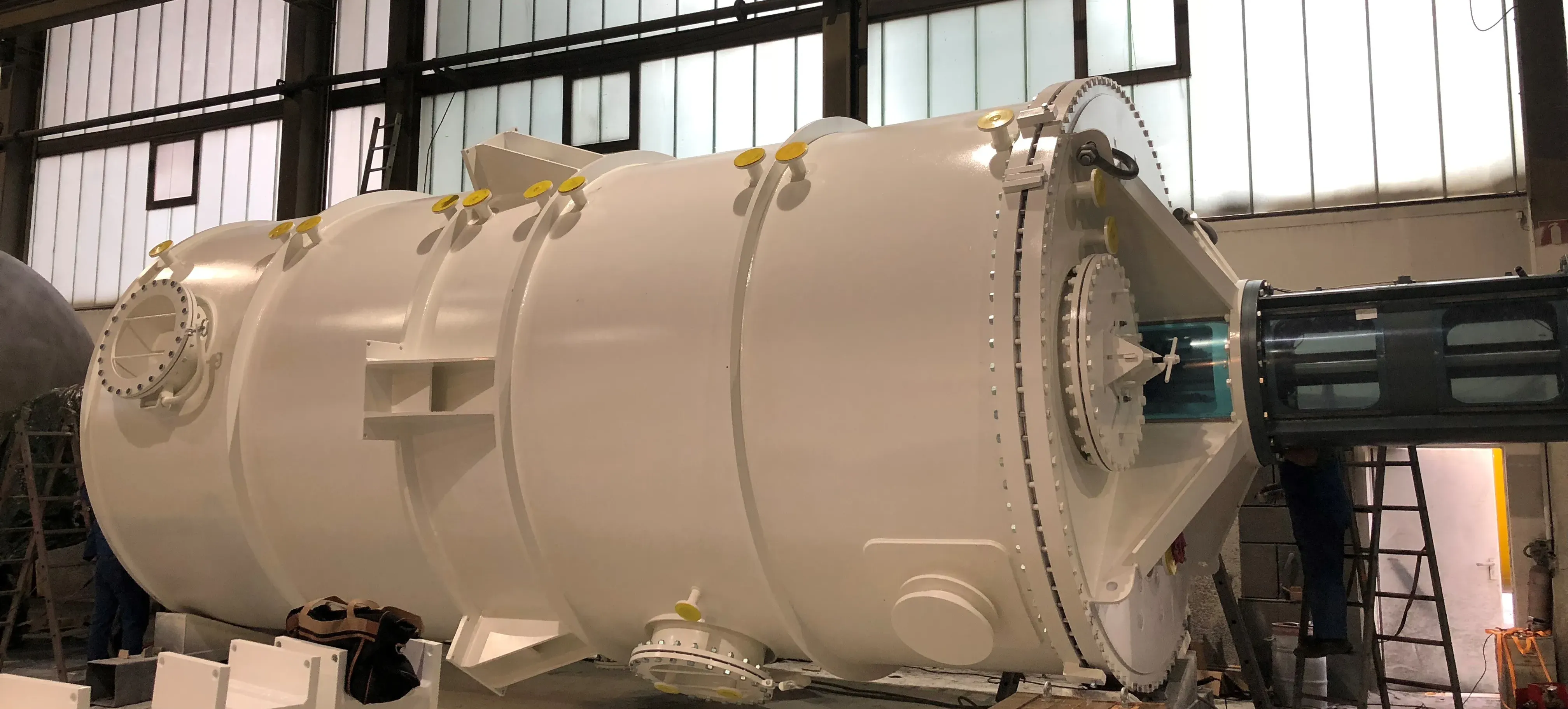
Agitator tanks
We manufacture agitator vessels for mixing and reaction processes according to customer drawings and process data. The agitator loads are factored into the strength calculations. The drive and seals can be assembled and tested at the factory prior to shipment.
Agitator loads are safely introduced into the vessel
Agitators generate dynamic forces that are transmitted to the vessel wall via nozzles and flanges. We account for these loads in the strength analysis and match the sealing surfaces to the selected agitator seal. Pressure, vacuum, and the operating medium are evaluated as part of the load case.
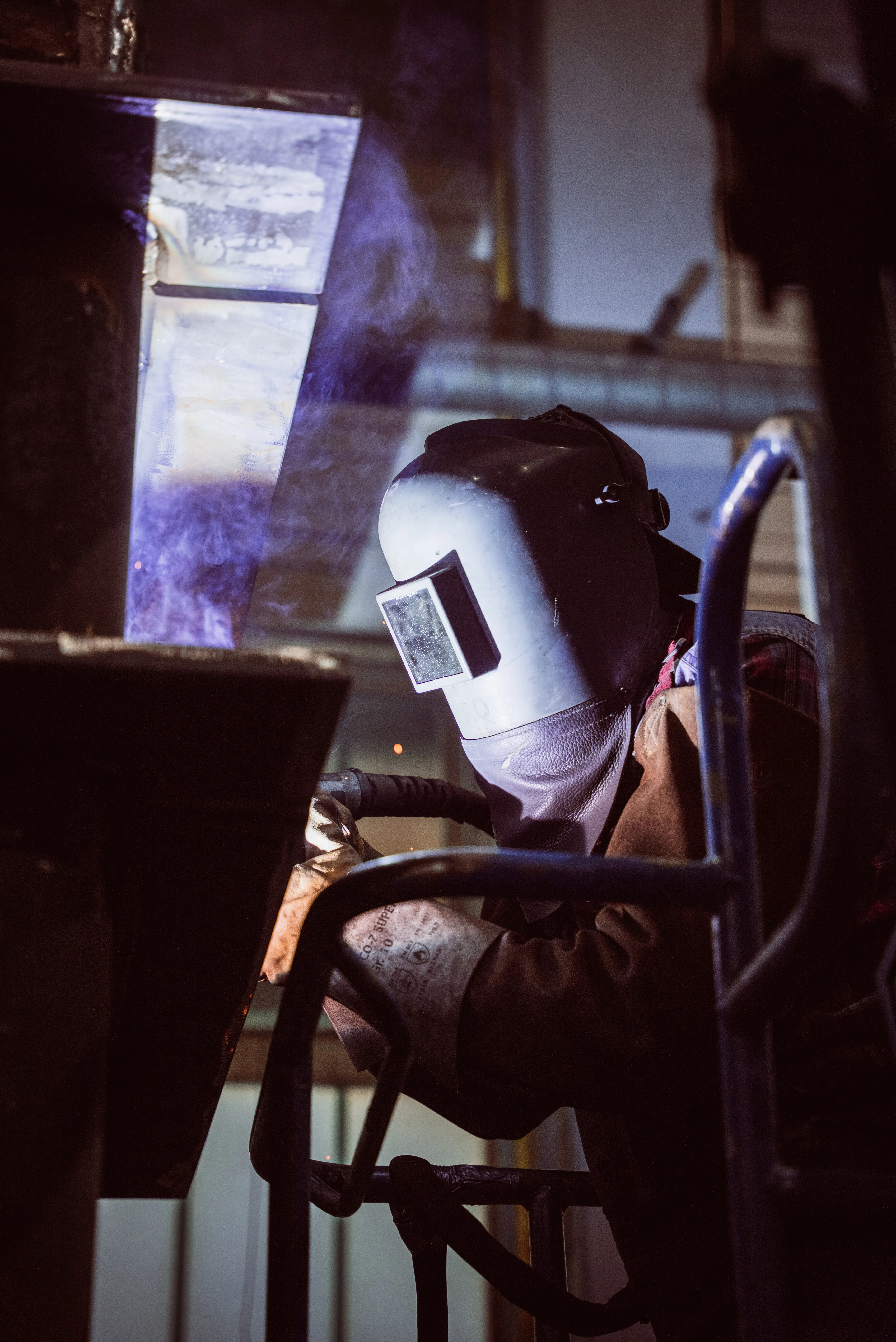
Agitated tanks based on process and drive data
We manufacture agitator vessels according to customer drawings and the intended application. Vessel geometry, connections, and internal components are tailored to the agitator and the process data. Material traceability and the agreed-upon tests are documented throughout the entire order.
Dimensions up to 5 m in diameter and 150 t
Agitator vessels can be manufactured with diameters up to 5 m and in single-piece lengths up to 50 m. Individual weights of up to 150 metric tons and wall thicknesses of up to 100 mm are possible. Horizontal and vertical designs can be segmented for transport and assembly. We evaluate non-standard dimensions and special materials on a project-by-project basis.
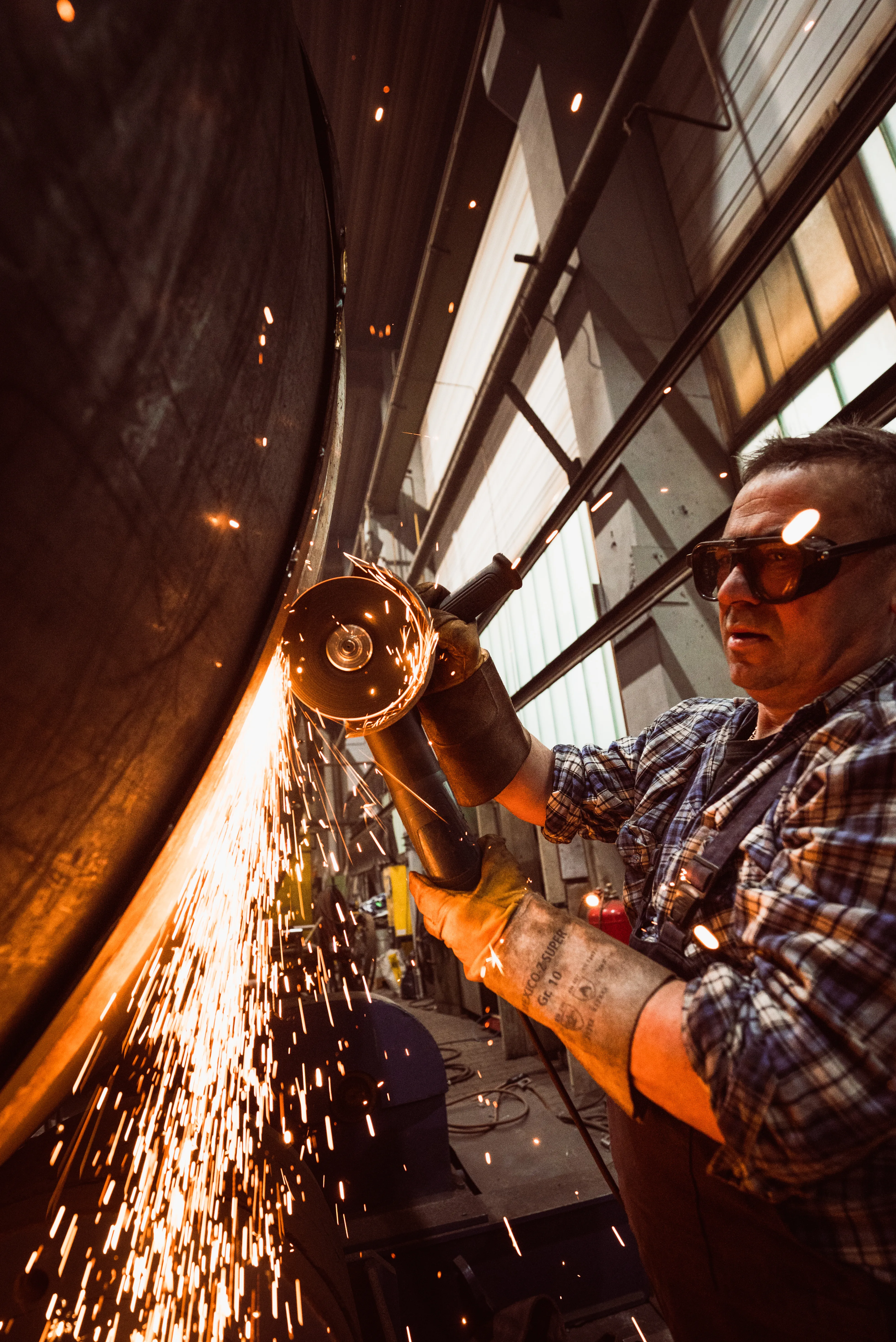
Test assembly and test run at the plant
Upon request, we fully install the agitator onto the vessel prior to shipment. During a test run, we verify the interaction between the drive and the seal under the agreed-upon conditions. The results are documented and made available for commissioning.
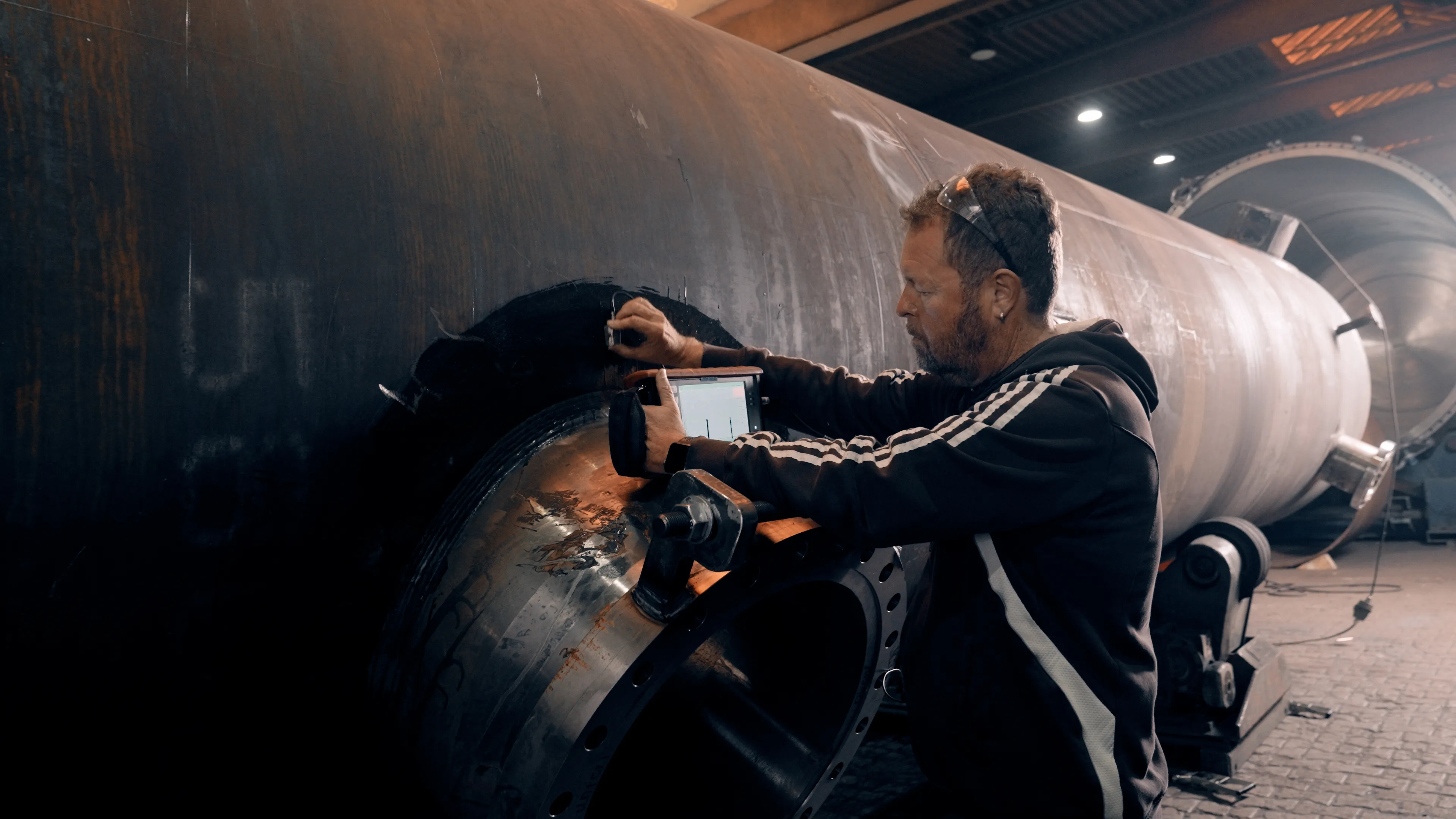
In-house quality assurance (QA)
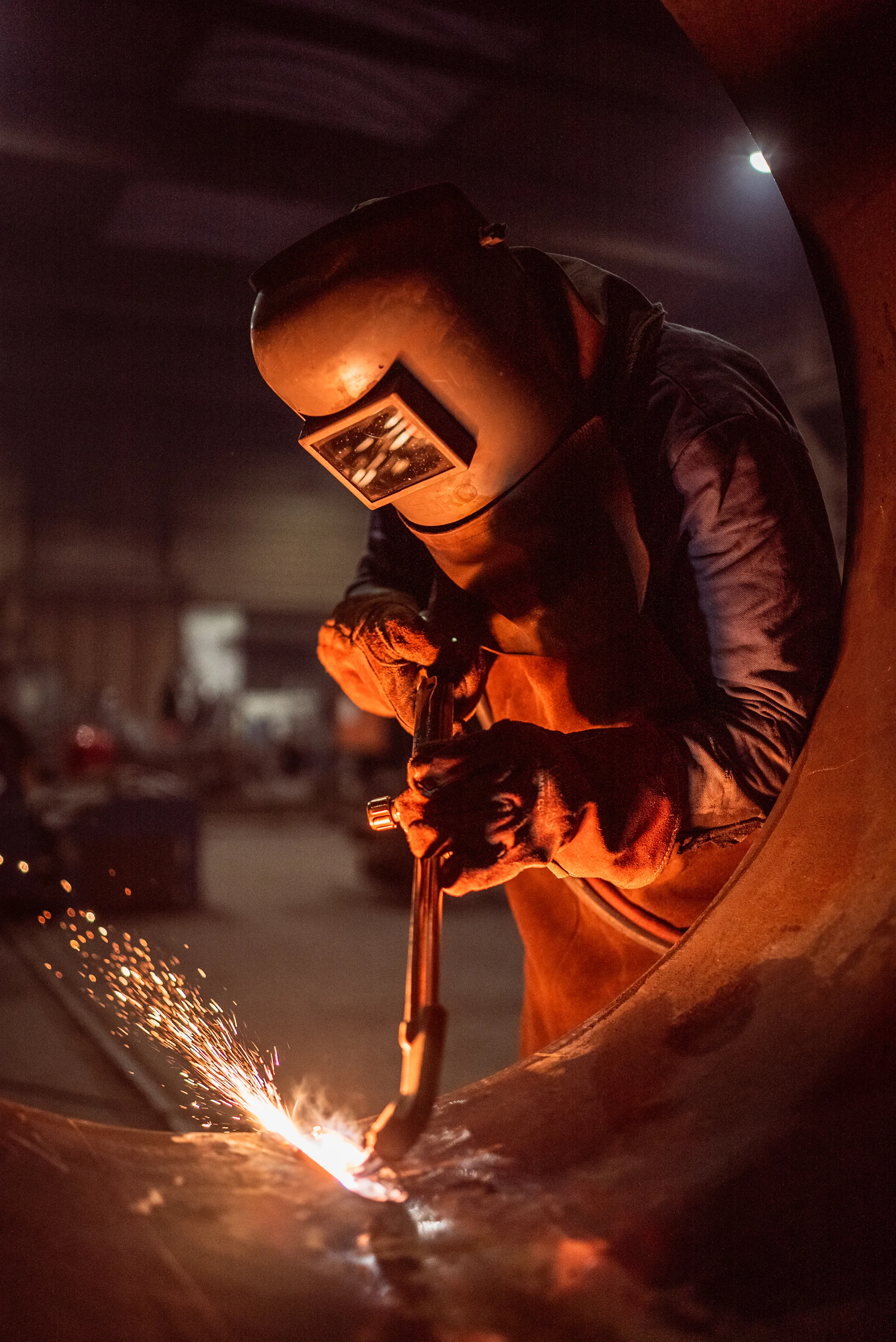
Our quality assurance team inspects production in-house. The specified testing procedures and 3D measurements are defined on a project-by-project basis. Our documentation team compiles material certificates, manufacturing records, and test results into comprehensive project documentation.
Design taking agitator loads into account
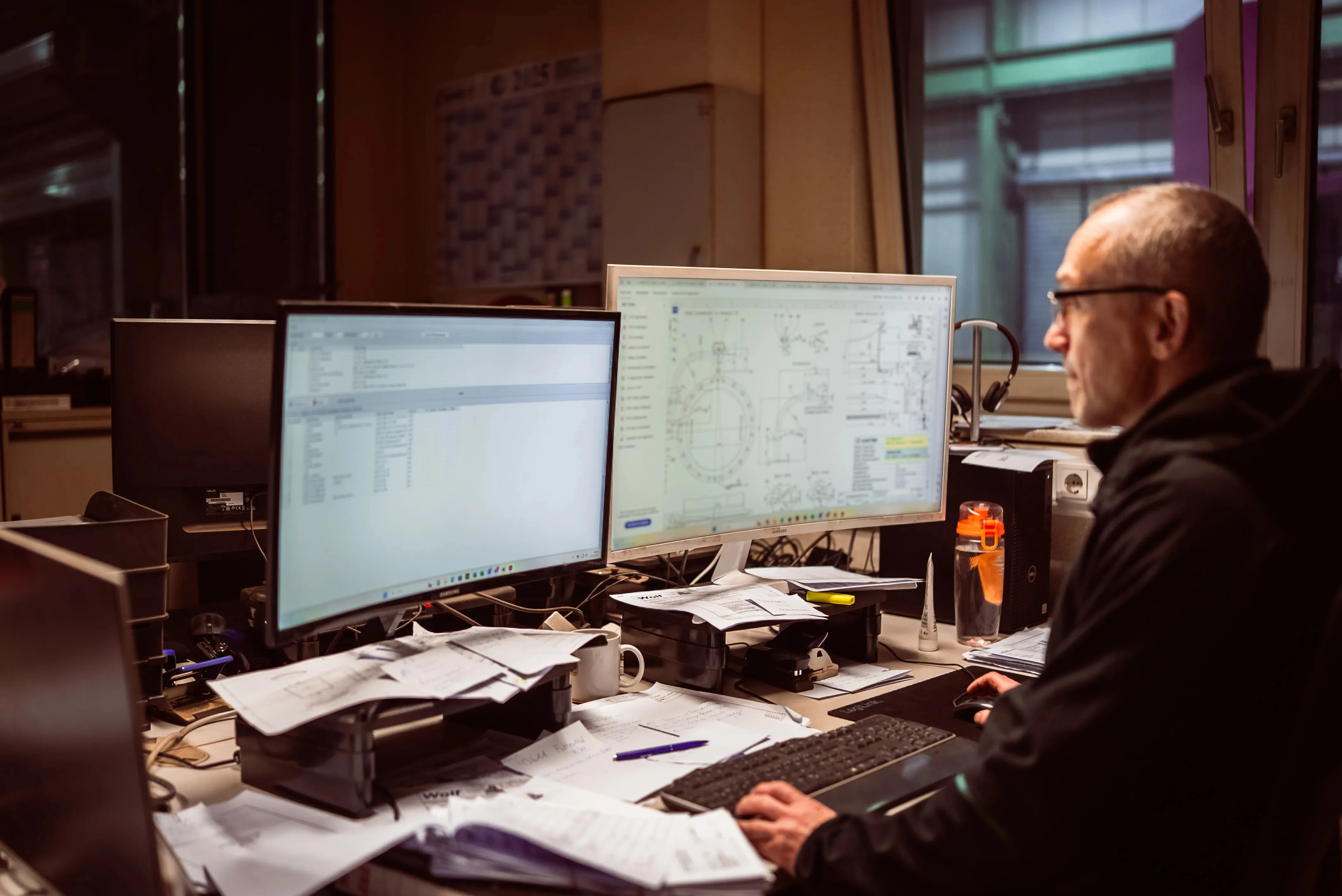
We perform calculations according to AD 2000 and EN 13445 using Sant’Ambrogio NextGen 2025; ASME verifications are performed using Compress 2025. Dynamic loads from the agitator are incorporated into the relevant load case. For detailed analyses, we use ANSYS Mechanical and Nozzle-Pro 15. Design is performed in PTC Creo.
Materials suitable for the mixing process
Carbon steels: P265GH, P355GH, P355NH, P355NL1, 16Mo3, 13CrMo4-5, 10CrMo9-10, 15NiCuMoNb5-6-4, SA-516 Gr. 60/70, SA-350 LF2, and SA-387 Gr. 11.
Stainless steels: 1.4301, 1.4541, 1.4571, 1.4539, and the corresponding SA-240 grades.
Duplex steels: 1.4462 and SA-240 318LN. We evaluate defined internal surfaces and cladding configurations for the respective process.
Certificates and Approvals
Technical questions about your agitator vessel
If you have any questions regarding the design or integration of the agitator, please contact our project team directly. We will work with you to determine the necessary process data.
Kai Jaspert
Leiter Vertrieb
Details on the construction of agitator vessels
Here we answer technical questions regarding the planning and design of agitator vessels.
Can agitator vessels be heated or cooled? + − Yes. For temperature control, half-tube or full-tube coils can be installed on the vessel wall. Electric trace heating is also an option. The type and capacity of the temperature control system are designed based on the process data. The required insulation is tailored to the intended level of protection.
Yes. For temperature control, half-tube or full-tube coils can be installed on the vessel wall. Electric trace heating is also an option. The type and capacity of the temperature control system are designed based on the process data. The required insulation is tailored to the intended level of protection.
What pressure and temperature ranges are possible for agitator vessels? + − WOLF manufactures agitator vessels for atmospheric, vacuum, and pressurized applications. The permissible limits are determined by the material, wall thickness, temperature, and regulatory requirements. For pressurized vessels, the strength calculation also takes into account the dynamic loads imposed by the agitator.
WOLF manufactures agitator vessels for atmospheric, vacuum, and pressurized applications. The permissible limits are determined by the material, wall thickness, temperature, and regulatory requirements. For pressurized vessels, the strength calculation also takes into account the dynamic loads imposed by the agitator.
In which industries are agitator vessels used? + − Agitated tanks are used in the chemical and petrochemical industries and in plant engineering, among other fields. Applications in environmental technology are also possible. The design depends on the medium to be processed and the requirements for the inner surface.
Agitated tanks are used in the chemical and petrochemical industries and in plant engineering, among other fields. Applications in environmental technology are also possible. The design depends on the medium to be processed and the requirements for the inner surface.
What types of agitators does WOLF integrate? + − We integrate the impeller that is suitable for the intended mixing or reaction process. Depending on the medium, options include propeller, turbine, paddle, anchor, or helical agitators. Magnetically coupled designs are also available. The drive, gearbox, and bearings are matched to the torque and rotational speed.
We integrate the impeller that is suitable for the intended mixing or reaction process. Depending on the medium, options include propeller, turbine, paddle, anchor, or helical agitators. Magnetically coupled designs are also available. The drive, gearbox, and bearings are matched to the torque and rotational speed.