Quick-release fasteners
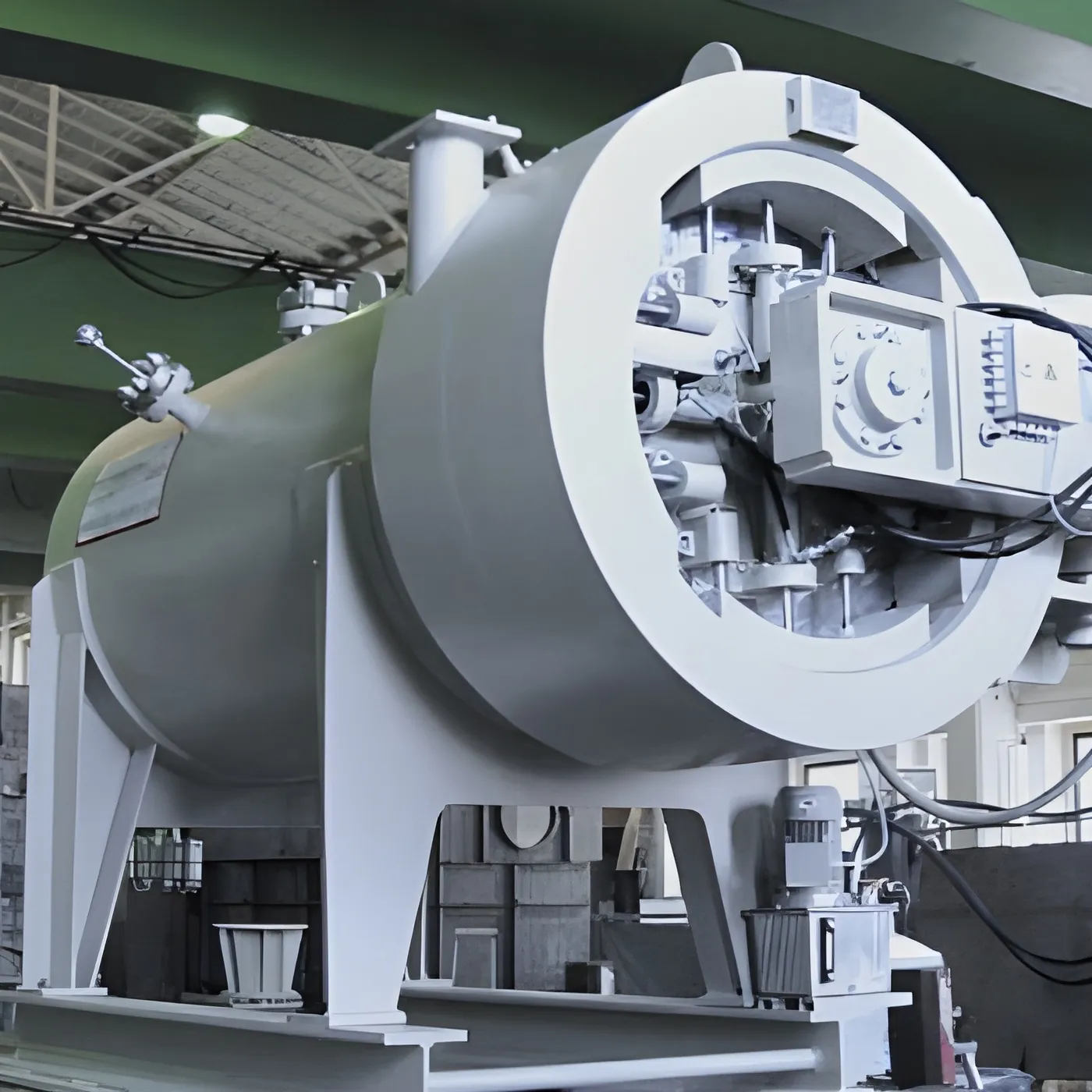
We manufacture quick-release fasteners for pressure vessels that are opened regularly. The fastener mechanism and sealing system are designed to withstand the operating conditions and the expected number of cycles. Both manual and hydraulic operating systems are available.
Sealing system and locking mechanism suited to the operating conditions
Quick-release fasteners are designed for the intended operating pressure and the planned number of opening cycles. The fastener mechanism must remain dimensionally stable even under pressure surges and thermal loads. We tailor the sealing system and operation to the medium and the installation orientation of the vessel. In cases of frequent load cycles, we perform the necessary fatigue analysis.
Design based on vessel geometry and operating concept
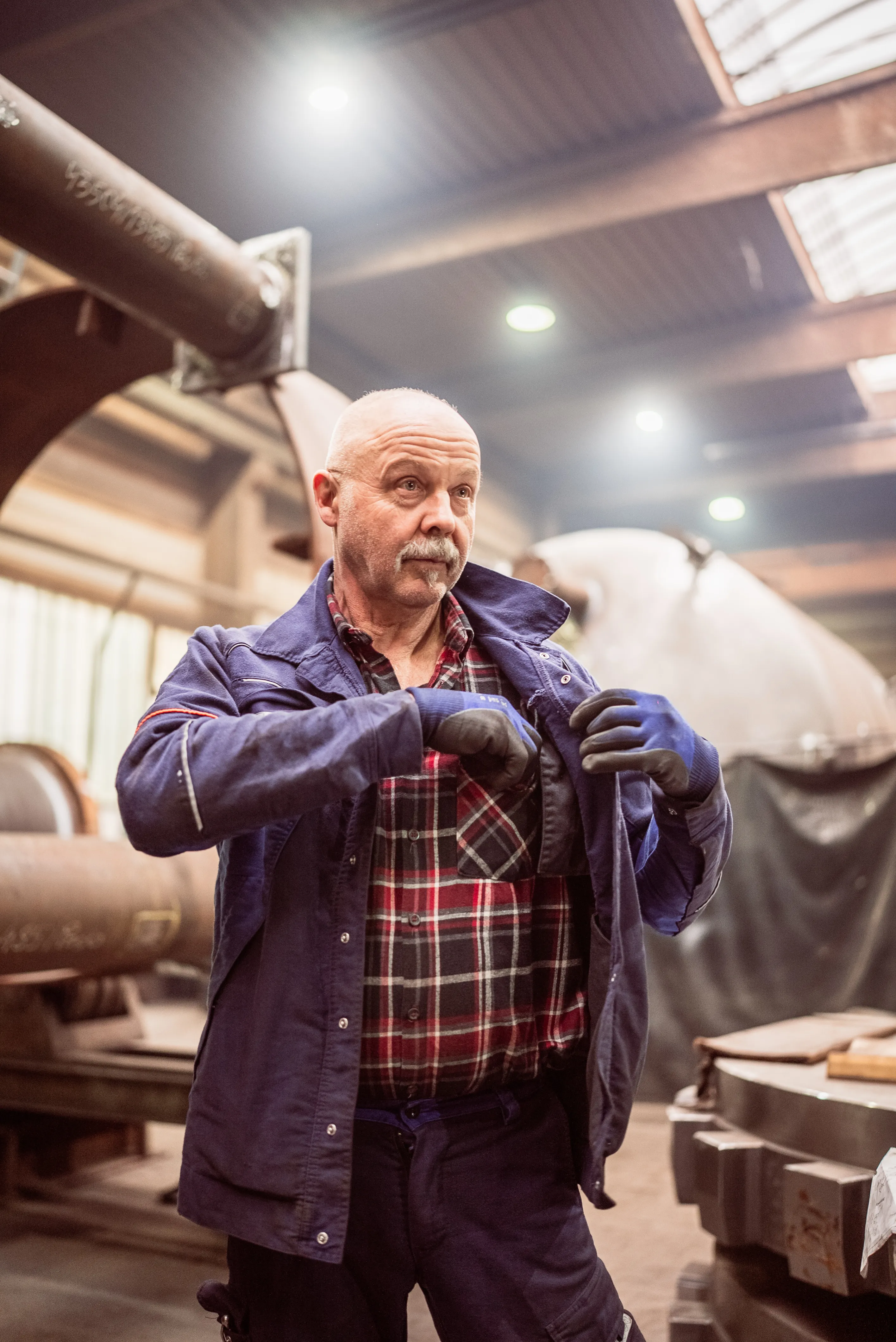
The choice of closure type depends on the specific load case and installation situation. We evaluate the nominal diameter, pressure rating, and frequency of operation in conjunction with the vessel’s connection requirements. Permissible operating limits are calculated and documented for each closure.
BDG quick-release fastener with rack-and-pinion operation
The BDG quick-release fastener can be designed for horizontal or vertical vessels. Manual operation is via a rack-and-pinion mechanism. Carbon steel is the preferred material; we evaluate other materials for each specific application. The permissible nominal diameter and pressure rating are determined by the project-specific design.
Possible additional services
Lid and closure systems: Can be welded to shells or bolted to flanges; hydraulic systems for opening, closing, swiveling, or tilting
Operations & Automation: Hand pump and manual valve operation; partially or fully automated systems with a hydraulic power unit and control system
Protection & Longevity: Corrosion protection for sealing surfaces (e.g., weld cladding); wear protection for the teeth; protective cover against weather and dirt
Sealing systems: Various sealing systems, adapted to the respective operating conditions
In-house quality assurance (QA)
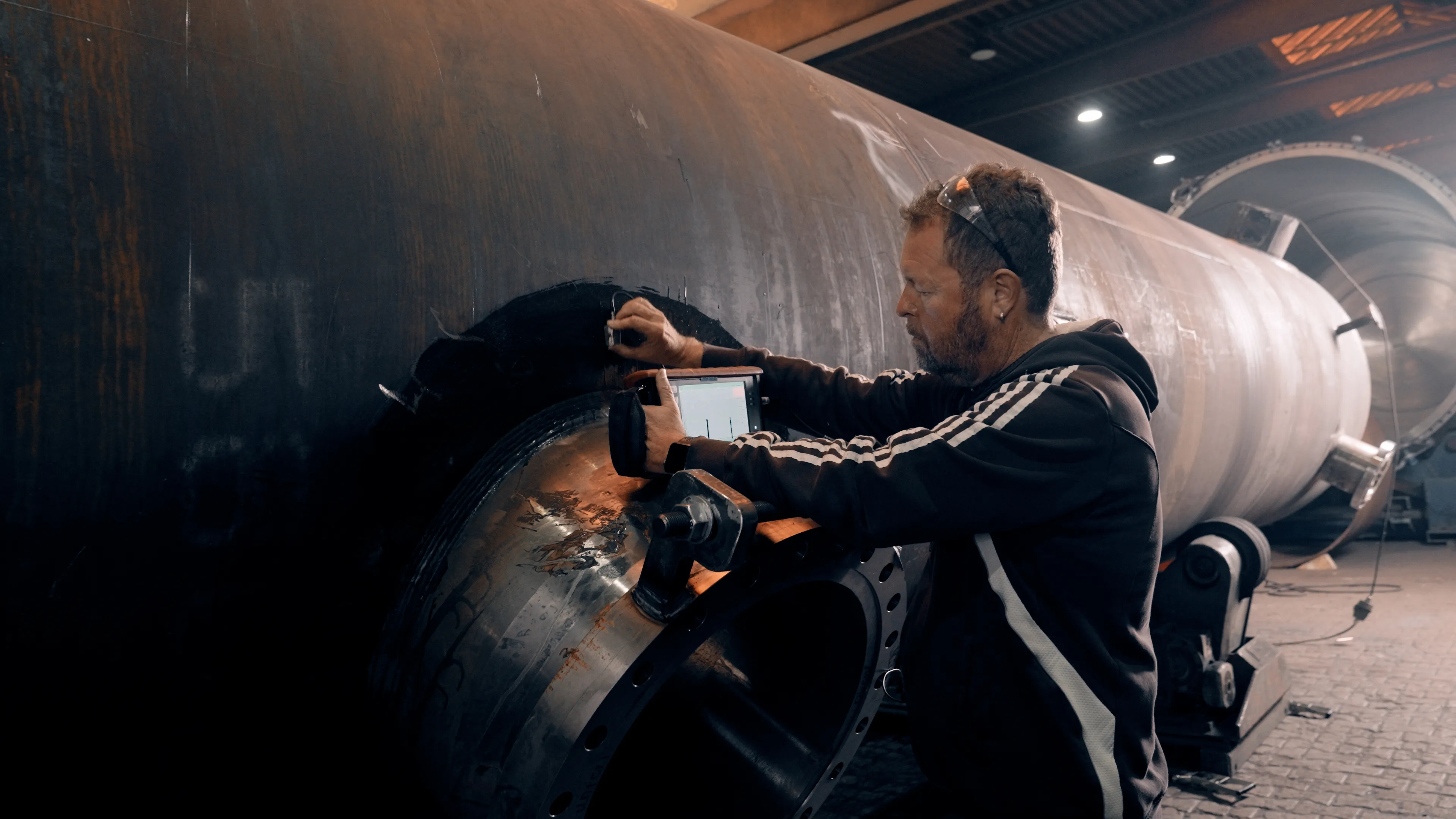
Our quality assurance team inspects production in-house. The specified testing procedures and 3D measurements are defined on a project-by-project basis. Our documentation team compiles material certificates, manufacturing records, and test results into comprehensive project documentation.
Strength and fatigue analyses
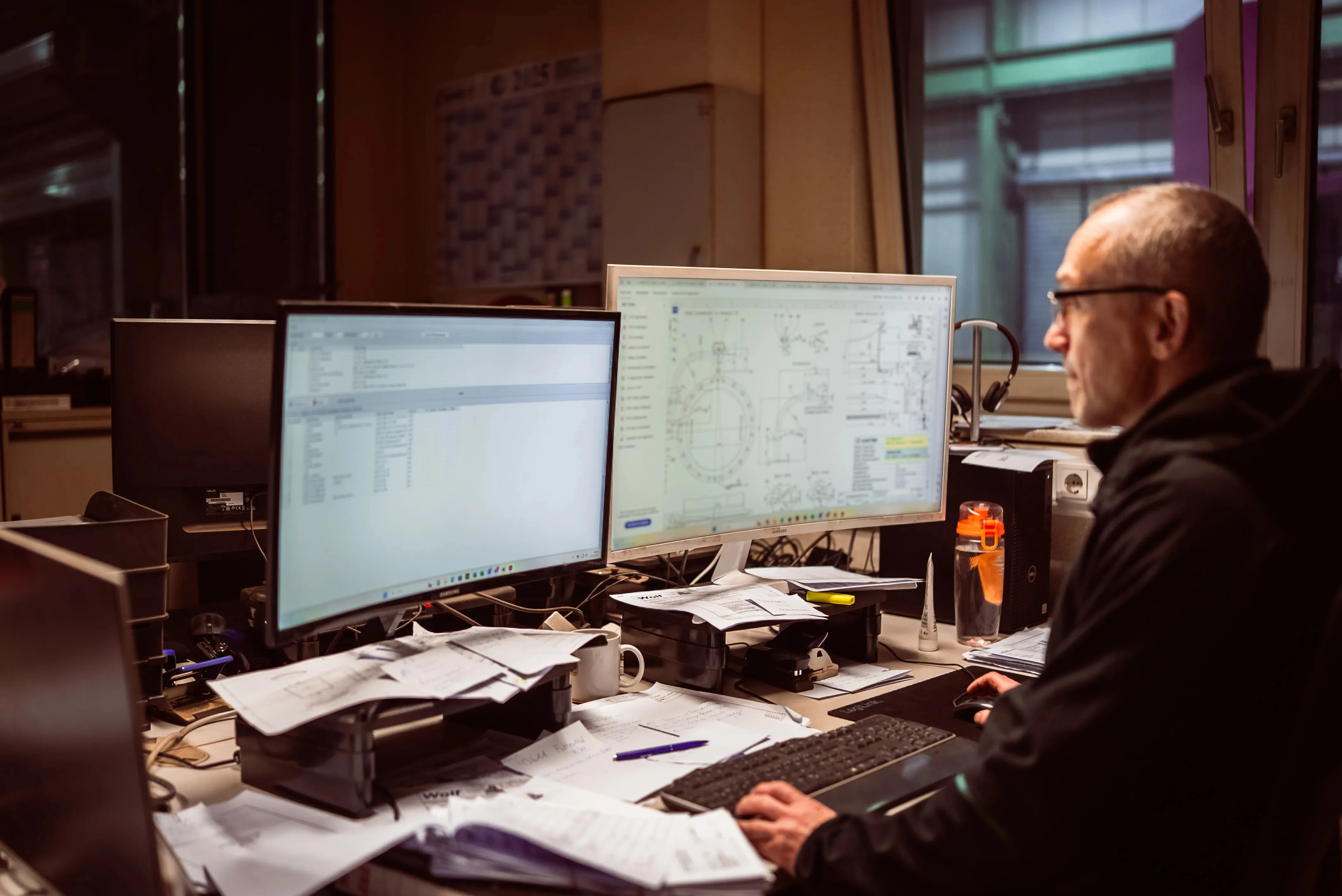
We perform calculations according to AD 2000 and EN 13445 using Sant’Ambrogio NextGen 2025; ASME verifications are performed using Compress 2025. We account for frequent opening and closing in the fatigue analysis in accordance with the applicable regulations. We perform detailed analyses using ANSYS Mechanical as needed. Design is carried out in PTC Creo.
Talk to our project team
Please send us the vessel specifications and details regarding the desired operation. Your inquiry will be forwarded directly to our project team via the contact form. We will get back to you as soon as possible.
Materials suited to the medium and sealing system
Carbon steel is the preferred material for many quick-release fastener designs. We use stainless steel when specific requirements for corrosion resistance or purity apply. Sealing surfaces can be protected with welded cladding for special media. We evaluate other materials on a project-by-project basis.

Certificates and Approvals
Technical questions about your quick-release fastener
If you have any questions regarding design, operation, or the scope of verification, please contact our project team directly. We will work with you to determine the necessary vessel specifications.
Kai Jaspert
Leiter Vertrieb

Frequently Asked Questions About Our Quick-Release Closures
Here we answer technical questions about the designs, specifications, and operation of our quick-release fasteners.
Can a quick-release fastener be retrofitted to an existing vessel? + − Retrofitting is generally possible, but must be evaluated for the existing vessel. The connection geometry and the condition of the material are decisive factors. In addition, the load-bearing capacity of the connection area must be verified. Only after an assessment of the existing conditions can it be determined whether a welded joint or a flanged joint is suitable.
Retrofitting is generally possible, but must be evaluated for the existing vessel. The connection geometry and the condition of the material are decisive factors. In addition, the load-bearing capacity of the connection area must be verified. Only after an assessment of the existing conditions can it be determined whether a welded joint or a flanged joint is suitable.
How is frequent opening and closing taken into account in the design? + − - Frequent opening and closing is taken into account as cyclic loading. The calculation is based on the applicable regulations and the agreed-upon number of opening cycles. Stressed closure components and gaskets are included in the assessment.
- Frequent opening and closing is taken into account as cyclic loading. The calculation is based on the applicable regulations and the agreed-upon number of opening cycles. Stressed closure components and gaskets are included in the assessment.
How are quick-release fasteners opened and closed? + − Depending on the design, the closure is operated via a handwheel, a rack, or a quick-action lever. If necessary, a hydraulic drive can be added and integrated into the system control. We tailor the operation to the vessel’s safety concept.
Depending on the design, the closure is operated via a handwheel, a rack, or a quick-action lever. If necessary, a hydraulic drive can be added and integrated into the system control. We tailor the operation to the vessel’s safety concept.
What determines the allowable operating pressure of a quick-release coupling? + − The permissible operating pressure depends on the design, nominal diameter, and material. Operating temperature and the number of load cycles are also taken into account. WOLF designs each closure in accordance with applicable regulations and project-specific vessel data. We specify binding limit values after reviewing this information.
The permissible operating pressure depends on the design, nominal diameter, and material. Operating temperature and the number of load cycles are also taken into account. WOLF designs each closure in accordance with applicable regulations and project-specific vessel data. We specify binding limit values after reviewing this information.