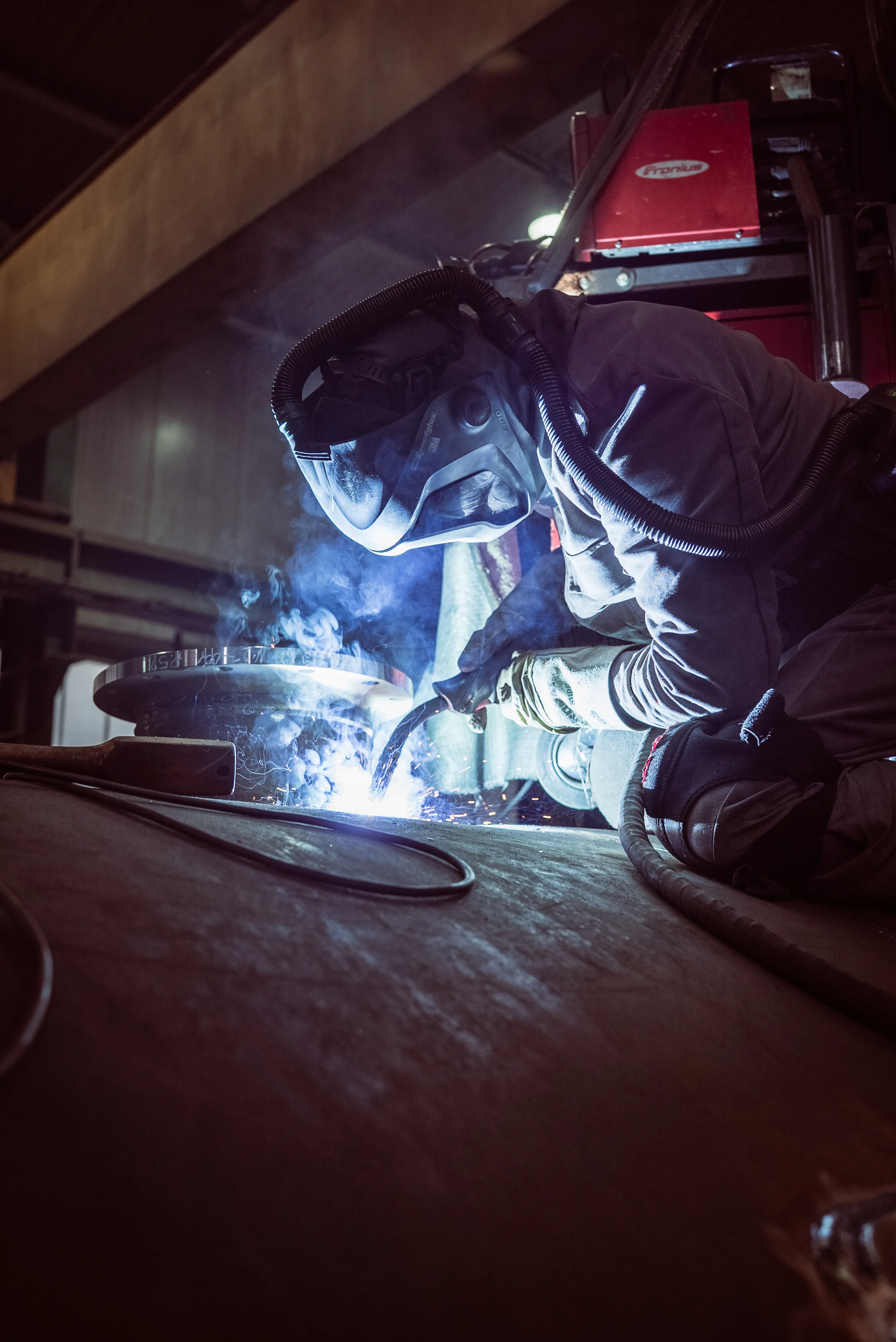
Pressure vessel
A pressure vessel must remain permanently leak-tight and dimensionally stable under the intended load conditions. We design and manufacture according to drawings or specifications and apply AD 2000, EN 13445, or ASME, depending on the project.
Pressure, vacuum, and cyclic loading are taken into account in the design
We manufacture pressure vessels for the process industry according to customer drawings and the intended application. Operating pressure, temperature range, and cyclic loads are factored into the design. Material traceability and the agreed-upon tests are documented throughout the entire manufacturing process.
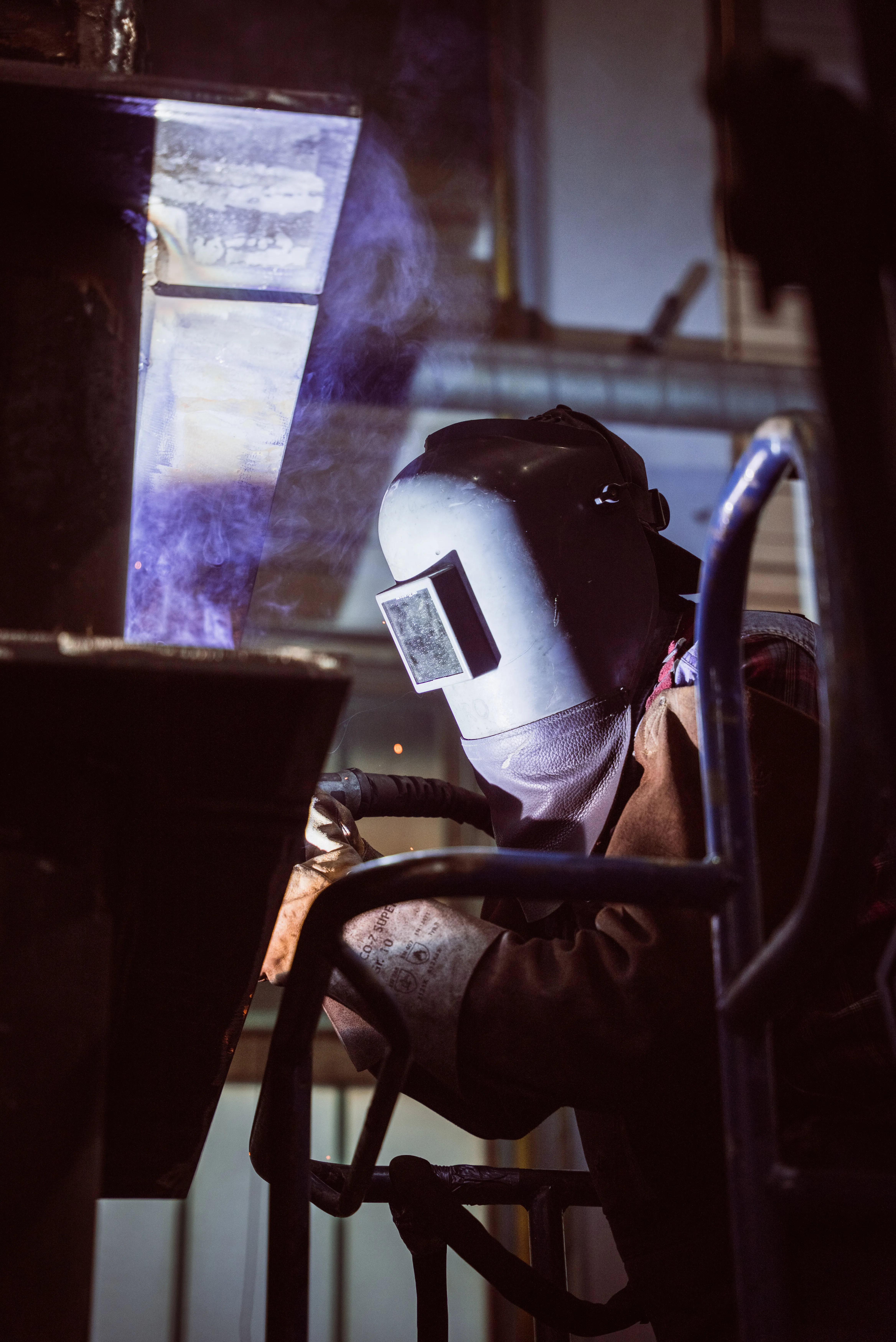
Dimensions and scope of testing
Dimensions, materials, and inspection depth are tailored to the operating conditions of the pressure vessel. We manufacture both one-off pieces and large vessels segmented for transport, and document material traceability throughout the entire order.
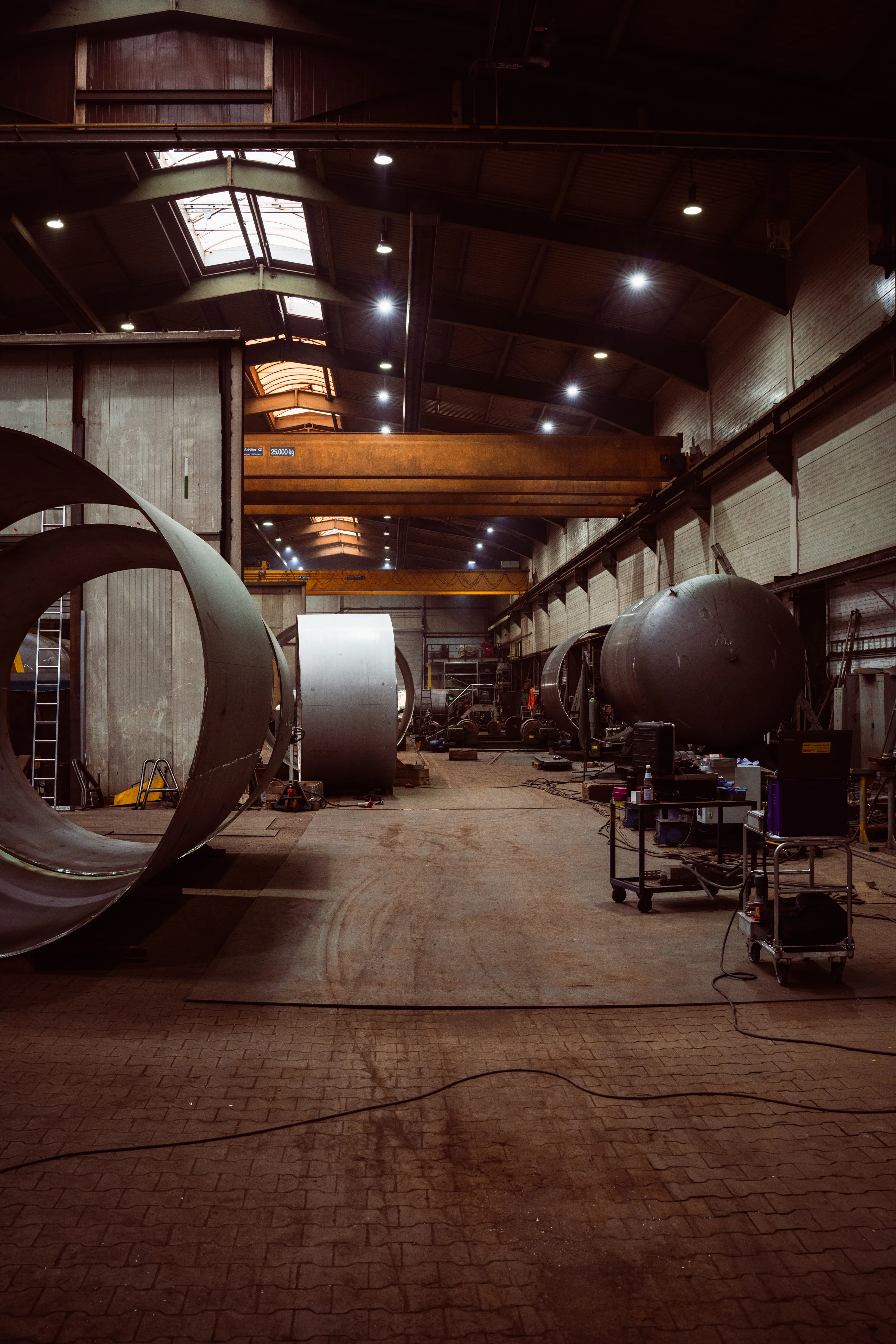
Manufacturing up to 5 m in diameter and 150 t
We manufacture pressure vessels up to 5 m in diameter and with single-piece lengths of up to 50 m. Individual weights of up to 150 t and wall thicknesses of up to 100 mm are possible. Depending on the diameter and material, we design conventional pressure vessels rated up to 400 bar. Horizontal and vertical designs can be segmented for transport and prepared for on-site assembly. We evaluate larger or non-standard dimensions on a project-by-project basis.
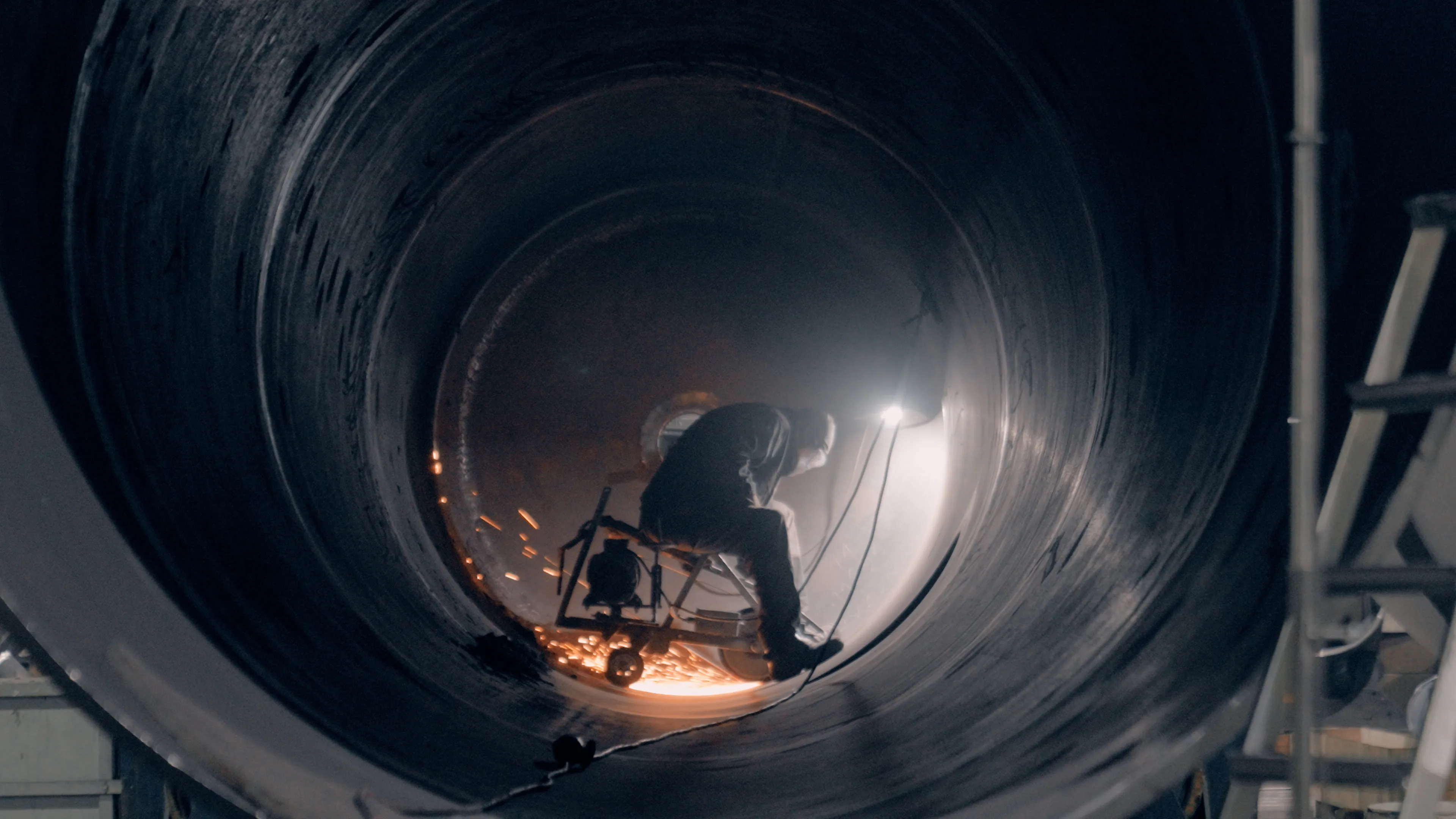
Additional services for ready-to-install vessels
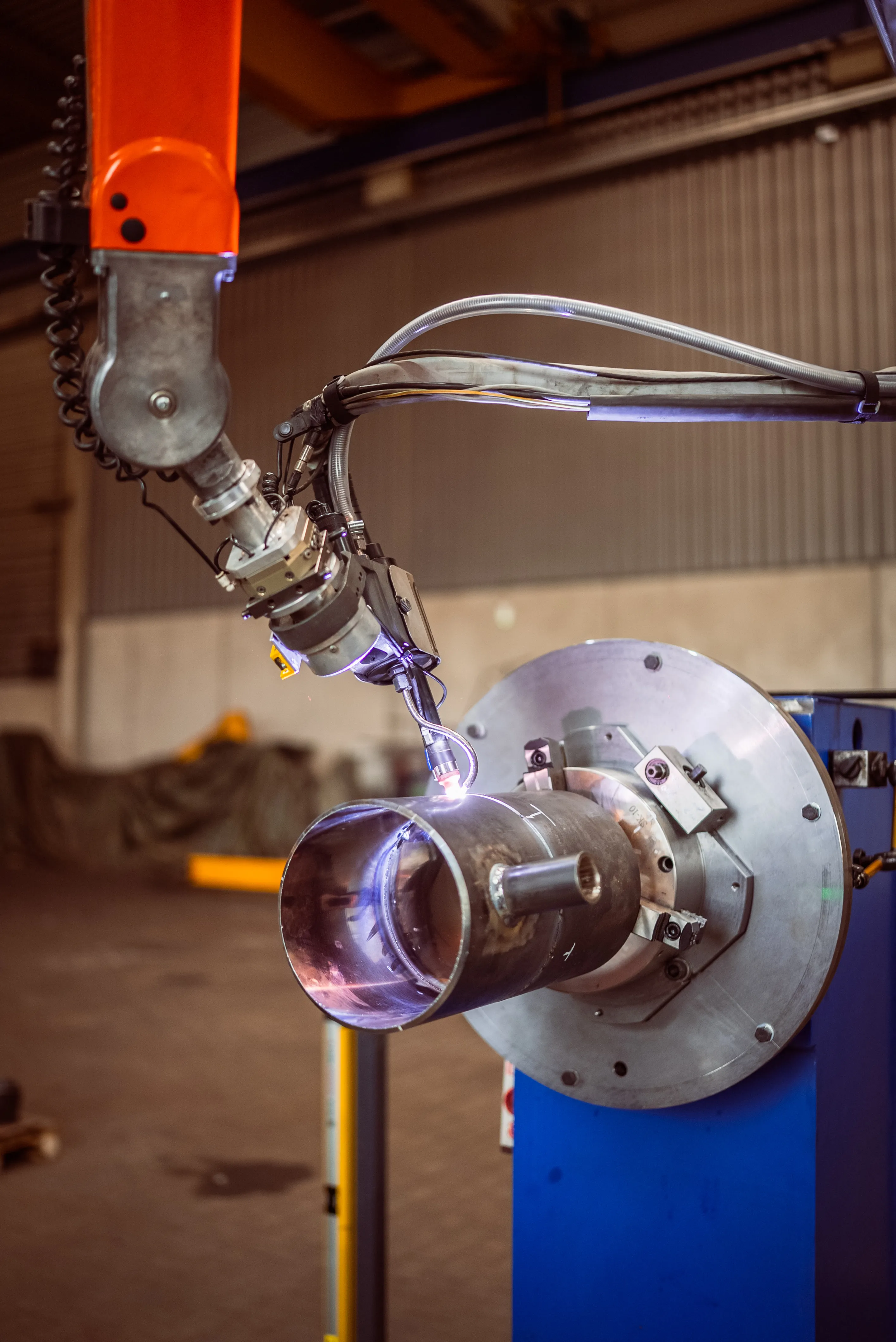
If required, we integrate heating and piping systems, including half- or full-pipe coils and electric trace heating. We fabricate steel structures and internal components according to project-specific designs. Internal and external coatings, fire protection systems, and insulation are applied as appropriate for the intended application. Drying and preservation can be performed prior to delivery.
In-house quality assurance (QA)
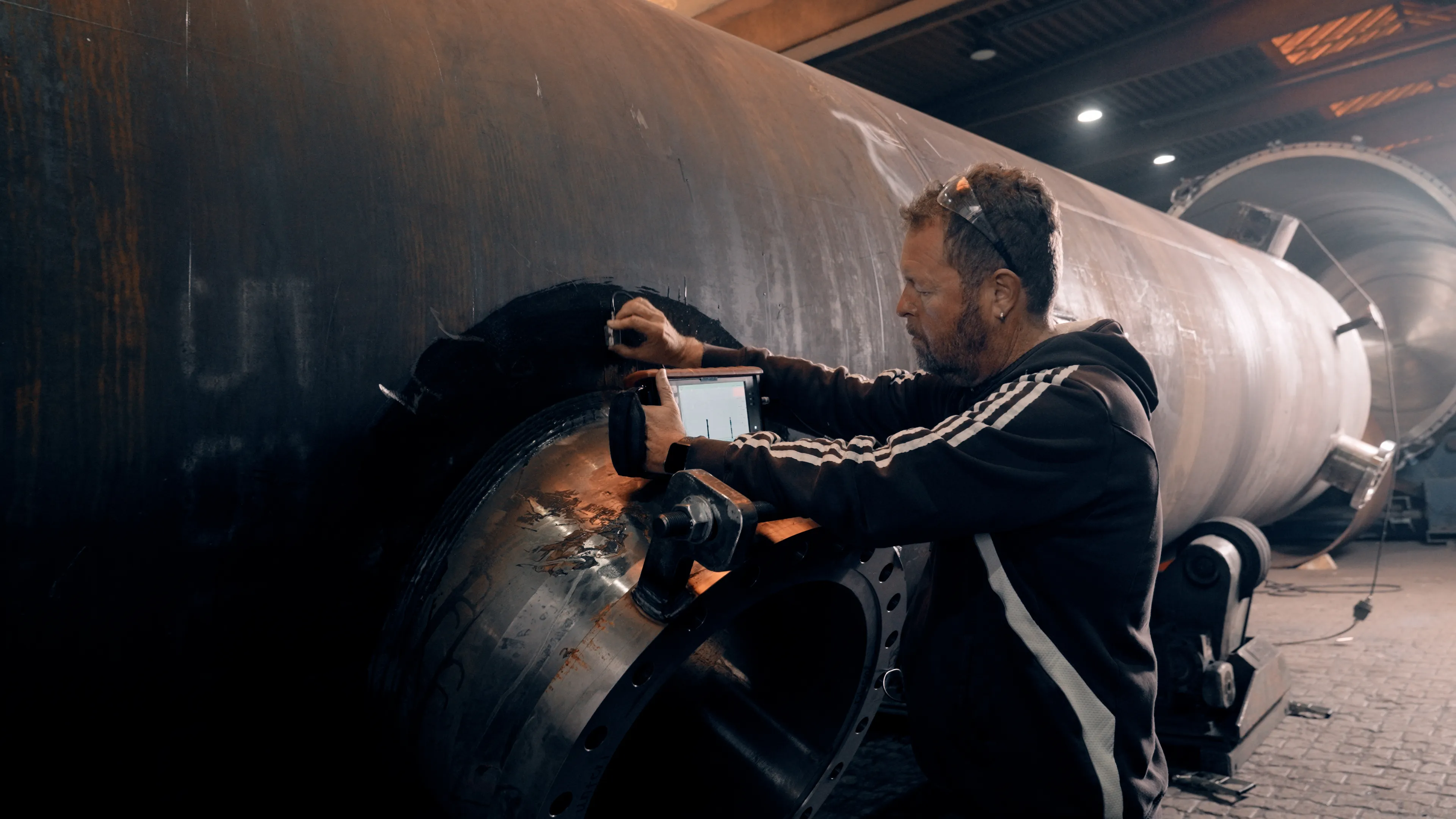
Our quality assurance team inspects production in-house. The specified testing procedures and 3D measurements are defined on a project-by-project basis. Our documentation team compiles material certificates, manufacturing records, and test results into comprehensive project documentation.
Design in accordance with the agreed-upon set of standards
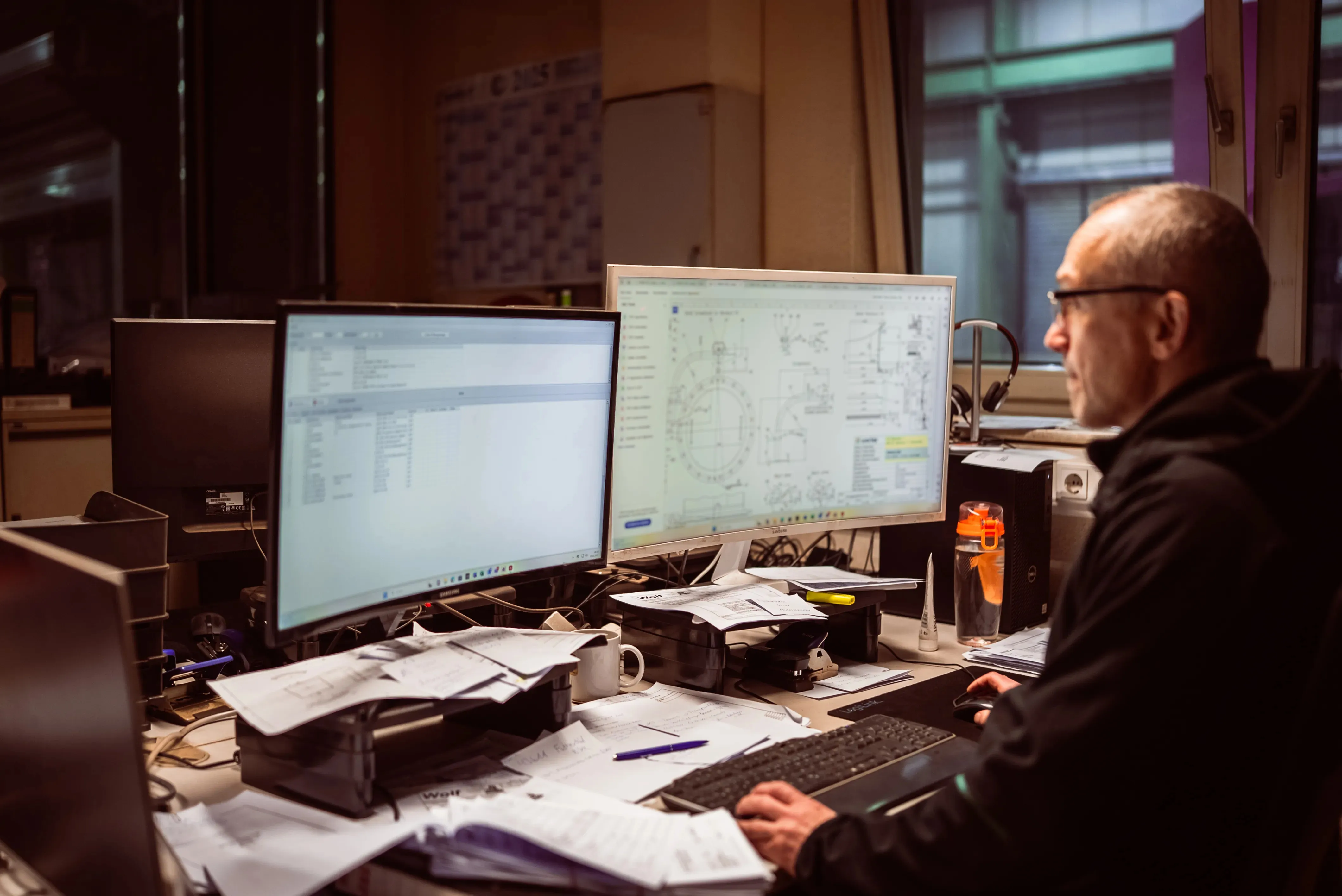
For AD 2000 and EN 13445, we use Sant’Ambrogio NextGen 2025; we perform ASME calculations using Compress 2025. We conduct FEM and CFD analyses using ANSYS Mechanical and Fluent 2025 R1. For nozzle structural analysis and flange verification, we use Nozzle-Pro 15 and TEMESfcal, respectively, in accordance with EN 1591-1. Design is performed in PTC Creo.
Talk to our project team
Please briefly describe the intended use case and the available technical documentation. Your inquiry will be sent directly to our project team via the contact form. We will get back to you as soon as possible.
Materials suitable for the operating medium
Carbon steels: P265GH, P355GH, P355NH, P355NL1, 16Mo3, 13CrMo4-5, 10CrMo9-10, 15NiCuMoNb5-6-4, SA-516 Gr. 60/70, SA-350 LF2, and SA-387 Gr. 11.
Stainless steels: 1.4301, 1.4541, 1.4571, 1.4539, and the corresponding SA-240 grades.
Duplex steels: 1.4462 and SA-240 318LN. We evaluate additional materials and clad versions for each specific application.
Certificates and Approvals
Technical questions about your pressure vessel
If you have any questions regarding the design or manufacture of your pressure vessel, please contact our project team directly. We will work with you to clarify the necessary details.

Kai Jaspert
Leiter Vertrieb
Frequently Asked Questions About Our Pressure Vessels
Here we answer technical questions regarding dimensions, pressure ranges, and collaboration with notified bodies.
Does WOLF manufacture special-purpose vessels to customer drawings? + − Yes. We manufacture pressure vessels and special-purpose vessels to your drawing or specification, including as one-off units. Our engineering office reviews the documents and calculates the vessel according to AD 2000, EN 13445, or ASME. Diameters up to 5 m, single-piece lengths up to 50 m, and unit weights up to 150 t are possible.
Yes. We manufacture pressure vessels and special-purpose vessels to your drawing or specification, including as one-off units. Our engineering office reviews the documents and calculates the vessel according to AD 2000, EN 13445, or ASME. Diameters up to 5 m, single-piece lengths up to 50 m, and unit weights up to 150 t are possible.
Does WOLF manufacture pressure vessels in stainless steel and duplex? + − Yes. We manufacture pressure vessels from austenitic stainless steels such as 1.4301, 1.4541, 1.4571, and 1.4539 and from duplex steel 1.4462; for ASME projects, in the corresponding SA-240 grades. We assess clad designs and other special materials for each specific application. If solution annealing is required after welding or forming, we carry it out in our own heat treatment shop for components up to 40 t.
Yes. We manufacture pressure vessels from austenitic stainless steels such as 1.4301, 1.4541, 1.4571, and 1.4539 and from duplex steel 1.4462; for ASME projects, in the corresponding SA-240 grades. We assess clad designs and other special materials for each specific application. If solution annealing is required after welding or forming, we carry it out in our own heat treatment shop for components up to 40 t.
Which type of head is suitable for a pressure vessel? + − Torispherical heads are economical and common at low to medium pressures. Semi-ellipsoidal heads are more deeply dished and suitable for higher pressures. Hemispherical heads withstand internal pressure most efficiently and are used at high pressures, for example in hydrogen storage vessels. The choice depends on pressure, diameter, wall thickness, and code.
Torispherical heads are economical and common at low to medium pressures. Semi-ellipsoidal heads are more deeply dished and suitable for higher pressures. Hemispherical heads withstand internal pressure most efficiently and are used at high pressures, for example in hydrogen storage vessels. The choice depends on pressure, diameter, wall thickness, and code.
Which Pressure Equipment Directive (PED) category does a pressure vessel fall into? + − The category depends on the maximum allowable pressure PS, the volume V, the fluid state, and the fluid group of the medium. These values are used to classify the vessel in one of the tables in Annex II of the directive; the decisive factor is usually the product of PS and V, but limits for the pressure alone also apply. The higher the category, the more extensive the involvement of the notified body. We determine the category together with you based on the data sheet.
The category depends on the maximum allowable pressure PS, the volume V, the fluid state, and the fluid group of the medium. These values are used to classify the vessel in one of the tables in Annex II of the directive; the decisive factor is usually the product of PS and V, but limits for the pressure alone also apply. The higher the category, the more extensive the involvement of the notified body. We determine the category together with you based on the data sheet.