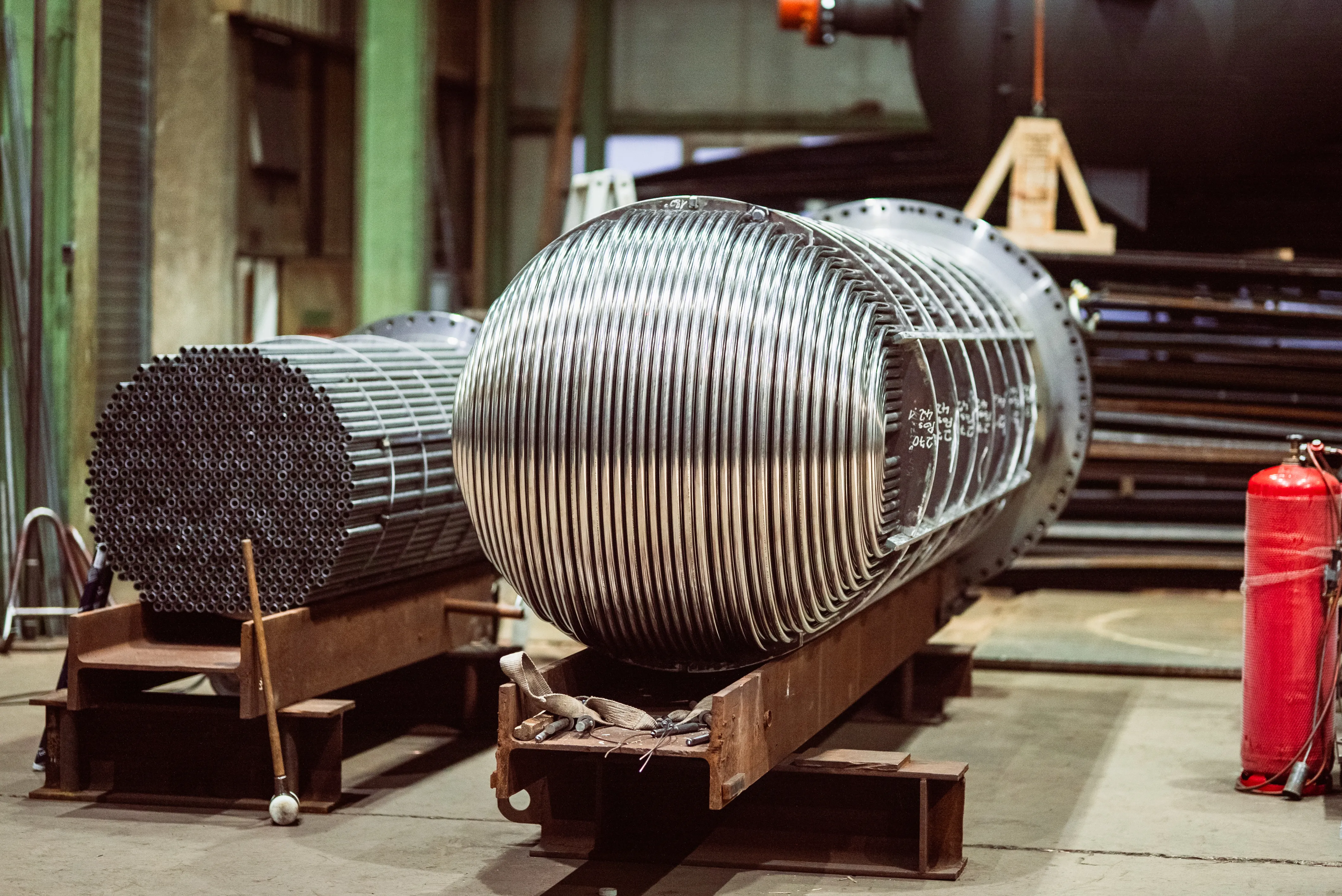
heat exchanger
WOLF manufactures shell-and-tube heat exchangers according to customer drawings and project-specific process data. The medium, operating pressure, and temperature profile are taken into account during the design phase. Upon request, we also perform the thermal calculations.
Thermal loads and pressure differentials are taken into account in the design
The tube side and shell side of a heat exchanger may be exposed to different pressures and temperatures. We tailor the material, tube sheet, and sealing surfaces to the process data. Cycle loading and thermal expansion are taken into account in the mechanical design and verified in accordance with the agreed-upon regulations.
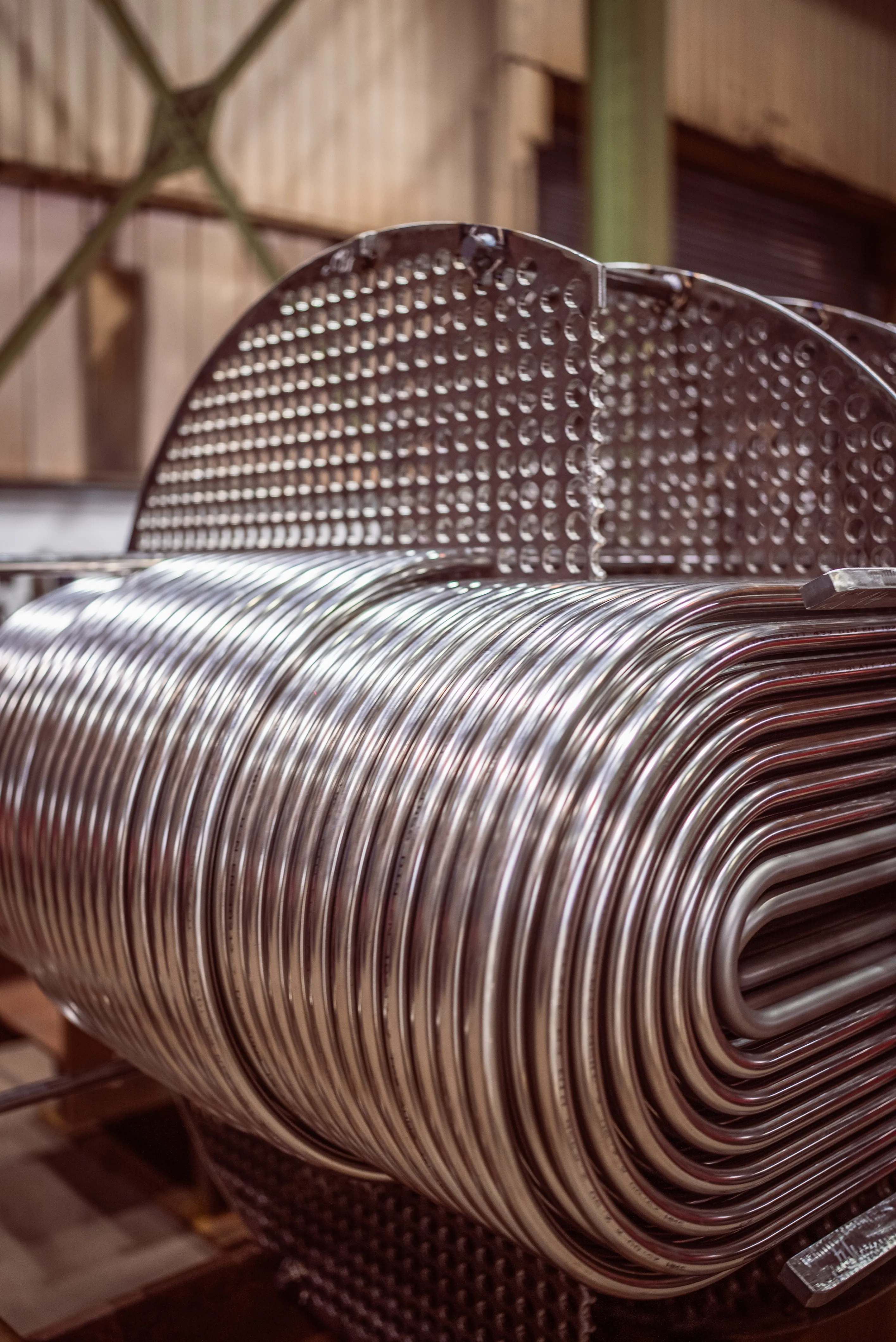
Shell-and-tube heat exchangers based on process data
We manufacture compact individual units and large bundle constructions according to customer specifications. The material and wall thickness are determined based on the medium as well as the mechanical and thermal loads.
Dimensions up to 4 m in diameter and 150 t
Heat exchangers can be manufactured with diameters up to 4 m and in single-piece lengths of up to 20 m. Individual weights of up to 150 t and wall thicknesses of up to 100 mm are possible. For transportation and installation, the unit can be manufactured in multiple sections. We evaluate non-standard dimensions and special materials on a project-by-project basis.
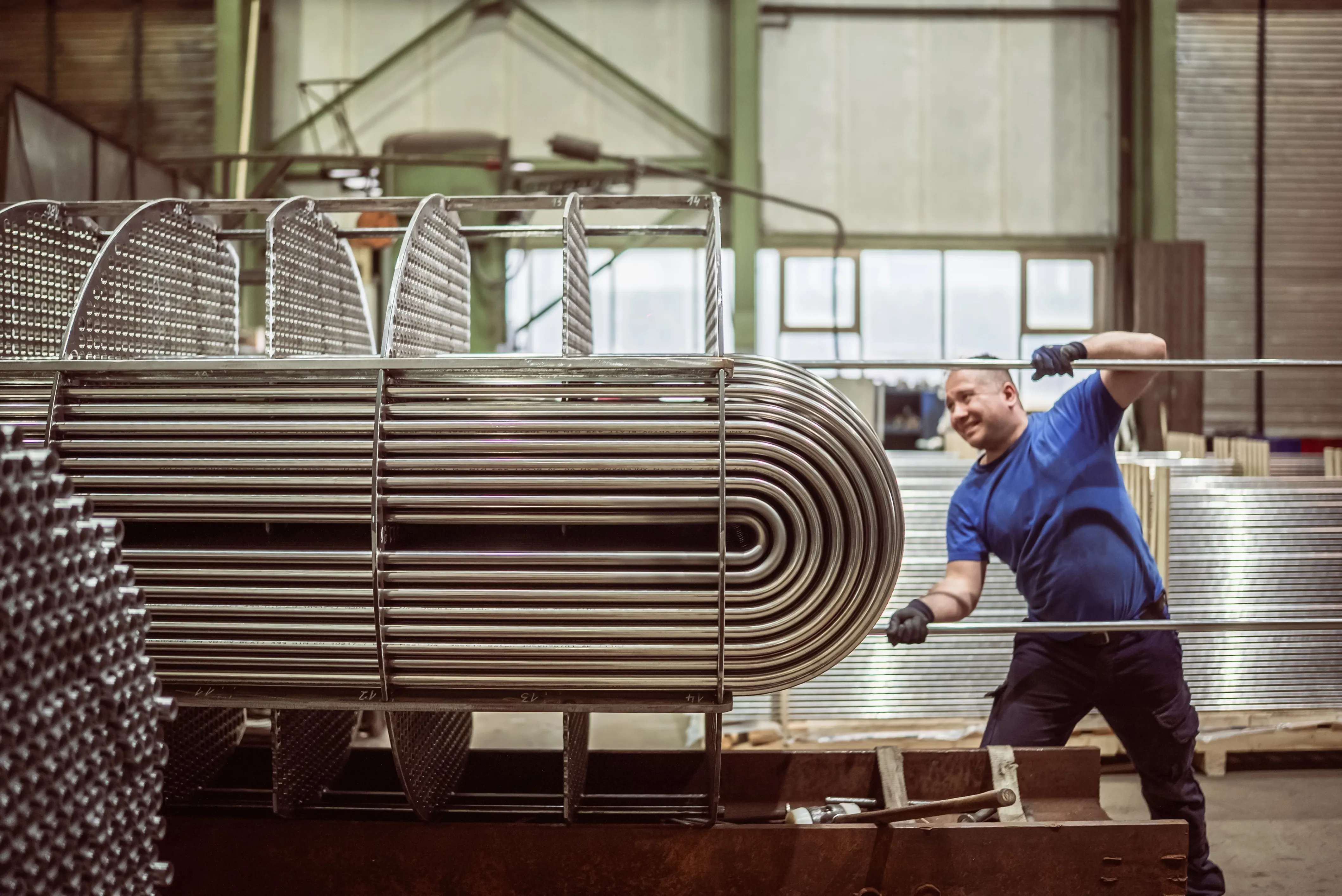
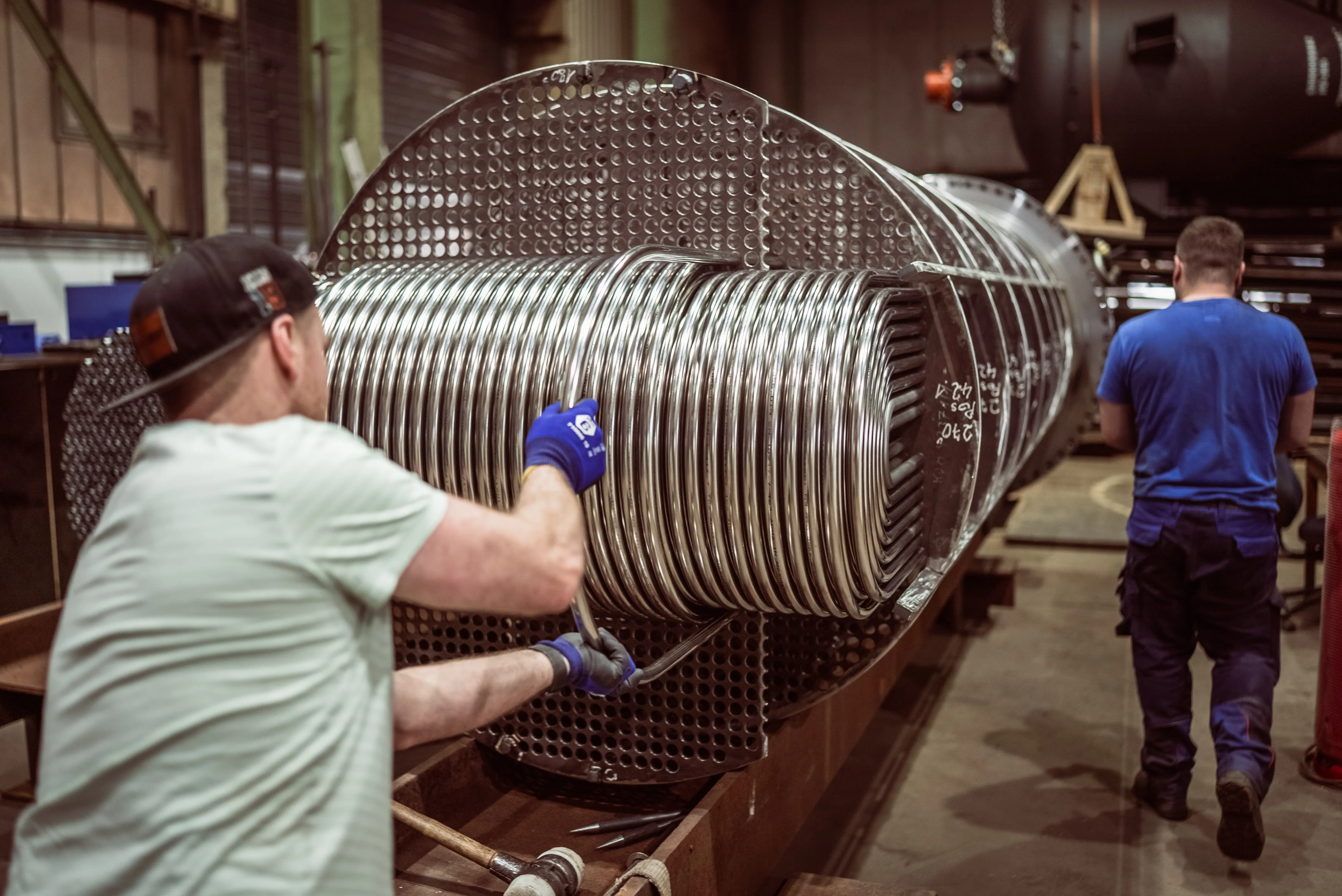
Possible additional services
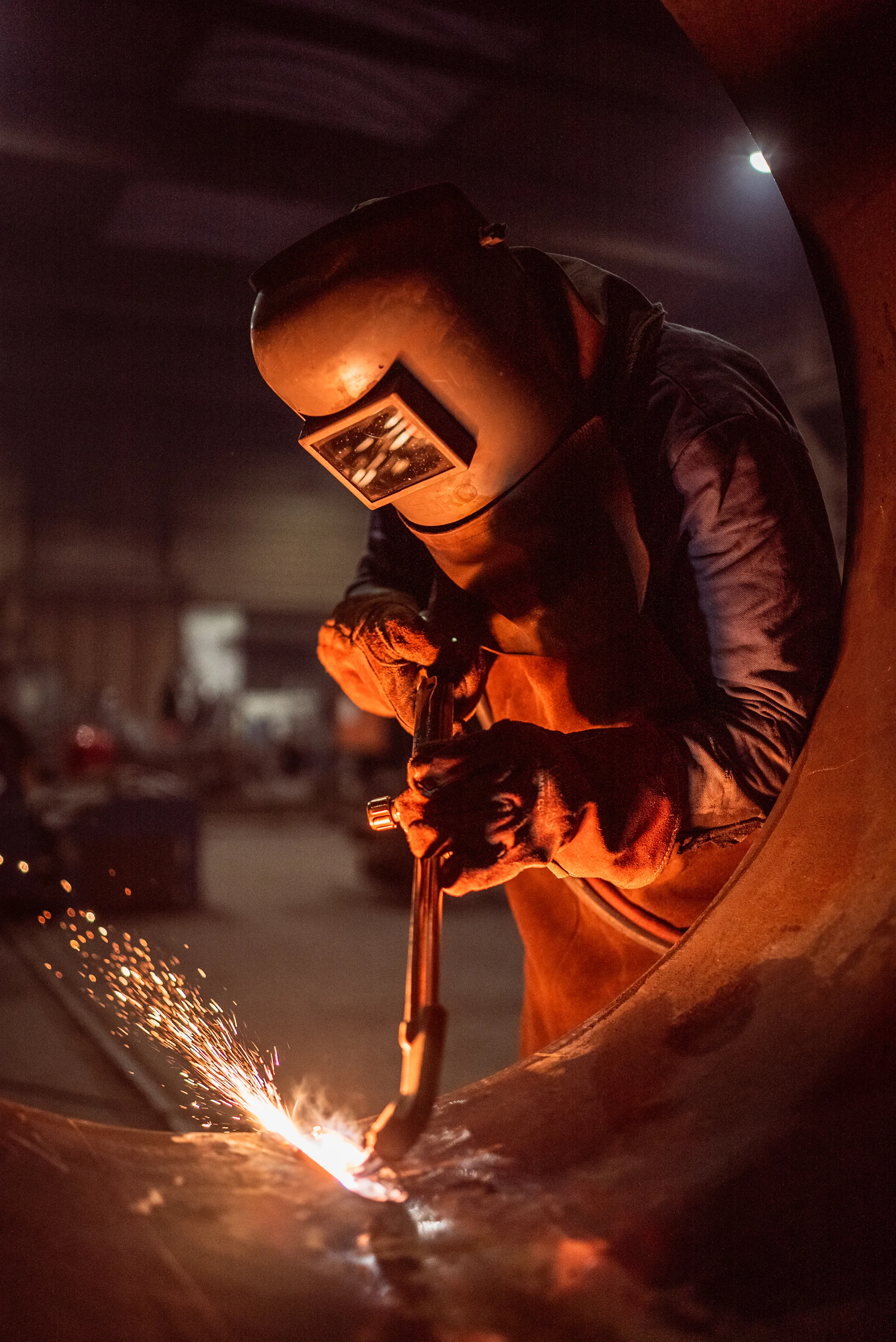
Piping and welded cladding; internal coatings (e.g., baked-on coatings or food-grade plastic coatings); external coatings (e.g., TSA coating or CUI); fire-retardant coatings (e.g., Chartek or Firetex); insulation for thermal, refrigeration, electrical, and fire protection; drying and preservation
In-house quality assurance (QA)
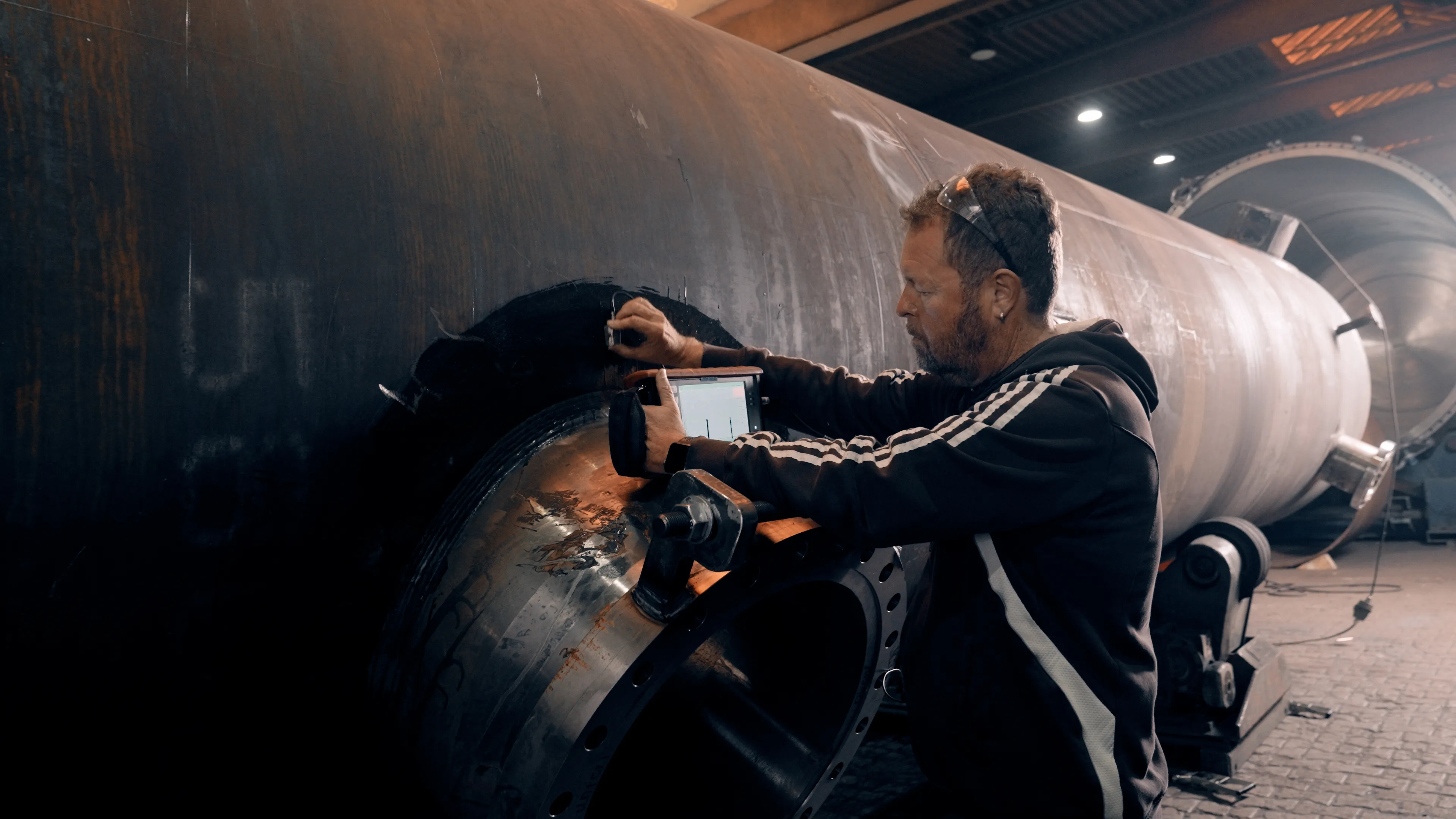
Our quality assurance team inspects production in-house. The specified testing procedures and 3D measurements are defined on a project-by-project basis. Our documentation team compiles material certificates, manufacturing records, and test results into comprehensive project documentation.
Thermal and mechanical design
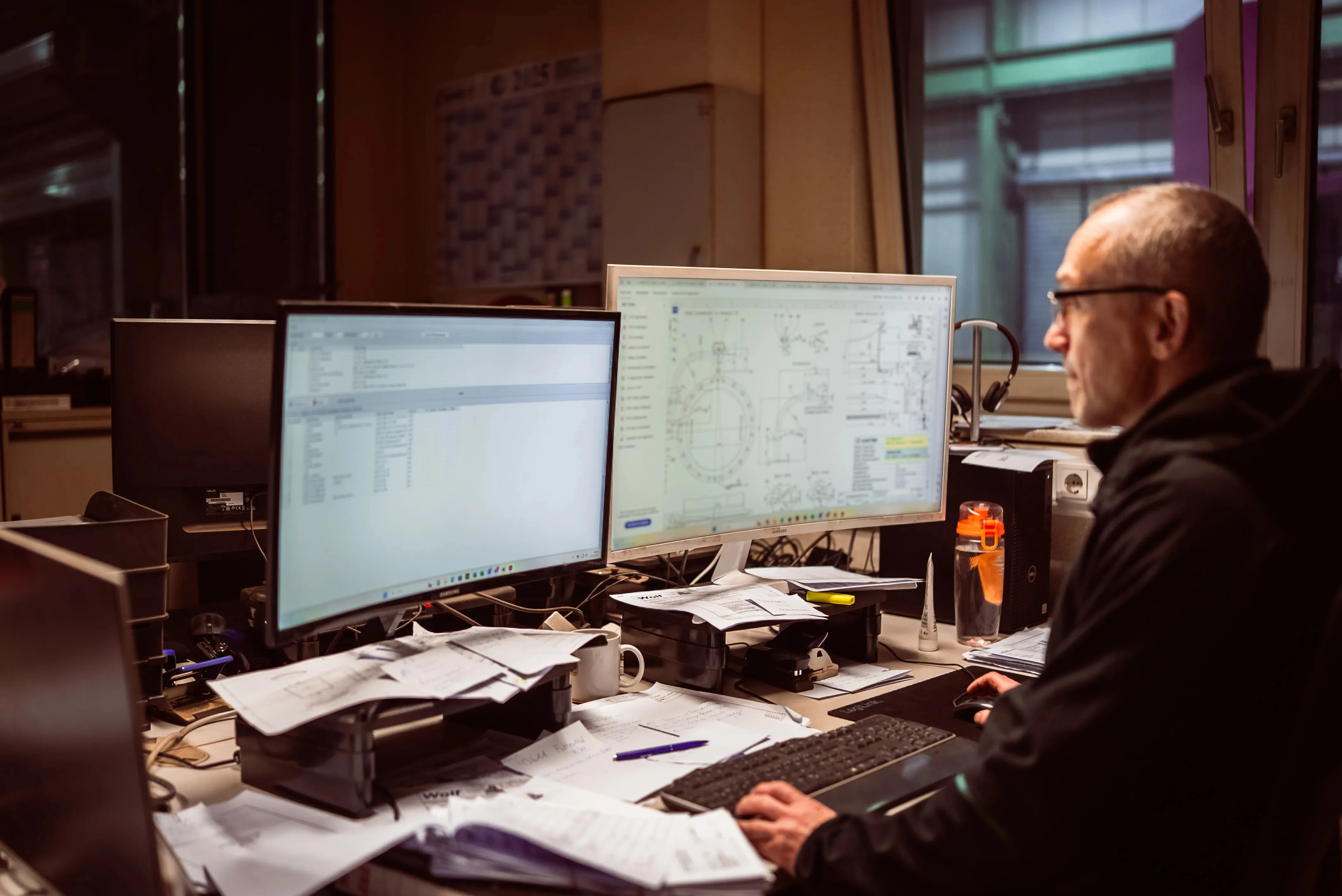
We perform process engineering design using Lauterbach Verfahrenstechnik Version 11. Mechanical calculations according to AD 2000 and EN 13445 are performed using Sant’Ambrogio NextGen 2025; we perform ASME verifications using Compress 2025. For detailed analyses, we use ANSYS Mechanical and Fluent 2025 R1. Design is performed in PTC Creo.
Talk to our project team
Please send us the process data and existing drawings for your heat exchanger. Your inquiry will be forwarded directly to our project team via the contact form. We will get back to you as soon as possible.
Materials suitable for the medium and temperature
Carbon steels: P265GH, P355GH, P355NH, P355NL1, 16Mo3, 13CrMo4-5, 10CrMo9-10, 15NiCuMoNb5-6-4, SA-516 Gr. 60/70, SA-350 LF2, and SA-387 Gr. 11.
Stainless steels: 1.4301, 1.4541, 1.4571, 1.4539, and the corresponding SA-240 grades.
Duplex steels: 1.4462 and SA-240 318LN. We evaluate cladding options for corrosive media.
Certificates and Approvals
Technical questions about your heat exchanger
If you have questions regarding design, construction, or maintenance, please contact our project team directly. We will work with you to clarify the necessary process data.
Kai Jaspert
Leiter Vertrieb
Questions about our heat exchangers
Here we answer technical questions regarding the types, design, and maintenance of shell-and-tube heat exchangers.
Does WOLF handle the thermal and mechanical design? + − Yes. Process engineering design is performed using Lauterbach Verfahrenstechnik Version 11. For strength calculations, we use AD 2000, EN 13445, or ASME Code Section VIII, depending on the project. Detailed verifications can be performed using FEM and CFD calculations in ANSYS Mechanical and Fluent.
Yes. Process engineering design is performed using Lauterbach Verfahrenstechnik Version 11. For strength calculations, we use AD 2000, EN 13445, or ASME Code Section VIII, depending on the project. Detailed verifications can be performed using FEM and CFD calculations in ANSYS Mechanical and Fluent.
What regulations govern the construction of heat exchangers? + − For projects within the European Union, the requirements of the Pressure Equipment Directive 2014/68/EU apply. Design is carried out in accordance with AD 2000 or EN 13445, depending on the specification. For the U.S. market, WOLF manufactures in accordance with ASME Code Section VIII, Division 1 or Division 2. The specific scope of the regulatory framework is determined at the start of the project.
For projects within the European Union, the requirements of the Pressure Equipment Directive 2014/68/EU apply. Design is carried out in accordance with AD 2000 or EN 13445, depending on the specification. For the U.S. market, WOLF manufactures in accordance with ASME Code Section VIII, Division 1 or Division 2. The specific scope of the regulatory framework is determined at the start of the project.
How are changing operating conditions and load cycles taken into account? + − Start-up and shutdown procedures generate thermal cycles and can cause fatigue in the equipment. If required by the operating conditions, we perform a fatigue analysis in accordance with the agreed-upon regulations. Components designed to accommodate thermal expansion are selected based on the process data.
Start-up and shutdown procedures generate thermal cycles and can cause fatigue in the equipment. If required by the operating conditions, we perform a fatigue analysis in accordance with the agreed-upon regulations. Components designed to accommodate thermal expansion are selected based on the process data.
Which materials are suitable for corrosive media? + − The choice of material depends on the medium, concentration, and operating temperature. Depending on the requirements, stainless steels, duplex steel, or clad materials may be considered. In a cladding arrangement, the base material bears the pressure load, while the high-alloy cladding provides corrosion protection. Suitability is tested for the specific operating conditions.
The choice of material depends on the medium, concentration, and operating temperature. Depending on the requirements, stainless steels, duplex steel, or clad materials may be considered. In a cladding arrangement, the base material bears the pressure load, while the high-alloy cladding provides corrosion protection. Suitability is tested for the specific operating conditions.