Welding technology in accordance with AD 2000, EN 13445, and ASME
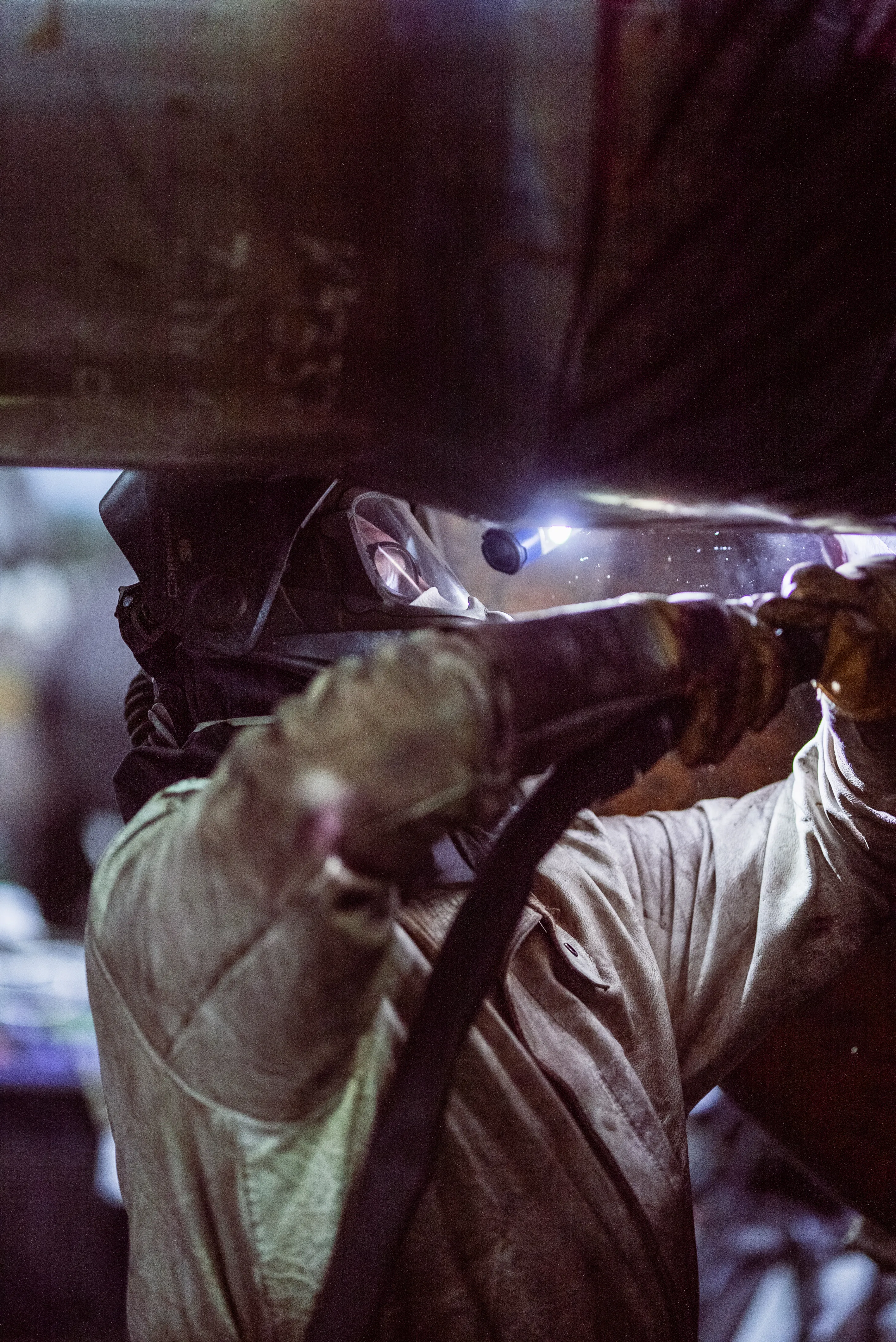
In vessel and equipment manufacturing, welded joints are critical to safety. Qualified specialists perform manual and mechanized processes in accordance with approved welding procedure specifications (WPS). The welding production process is certified according to DIN EN ISO 3834.
Processes and Materials in Vessel Construction
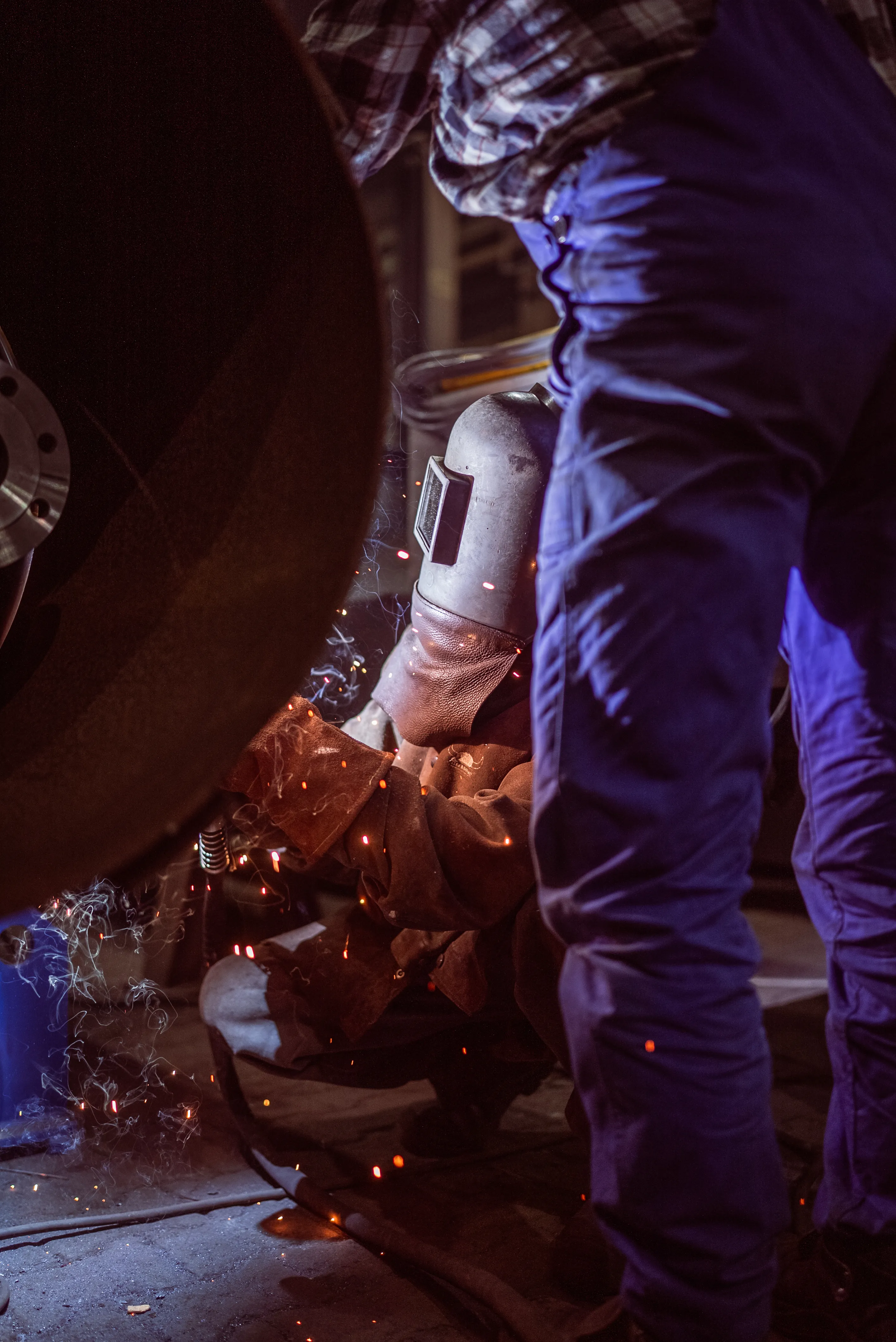
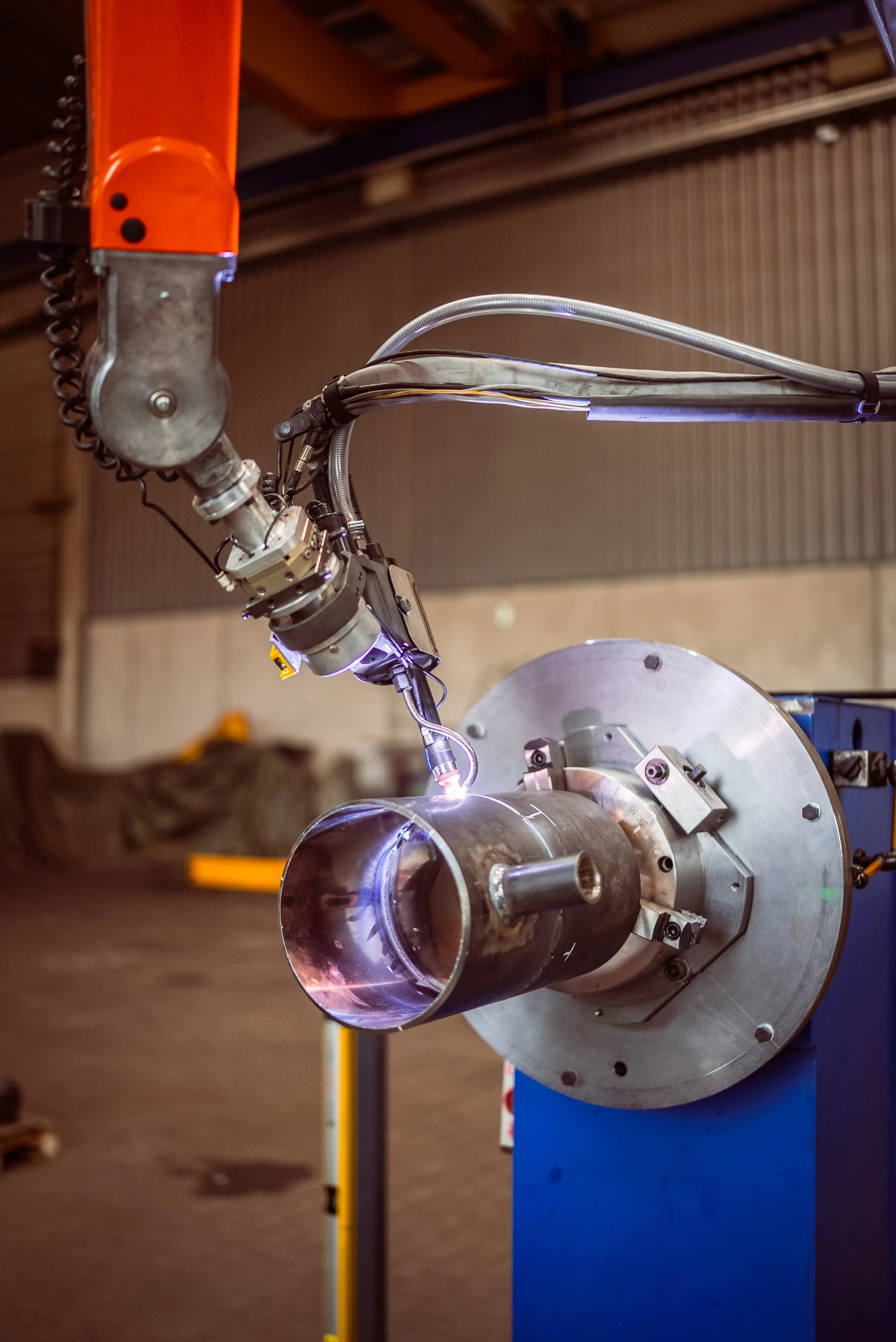
We use TIG (141), MAG (135/136), manual arc (111), and submerged arc welding (121). Depending on the task, we work manually, mechanically, or with robotic assistance.
Materials processed include carbon steels such as P265GH and P355GH, as well as heat-resistant grades such as 16Mo3 and 13CrMo4-5. Austenitic stainless steels, Duplex 1.4462, and clad materials are also welded using qualified processes. When the material requires it, we employ controlled preheating and defined heat input.
WPS and WPQR for every welding task
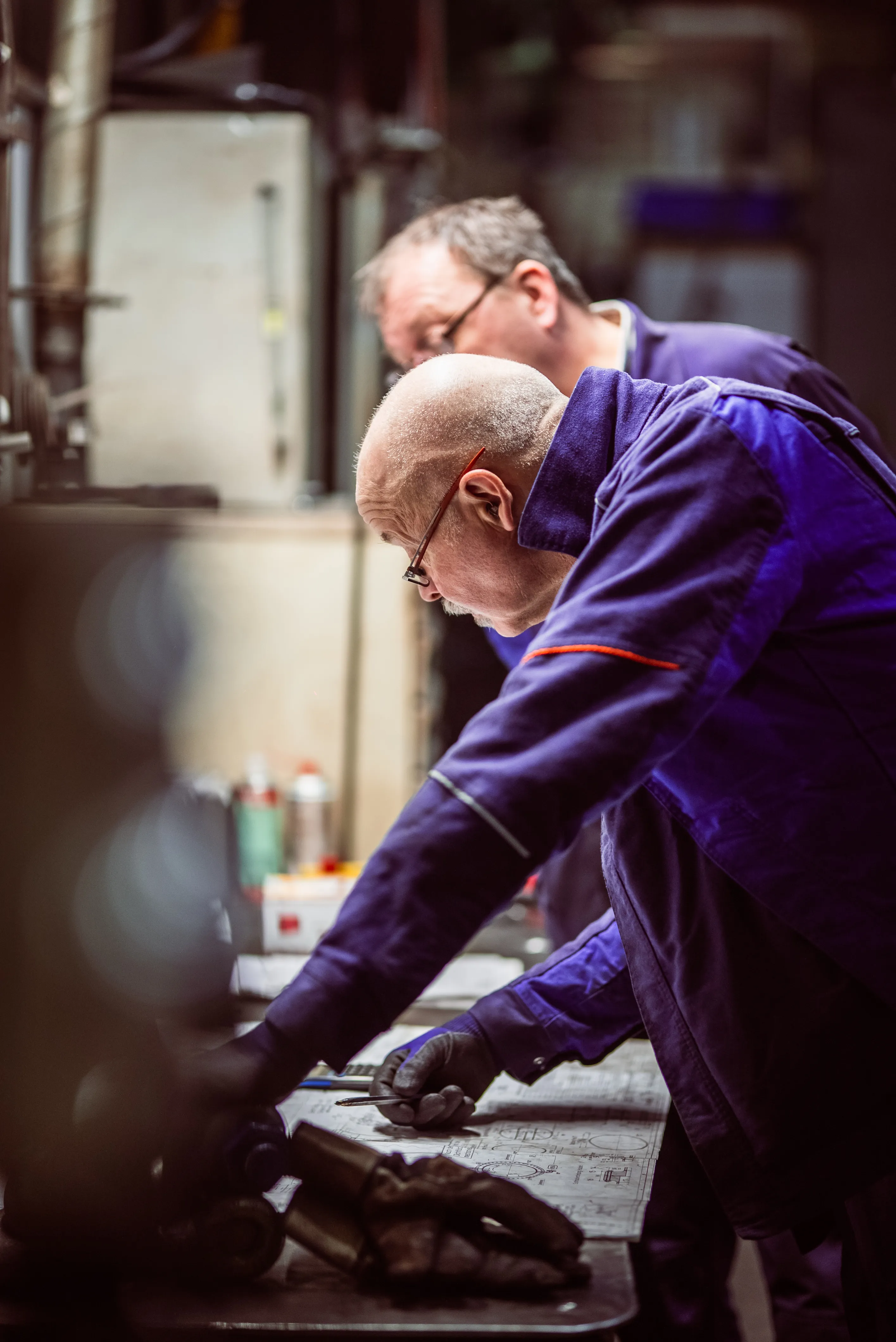
Every welded joint is based on an approved welding procedure specification (WPS). Process qualification is performed in accordance with DIN EN ISO 15614 and is documented in the WPQR. New projects begin with a preliminary welding procedure specification (WPS) and the corresponding qualification test.
Our welders are certified according to DIN EN ISO 9606. For ASME orders, the requirements of ASME Code Section IX also apply. The welding supervision monitors the process and assigns the documentation to the respective order.
The process is tailored to the task at hand
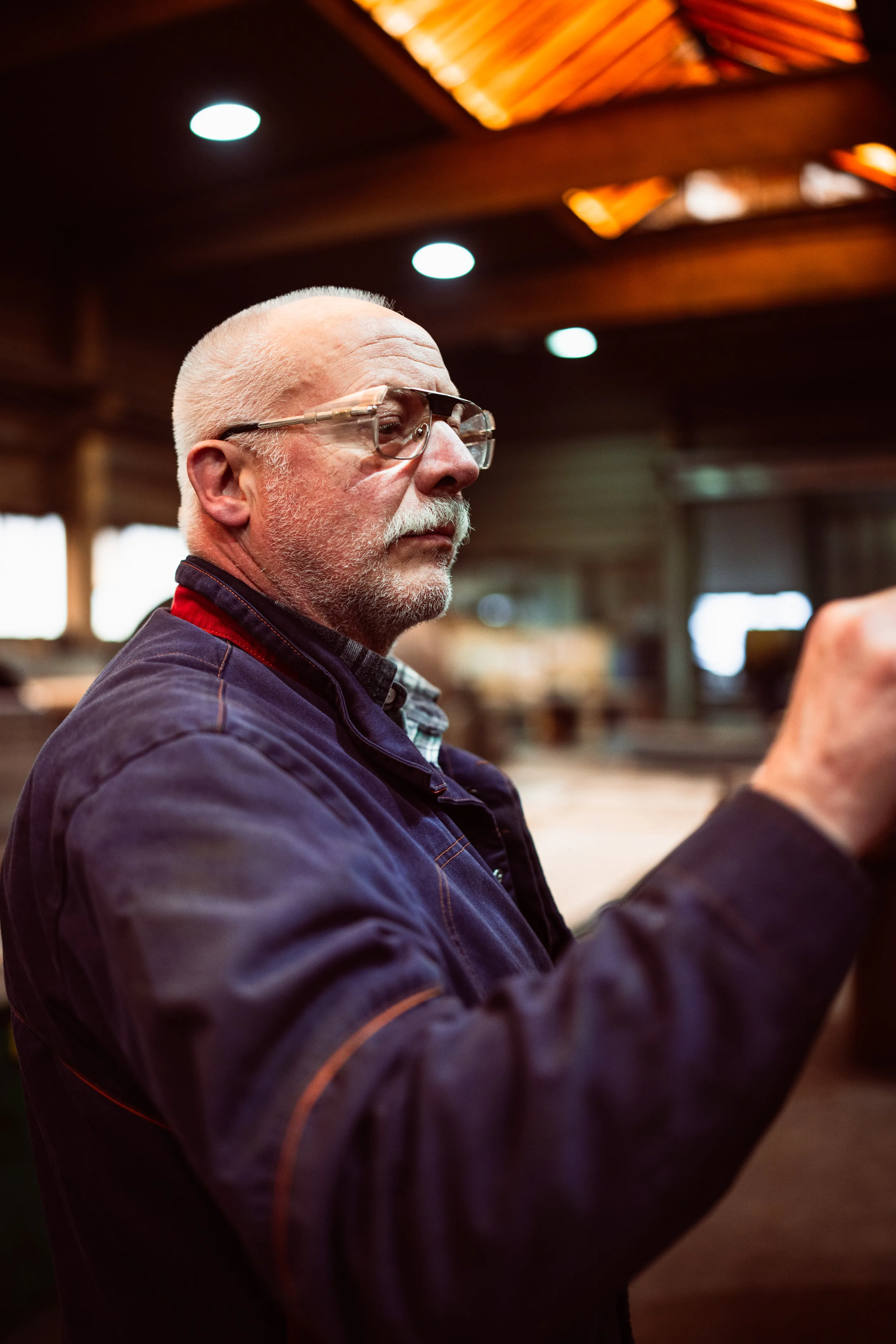
For complex individual components, welding is primarily performed manually. Recurring circumferential and longitudinal weld seams can be performed mechanically or with robotic assistance. The decision depends on the material, weld geometry, and batch size.
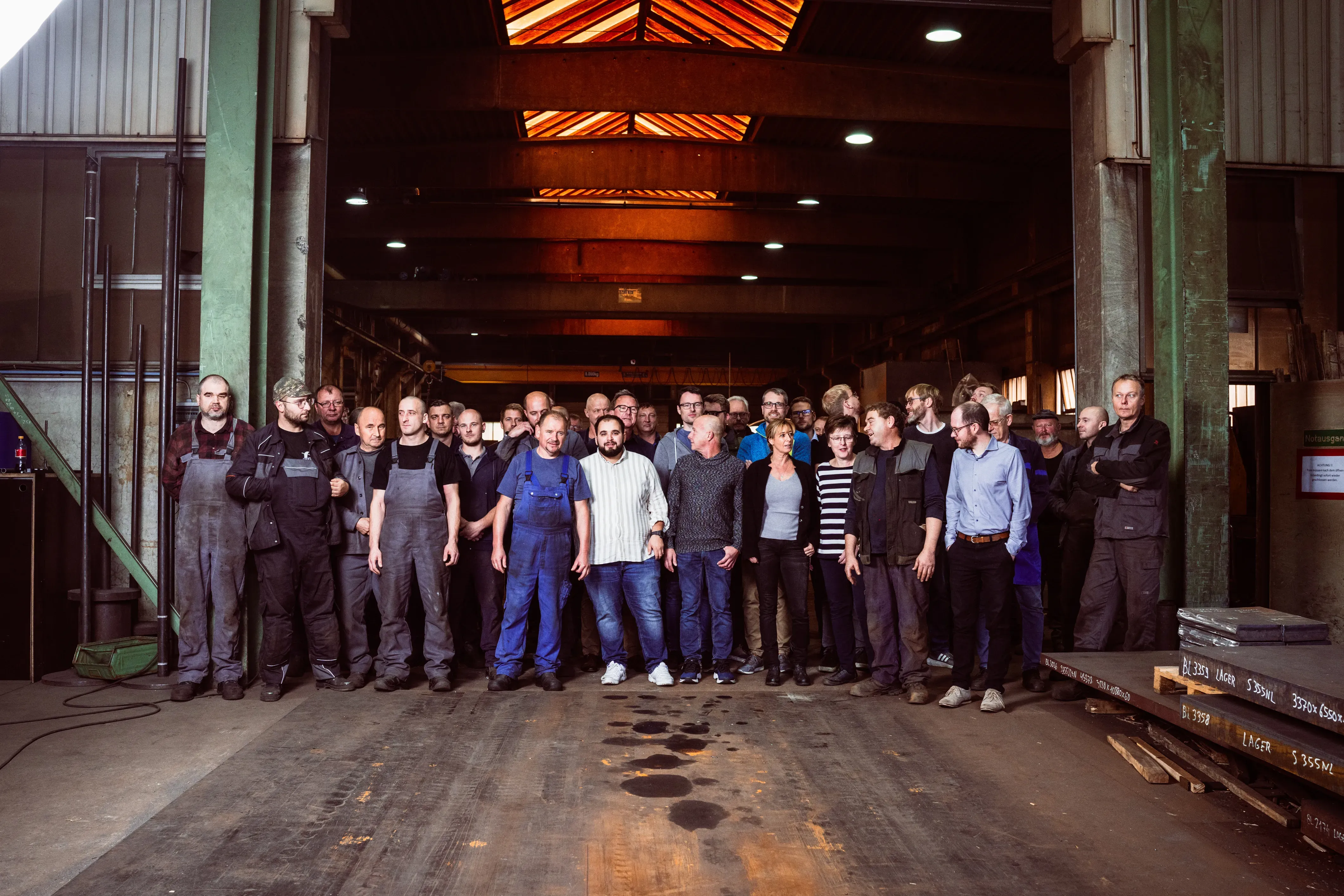
Contact person for welding technology
If you have questions about a material or a specific welding task, please contact our team. We will review the requirements and determine the appropriate process on a project-by-project basis.
Mohamed Elbardan
Qualitätssicherung
Frequently Asked Questions About Welding Technology
Here we answer questions about welding processes and process qualifications. The requirements for welders and welding supervision are also explained.
According to which standards is your welding technology certified? + − Our welding production is certified according to DIN EN ISO 3834. For pressure equipment, the approvals according to AD 2000 and EN 13445 apply in conjunction with the Pressure Equipment Directive 2014/68/EU. We manufacture ASME orders in accordance with our existing U and U2 certifications. For load-bearing steel components, we hold certification in accordance with EN 1090-1/-2.
Our welding production is certified according to DIN EN ISO 3834. For pressure equipment, the approvals according to AD 2000 and EN 13445 apply in conjunction with the Pressure Equipment Directive 2014/68/EU. We manufacture ASME orders in accordance with our existing U and U2 certifications. For load-bearing steel components, we hold certification in accordance with EN 1090-1/-2.
What tests do you perform on weld seams? + − The scope of testing is determined by regulations and the test plan. For surface inspection, we use visual testing (VT), penetrant testing (PT), or magnetic particle testing (MT). Internal irregularities are examined using radiographic testing (RT) or ultrasonic testing (UT), depending on the task. For ultrasonic testing (UT), TOFD and phased array methods are also available.
The scope of testing is determined by regulations and the test plan. For surface inspection, we use visual testing (VT), penetrant testing (PT), or magnetic particle testing (MT). Internal irregularities are examined using radiographic testing (RT) or ultrasonic testing (UT), depending on the task. For ultrasonic testing (UT), TOFD and phased array methods are also available.
Do you also weld duplex and clad materials? + − Yes. Duplex 1.4462 is welded using qualified processes and controlled heat input. For clad materials, the base material and the cladding are treated separately during the welding process. The filler material for the top layer is selected to meet the required corrosion resistance.
Yes. Duplex 1.4462 is welded using qualified processes and controlled heat input. For clad materials, the base material and the cladding are treated separately during the welding process. The filler material for the top layer is selected to meet the required corrosion resistance.
What are your welders’ qualifications? + − Our welders are certified in accordance with DIN EN ISO 9606 for the respective welding process. The certification takes into account the material group and the required welding position. For ASME projects, the requirements of ASME Code Section IX also apply. The welding supervision monitors the validity of the certifications.
Our welders are certified in accordance with DIN EN ISO 9606 for the respective welding process. The certification takes into account the material group and the required welding position. For ASME projects, the requirements of ASME Code Section IX also apply. The welding supervision monitors the validity of the certifications.