Non-destructive testing (NDT)
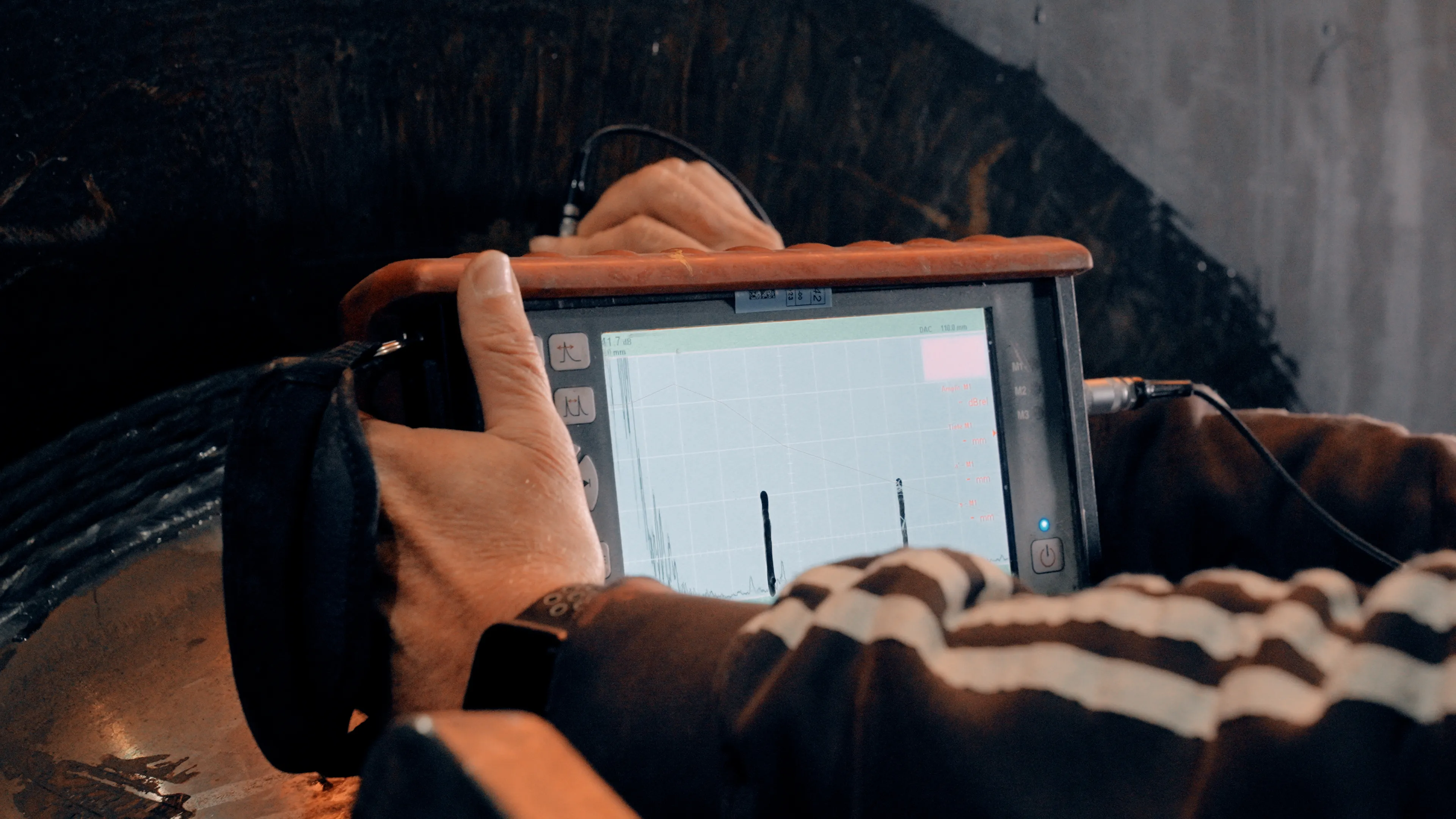
We inspect materials and weld seams using non-destructive testing methods without damaging the component. Our inspection personnel, qualified in accordance with DIN EN ISO 9712, perform both visual testing (VT) and mechanized ultrasonic testing using FMC/TFM.
In-house NDT and welding supervision
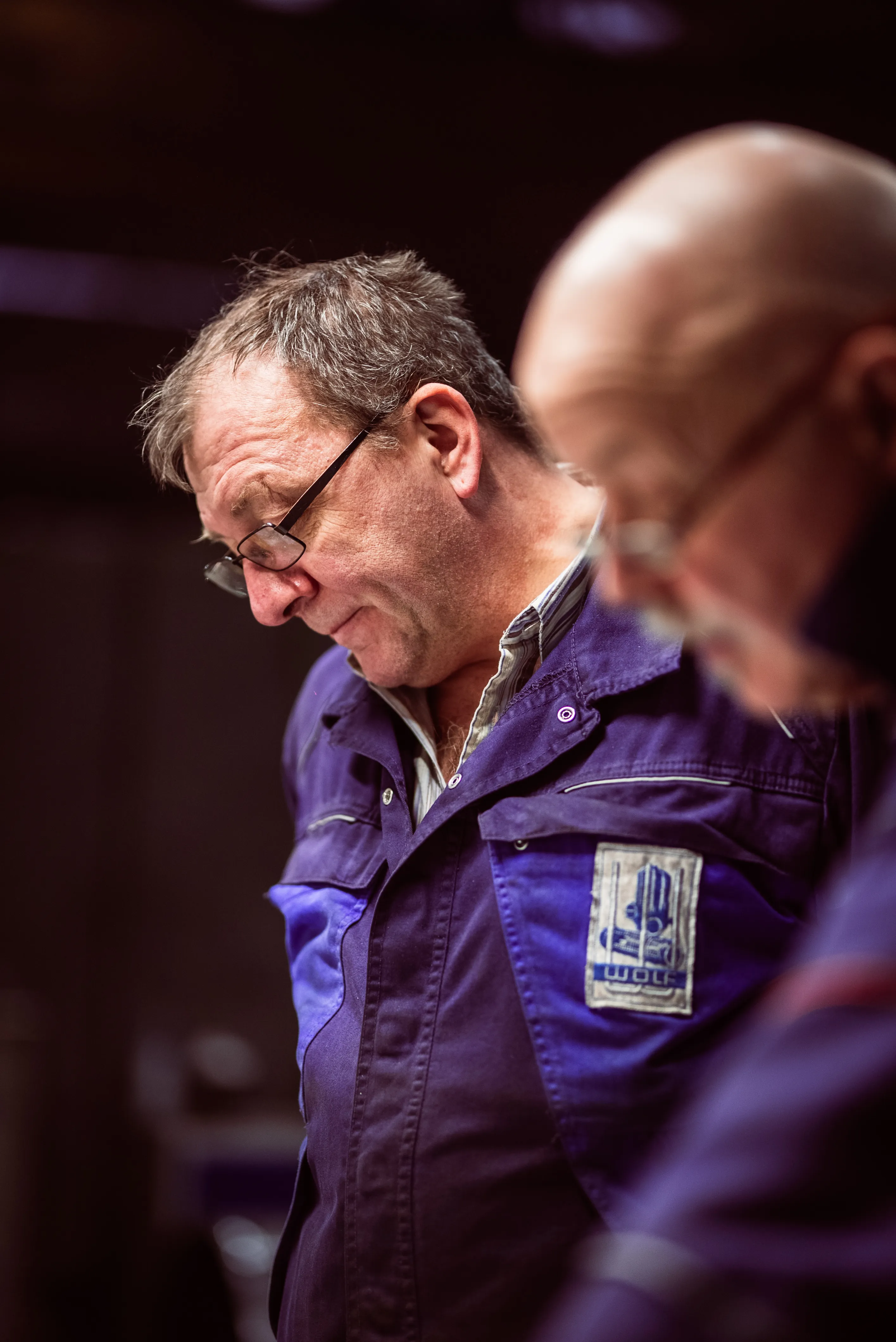
Three certified NDT inspectors work at WOLF. One inspector is qualified for Level 3, and two others for Level 2 according to DIN EN ISO 9712. The team covers VT, PT, MT, RT, UT, TOFD, and phased array. Additional ultrasonic expertise is available for FMC/TFM.
Welding supervision is handled by a certified welding engineer (IWE/EWE). Two welding technicians prepare project-specific WPS and WPQR documents and oversee process control. Two employees manage project documentation and traceability.
Non-destructive testing methods
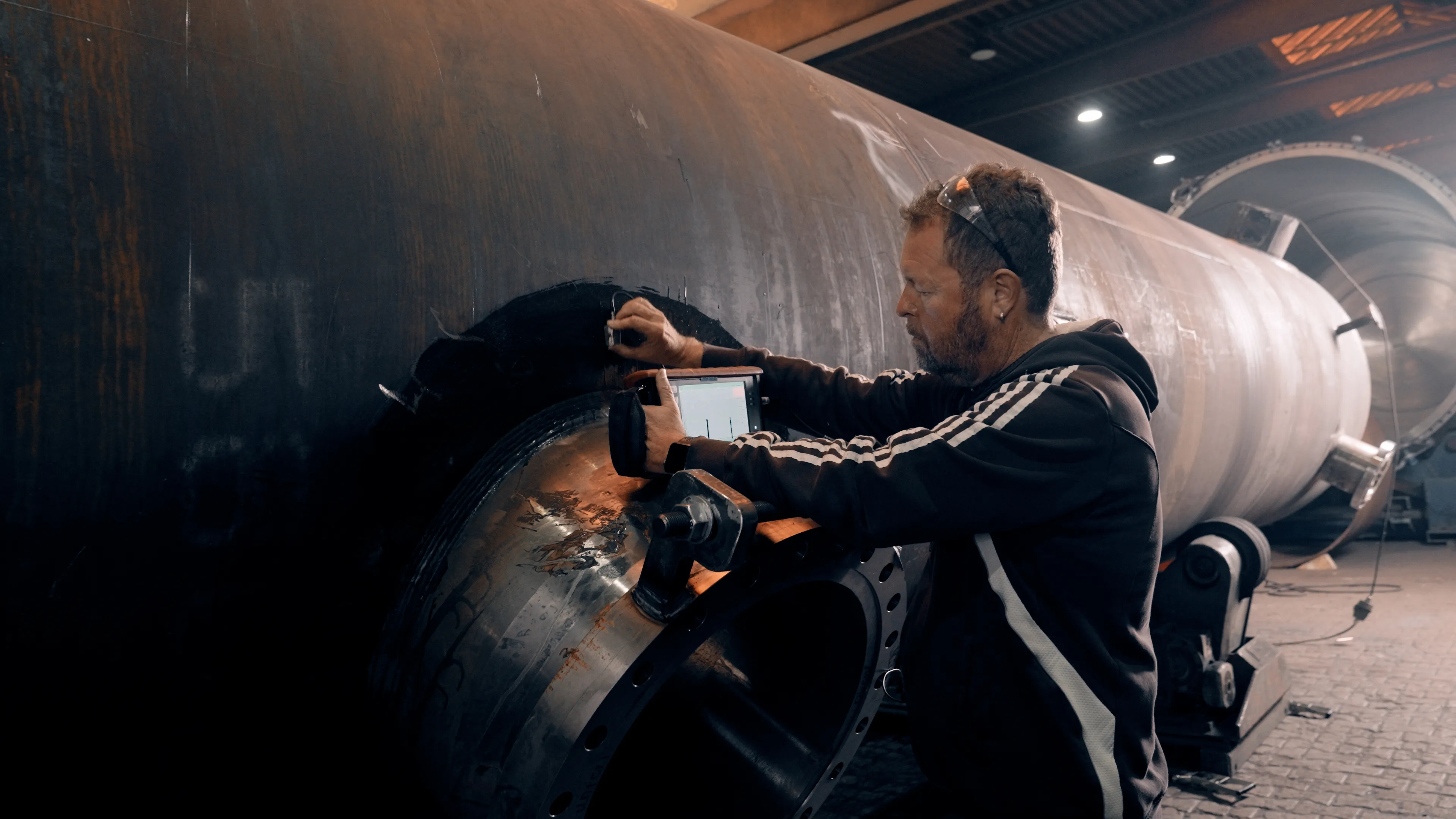
The appropriate procedure depends on the material, geometry, and applicable regulations. The scope of testing and evaluation criteria are specified in the test plan.
ultrasonic testing (UT)
During ultrasonic testing (UT), we inspect components and weld seams for internal or near-surface irregularities. The method is also suitable for wall thickness measurement. The results are immediately available for evaluation and are documented in the test report. For demanding inspection tasks, we use TOFD, phased array, or FMC/TFM.
Data capture using Full Matrix Capture
Full Matrix Capture is an acquisition method used in phased-array ultrasonic testing. Each element of the probe transmits a signal in sequence while the remaining elements receive. This results in a complete data matrix of the transmitter-receiver combinations within the inspection area.
Reconstruction using the Total Focusing Method
The Total Focusing Method reconstructs an ultrasonic image that is focused at every pixel from the FMC database. The stored data can be re-evaluated using different focusing strategies. This is particularly helpful for complex geometries or hard-to-reach inspection areas.
Contact person for non-destructive testing (NDT)
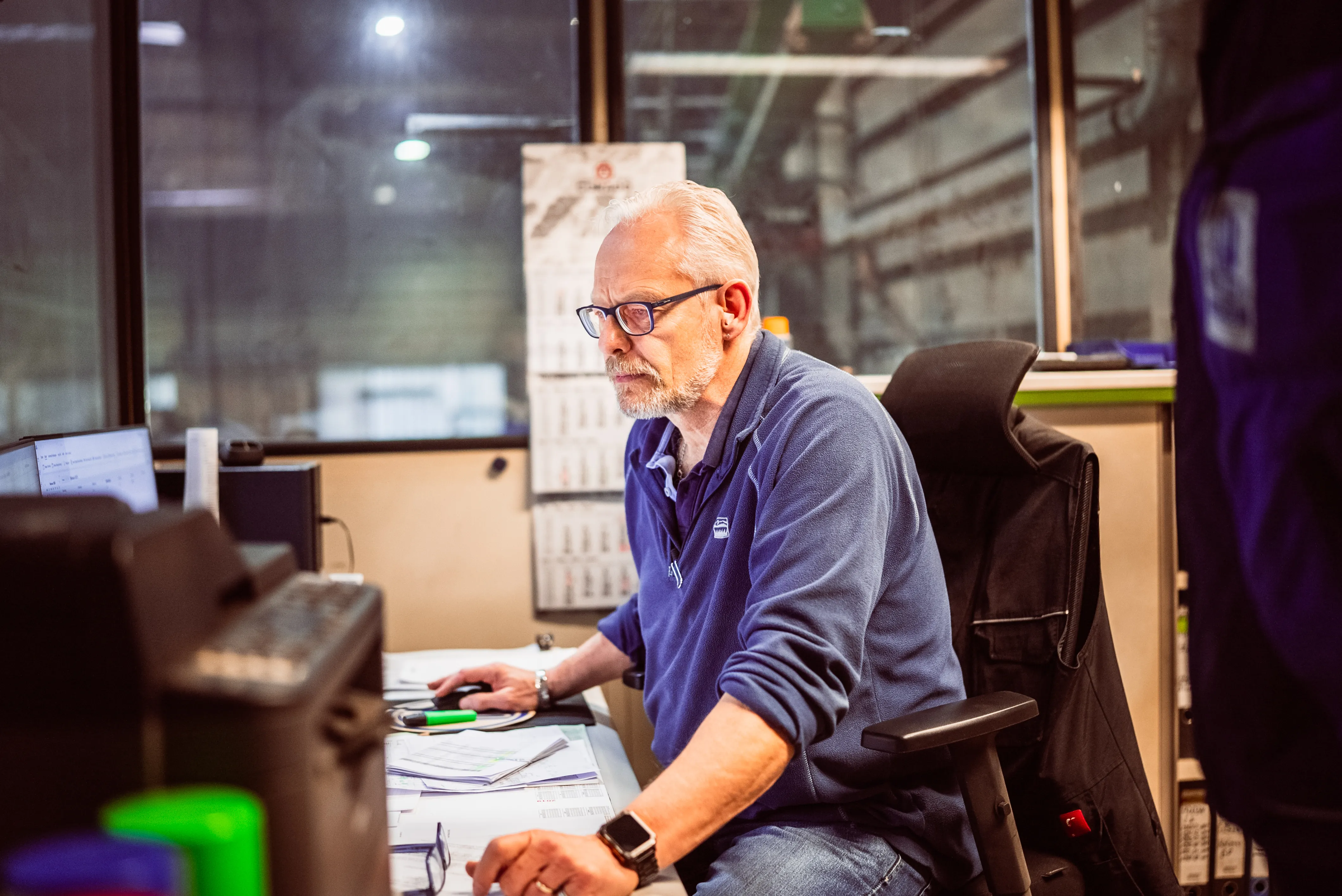
To select the test procedure, we need information about the component and the applicable regulations. Our quality assurance team will then coordinate the scope of testing with you.
Mohamed Elbardan
Qualitätssicherung

Frequently Asked Questions About Non-Destructive Testing (NDT)
Here we answer questions regarding the qualifications of our inspection personnel and the selection of testing methods. Information on documentation can also be found in this section.
How are the test results documented? + − Each inspection is documented in a report that includes the method used and the specified scope of the inspection. Equipment used and evaluation results are also recorded. The reports are assigned to the order’s data file and stored in DocuWare in an audit-proof manner. We archive digital ultrasonic data from TOFD, phased array, and FMC/TFM for later comparative inspections.
Each inspection is documented in a report that includes the method used and the specified scope of the inspection. Equipment used and evaluation results are also recorded. The reports are assigned to the order’s data file and stored in DocuWare in an audit-proof manner. We archive digital ultrasonic data from TOFD, phased array, and FMC/TFM for later comparative inspections.
What are the advantages of FMC/TFM over conventional phased array? + − With FMC, the transmitter-receiver combinations of the probe are fully recorded. TFM uses this data to calculate a focused image for each pixel. This allows for better evaluation of small or poorly oriented indications. The stored data set can later be re-evaluated using different focusing strategies without repeating the measurement.
With FMC, the transmitter-receiver combinations of the probe are fully recorded. TFM uses this data to calculate a focused image for each pixel. This allows for better evaluation of small or poorly oriented indications. The stored data set can later be re-evaluated using different focusing strategies without repeating the measurement.
When do you use UT, TOFD, or phased array instead of RT? + − Mechanized ultrasonic testing methods are particularly suitable for thick walls or areas with limited accessibility. They can also be used when radiographic testing is impractical due to radiation safety concerns. TOFD and phased array provide digitally archivable test data and assist in determining the size of indications. The selection of the method is specified in the inspection plan.
Mechanized ultrasonic testing methods are particularly suitable for thick walls or areas with limited accessibility. They can also be used when radiographic testing is impractical due to radiation safety concerns. TOFD and phased array provide digitally archivable test data and assist in determining the size of indications. The selection of the method is specified in the inspection plan.
What is the scope of testing for weld seams on pressure vessels? + − The scope of testing is determined by the agreed-upon set of standards and the test group. The potential hazards associated with the operating conditions are taken into account in the inspection plan. For hydrogen-carrying components or upon explicit customer request, all pressure-bearing weld seams can be tested volumetrically. We coordinate the specific inspection plan before production begins.
The scope of testing is determined by the agreed-upon set of standards and the test group. The potential hazards associated with the operating conditions are taken into account in the inspection plan. For hydrogen-carrying components or upon explicit customer request, all pressure-bearing weld seams can be tested volumetrically. We coordinate the specific inspection plan before production begins.