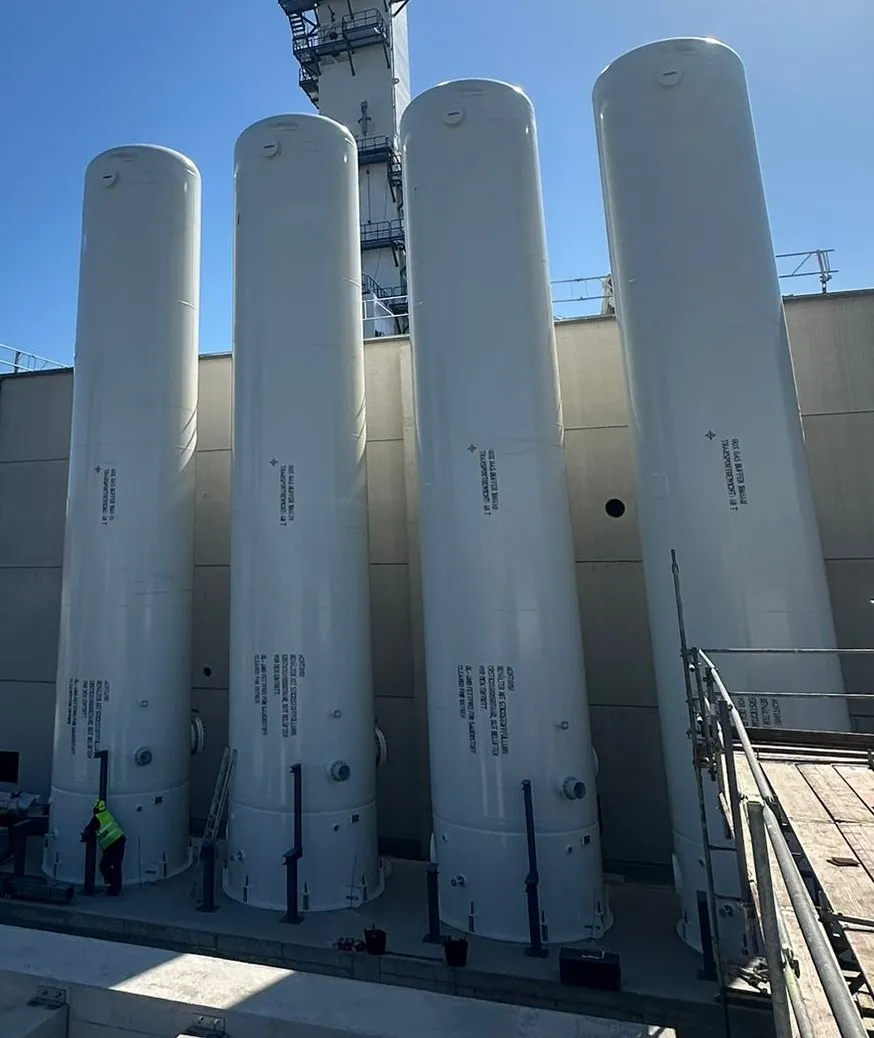
Gas Separation Unit (GSU) for electrolyzers
We manufacture Gas Separation Units (GSUs) as pressure vessels for electrolyzers: They reliably separate the generated hydrogen and oxygen from the electrolyte. Compliant with AD 2000, EN 13445, and ASME standards, tested and documented by a single source.
Pressure vessels for gas-liquid separation in the electrolysis process
The design pressure and operating temperature are tailored to the flow pattern for each gas separation unit. We manufacture the pressure vessels with the required tolerances and sealing surfaces and integrate a demister as needed. This allows for the reliable separation of gas and electrolyte without placing unnecessary stress on the internal components.
Structure and operational data of GSU
We manufacture GSUs as vertical pressure vessels with integrated demisters, tailored to PEM electrolyzers or alkaline electrolyzers (AEL) and to your stack design, from pilot scale to GW-scale plants.
Design ranging from pilot-scale to large-scale plants
- Volume: 50 l (pilot plants) to 50 m³ (large-scale GW plants)
- Design pressure: 1 to 80 bar (standard 6 to 30 bar)
- Design temperature: -20 °C to +120 °C
- Demister efficiency: > 99.9% separation of droplets > 5 µm
- Throughput: up to 50,000 Nm³/h of gas volume per vessel
- Level control: Tolerance < ±10 mm
- Purity at the outlet: residual moisture < 0.1% by volume before the drying stage
In-house quality assurance (QA)
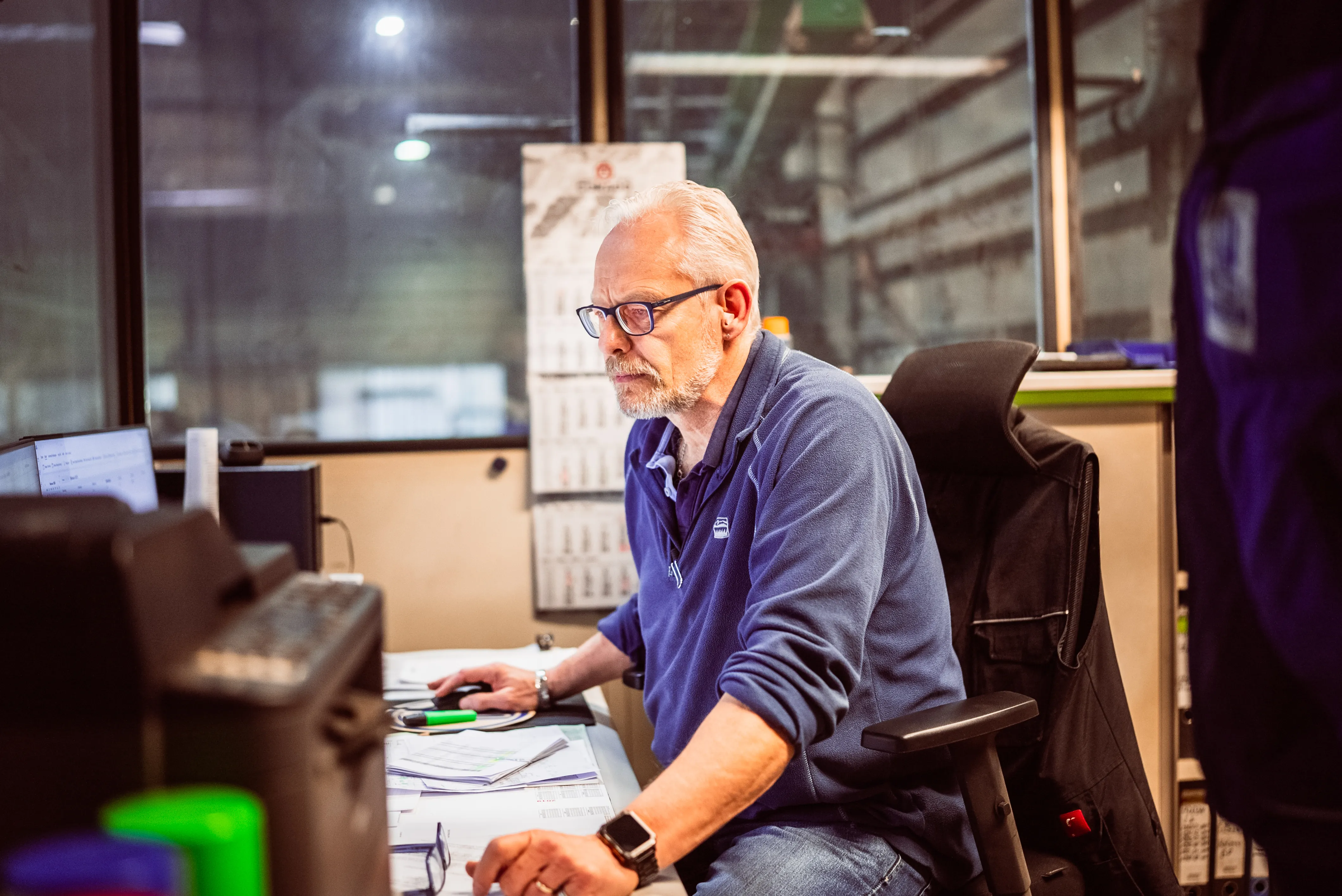
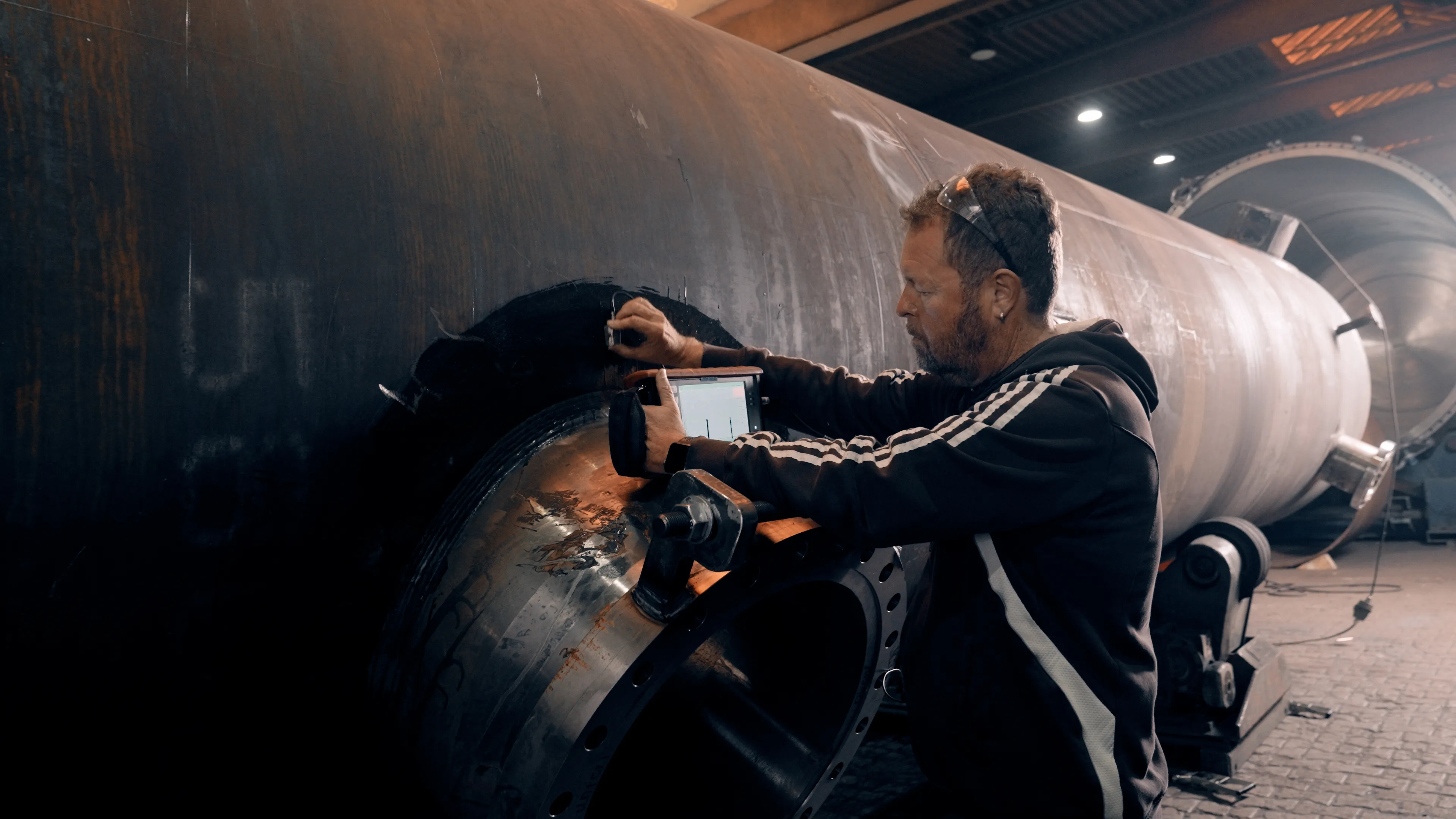
Our quality assurance team inspects production in-house. The specified testing procedures and 3D measurements are defined on a project-by-project basis. Our documentation team compiles material certificates, manufacturing records, and test results into comprehensive project documentation.
Design in accordance with standards
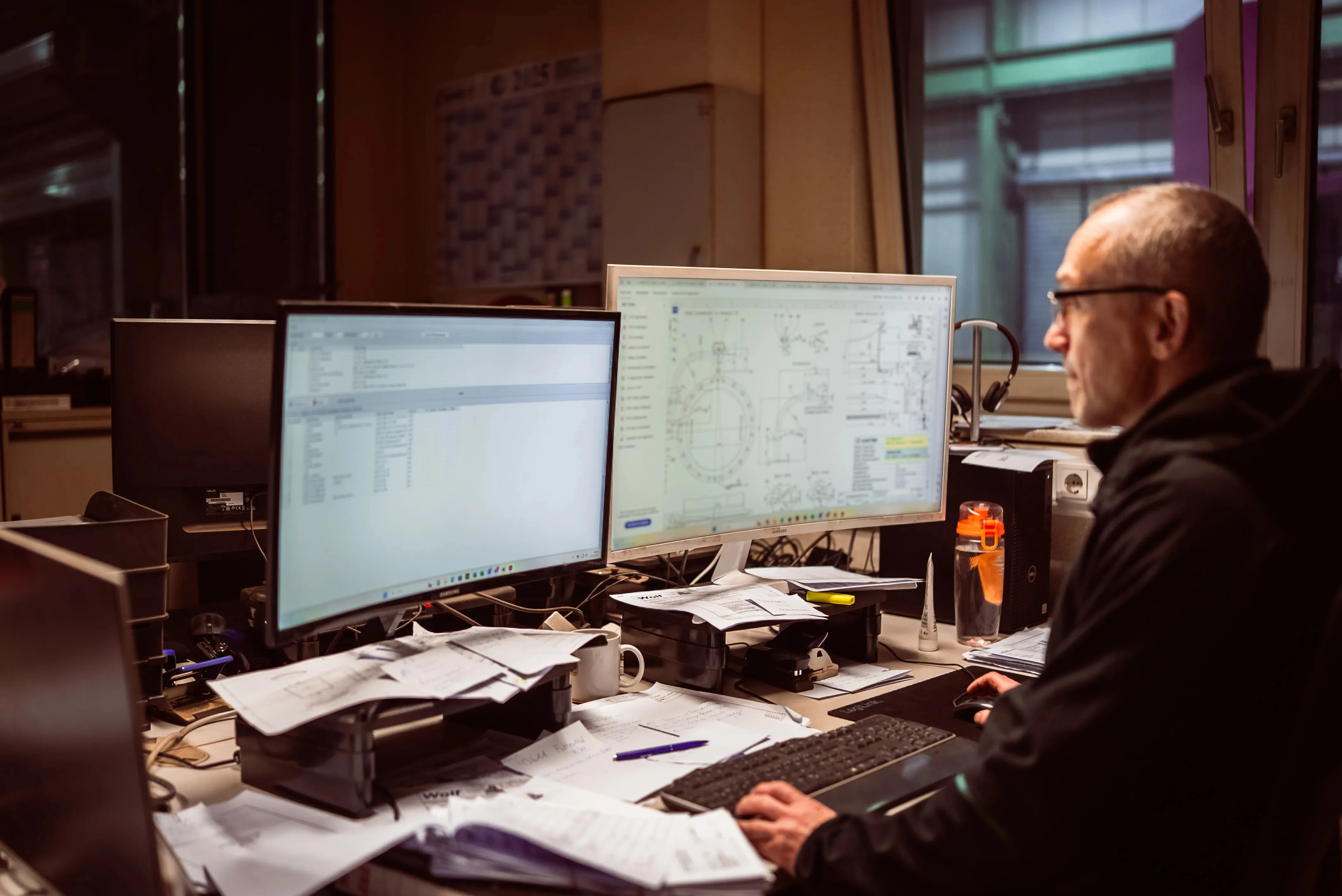
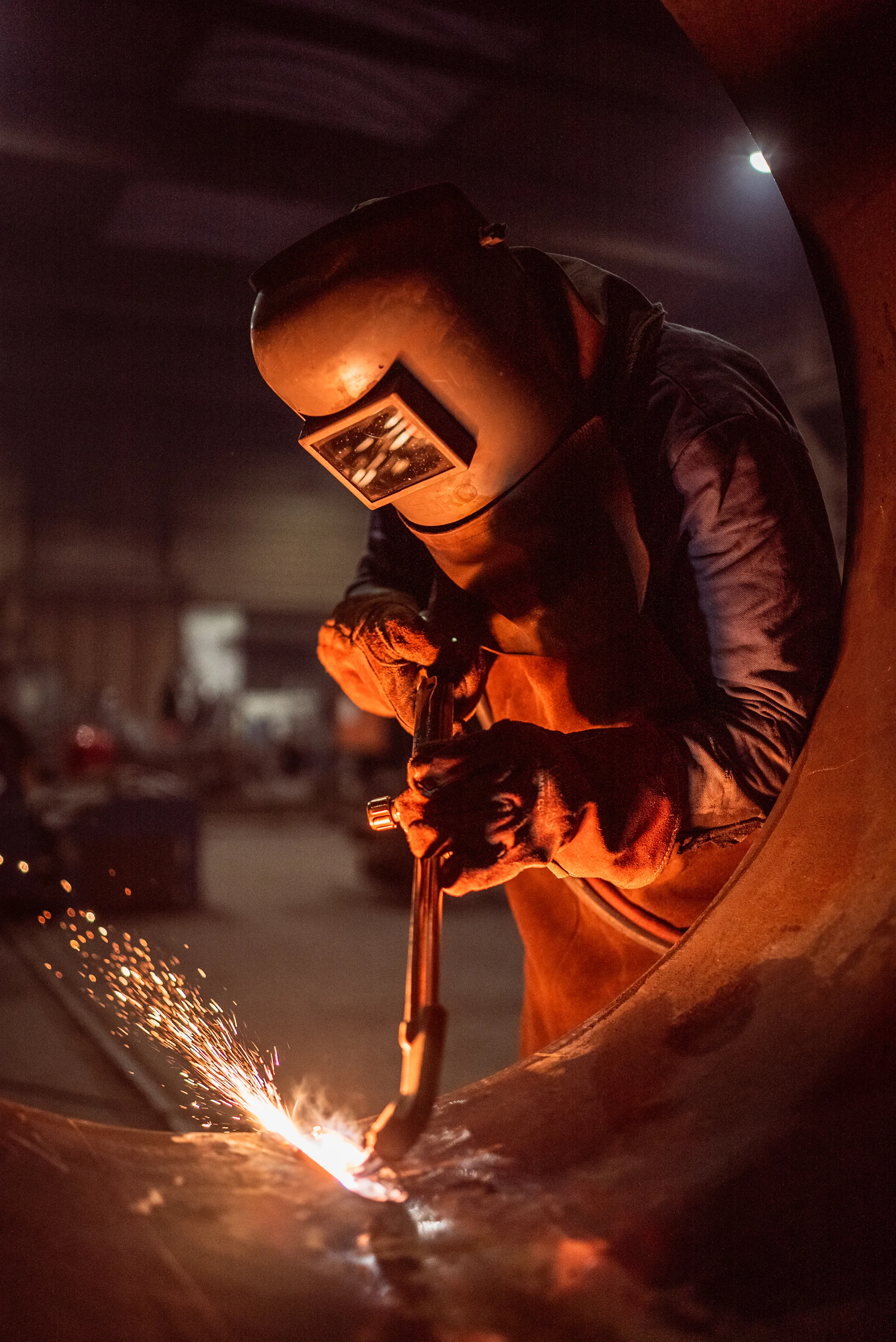
Our engineers perform multi-stage calculations for each gas separation unit: pressure mechanics according to AD 2000 and EN 13445 using Sant’Ambrogio NextGen 2025, and according to ASME using Compress 2025. We evaluate nozzles and thermal loads using FEM with ANSYS Mechanical and Nozzle-Pro 15 (WRC 537, EN 13445 Annex K). In addition, we use proven design methods for phase separation, residence time, and demister sizing. The design is created in PTC Creo and can be integrated into your stack and skid models.
Material selection suitable for the electrolyte
The choice of material depends on the electrolyte. For alkaline electrolysers using KOH solution at 70 to 90 °C, we use corrosion-resistant stainless steels: 1.4404 (316L), 1.4571 (316Ti), and 1.4539 (904L). For particularly long service life, nickel-based alloys such as Alloy 600 and Alloy 625 are used. In PEM systems with demineralized water, purity is key: Here we use 1.4301 (304) and 1.4404 (316L), and on the oxygen side, Grade 2 and 7 titanium. We address high-pressure and special applications with duplex 1.4462.
Certificates and Approvals
We will clarify technical questions directly with you
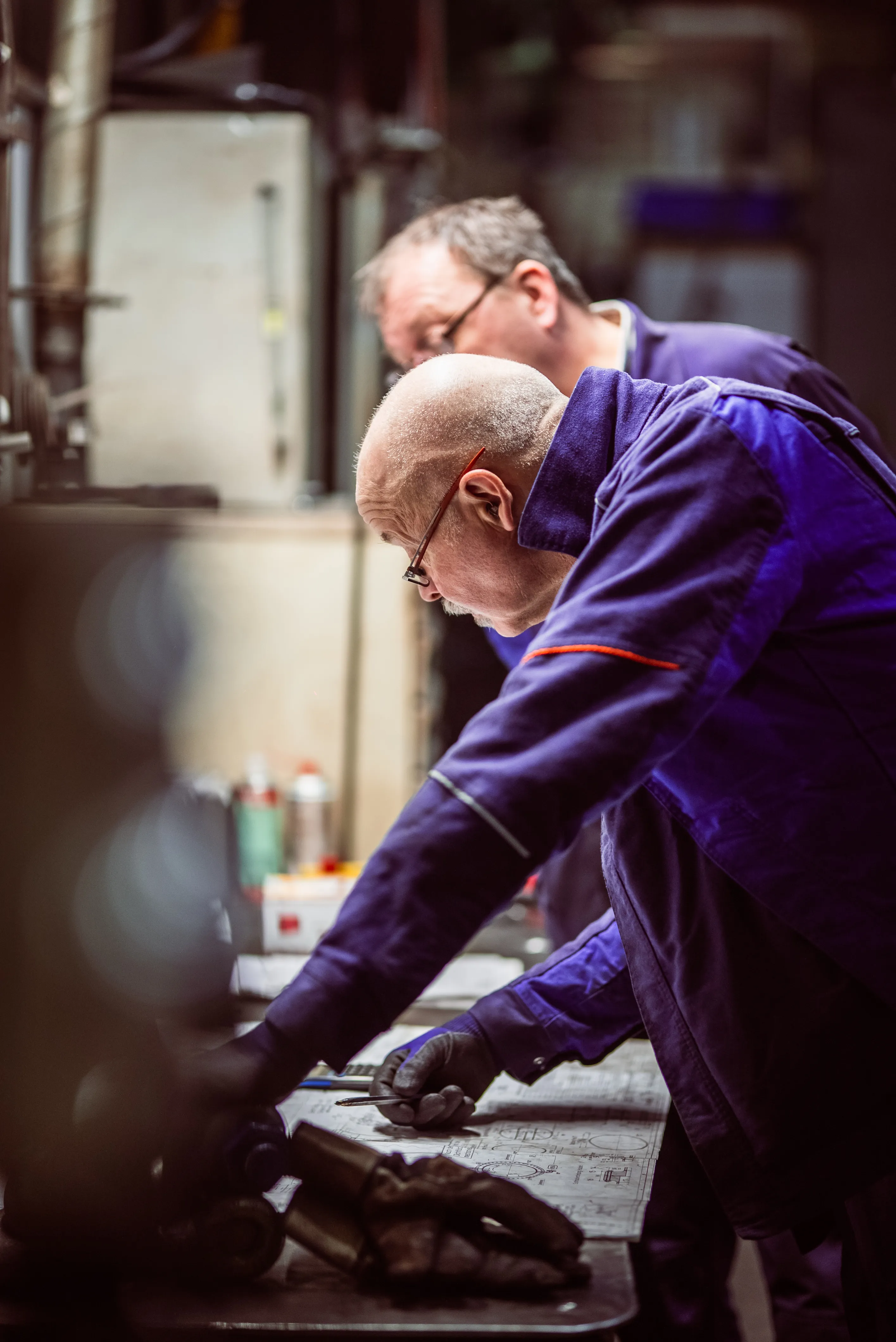
If you have technical questions regarding the design or manufacture of your gas separation unit, please contact our project team directly. We will work with you to clarify the necessary details.
Frequently Asked Questions About Gas Separation Units for Electrolyzers
Here we answer technical questions regarding the design of gas separation units for PEM and alkaline electrolysers. Our engineers are available to discuss project-specific requirements at +49 2739 8970-0 or via email at sales.hydrogen@rjwolf.de.
Can you supply a GSU as a complete skid? + − Yes. Upon request, we can deliver the GSU skid pre-assembled, including:
- GSU pressure vessels for H₂ and O₂
- Lye circulation pumps with variable-frequency drives
- Heat exchangers for regulating electrolyte temperature
- Piping, valves, and safety fittings
- Sensors for pressure, differential pressure, level, temperature, and gas analysis
- ATEX-compliant control cabinet wiring available upon request
This simplifies your plant engineering and shortens the commissioning process.
Yes. Upon request, we can deliver the GSU skid pre-assembled, including:
- GSU pressure vessels for H₂ and O₂
- Lye circulation pumps with variable-frequency drives
- Heat exchangers for regulating electrolyte temperature
- Piping, valves, and safety fittings
- Sensors for pressure, differential pressure, level, temperature, and gas analysis
- ATEX-compliant control cabinet wiring available upon request
This simplifies your plant engineering and shortens the commissioning process.
Which demister model do you recommend? + − The choice depends on the gas velocity, the lye’s tendency to foam, and the maintenance plan:
- Wire mesh pad: cost-effective standard option, easy to replace through the manway
- Vane-Pack lamellar separator: higher gas velocities with lower pressure drop, less tendency to encrust
- Combination of mesh and vanes: separation efficiency over 99.9%, suitable for use before sensitive dryer stages
For highly foaming caustic solutions, we recommend a Vane-Pack with a downstream mesh demister.
The choice depends on the gas velocity, the lye’s tendency to foam, and the maintenance plan:
- Wire mesh pad: cost-effective standard option, easy to replace through the manway
- Vane-Pack lamellar separator: higher gas velocities with lower pressure drop, less tendency to encrust
- Combination of mesh and vanes: separation efficiency over 99.9%, suitable for use before sensitive dryer stages
For highly foaming caustic solutions, we recommend a Vane-Pack with a downstream mesh demister.
How do you prevent gas crossover between the H₂ and O₂ sides? + − A pressure difference of more than approximately 50 mbar between H₂ and O₂ GSU is considered a safety-critical issue because it can promote gas crossover across the stack membrane. We address this design-wise as follows:
- The pressure loss characteristics of both GSUs are mirrored in the design (matched pair).
- A hydraulic lye balancing system connects both vessels (standard with AEL).
- Differential pressure measurement is performed redundantly, using a SIL-2- or SIL-3-compliant interface.
- The level control loop operates with tolerances of less than ±10 mm.
- Upon request, we integrate H₂-in-O₂ and O₂-in-H₂ analysis via sampling ports.
A pressure difference of more than approximately 50 mbar between H₂ and O₂ GSU is considered a safety-critical issue because it can promote gas crossover across the stack membrane. We address this design-wise as follows:
- The pressure loss characteristics of both GSUs are mirrored in the design (matched pair).
- A hydraulic lye balancing system connects both vessels (standard with AEL).
- Differential pressure measurement is performed redundantly, using a SIL-2- or SIL-3-compliant interface.
- The level control loop operates with tolerances of less than ±10 mm.
- Upon request, we integrate H₂-in-O₂ and O₂-in-H₂ analysis via sampling ports.
What design pressures are possible? + − Standard operating pressures range from 6 to 30 bar for conventional AEL and PEM systems. Upon request, we manufacture GSUs with a design pressure of up to 80 bar for pressure electrolysers and special systems. For pressures above 50 bar, we typically use 1.4571 or Duplex 1.4462 and perform a fatigue analysis in accordance with EN 13445-3, Section 17 (simplified) or Section 18 (detailed). Load cycling is a key design criterion in volatile operation with renewable electricity.
Standard operating pressures range from 6 to 30 bar for conventional AEL and PEM systems. Upon request, we manufacture GSUs with a design pressure of up to 80 bar for pressure electrolysers and special systems. For pressures above 50 bar, we typically use 1.4571 or Duplex 1.4462 and perform a fatigue analysis in accordance with EN 13445-3, Section 17 (simplified) or Section 18 (detailed). Load cycling is a key design criterion in volatile operation with renewable electricity.