Hydrogen technology from Germany
WOLF manufactures pressure-bearing components for electrolysis plants and stationary hydrogen storage systems. The product portfolio includes membrane housings and gas separation units for electrolysis plants. We manufacture stationary pressure vessels up to 400 bar; shell-and-tube pressure vessels are available up to 500 bar. Design and manufacturing are carried out in accordance with AD 2000, EN 13445, or ASME.
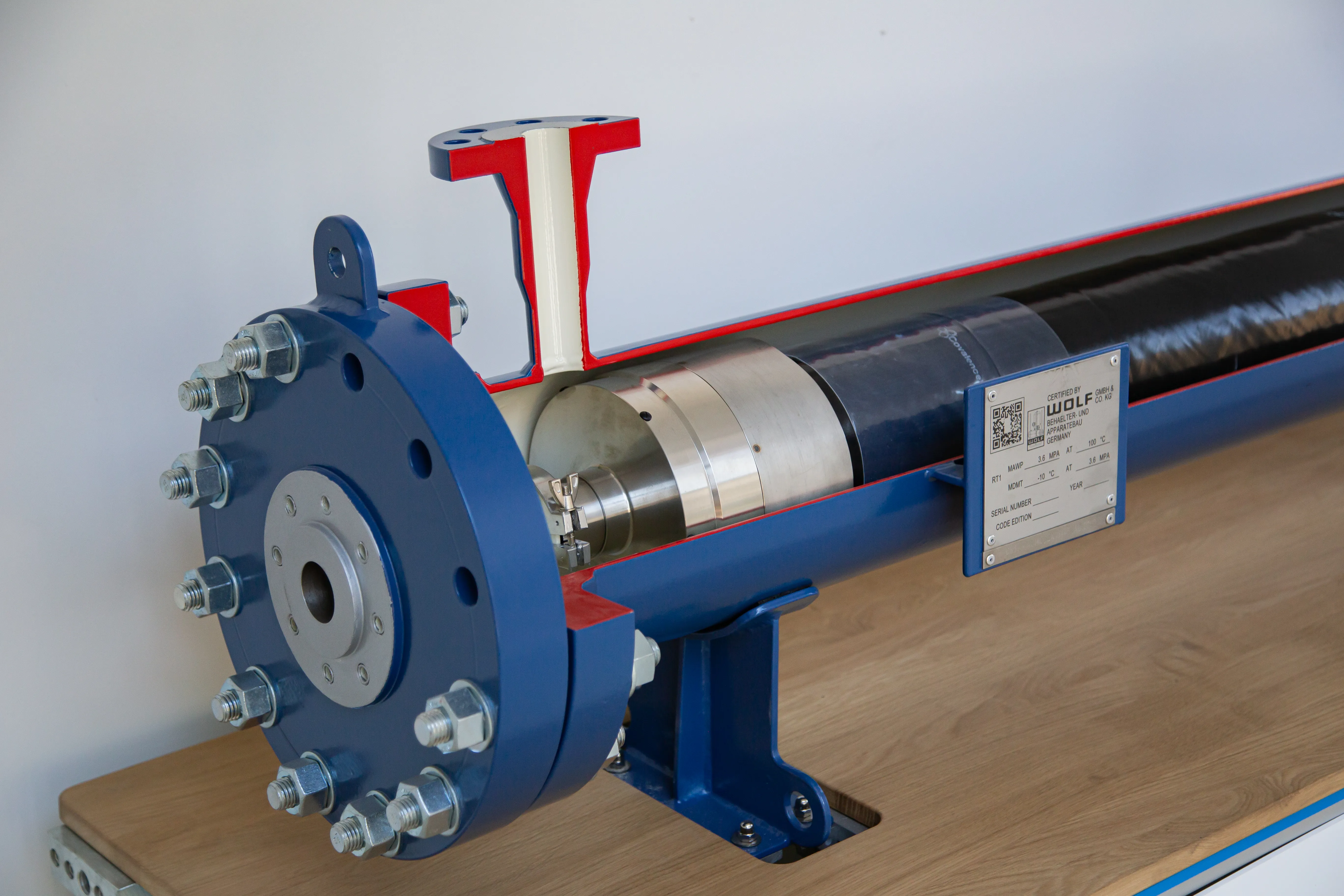
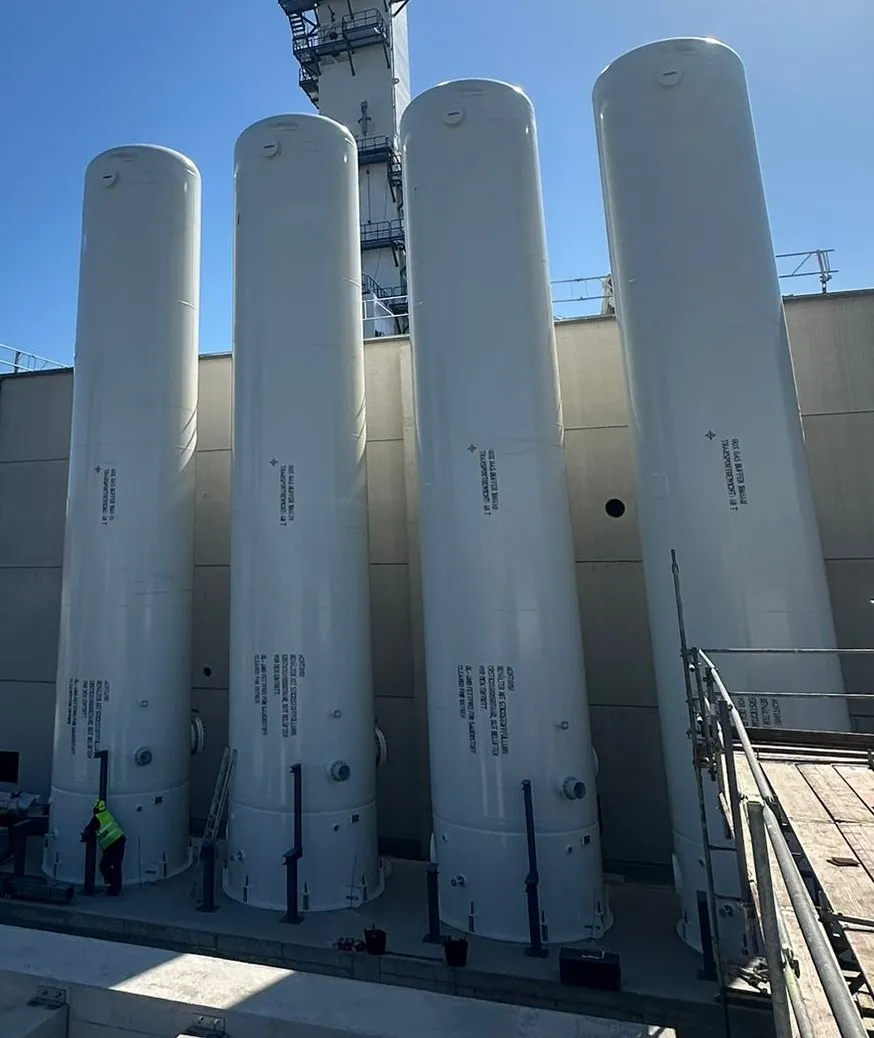
Vessel Manufacturing for the Hydrogen Economy
WOLF Behälter- und Apparatebau manufactures pressure-bearing components for hydrogen systems. Design takes place in our engineering offices, and manufacturing occurs at the Wilnsdorf and Herdorf plants. Pressure-bearing components are subjected to non-destructive testing in accordance with project-specific test specifications.
Hydrogen storage by volume and pressure range
We manufacture standard vessels and custom hydrogen storage tanks for your projects.
Standard volumes up to 50 bar
For design pressures up to 50 bar, we supply vertical and horizontal storage tanks in standard volumes of 10, 20, 33, 50, 75, 95, 100, 115, 130, 160, and 190 m³, manufactured in accordance with AD 2000, EN 13445, ASME, or other requirements.
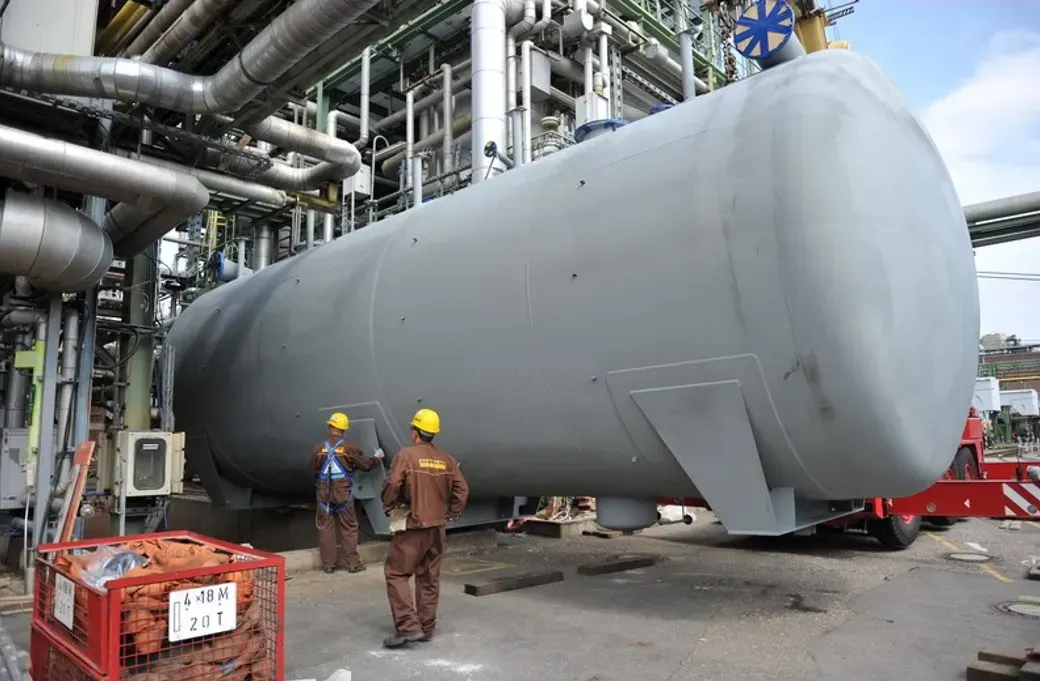
WOLF Safety Technology
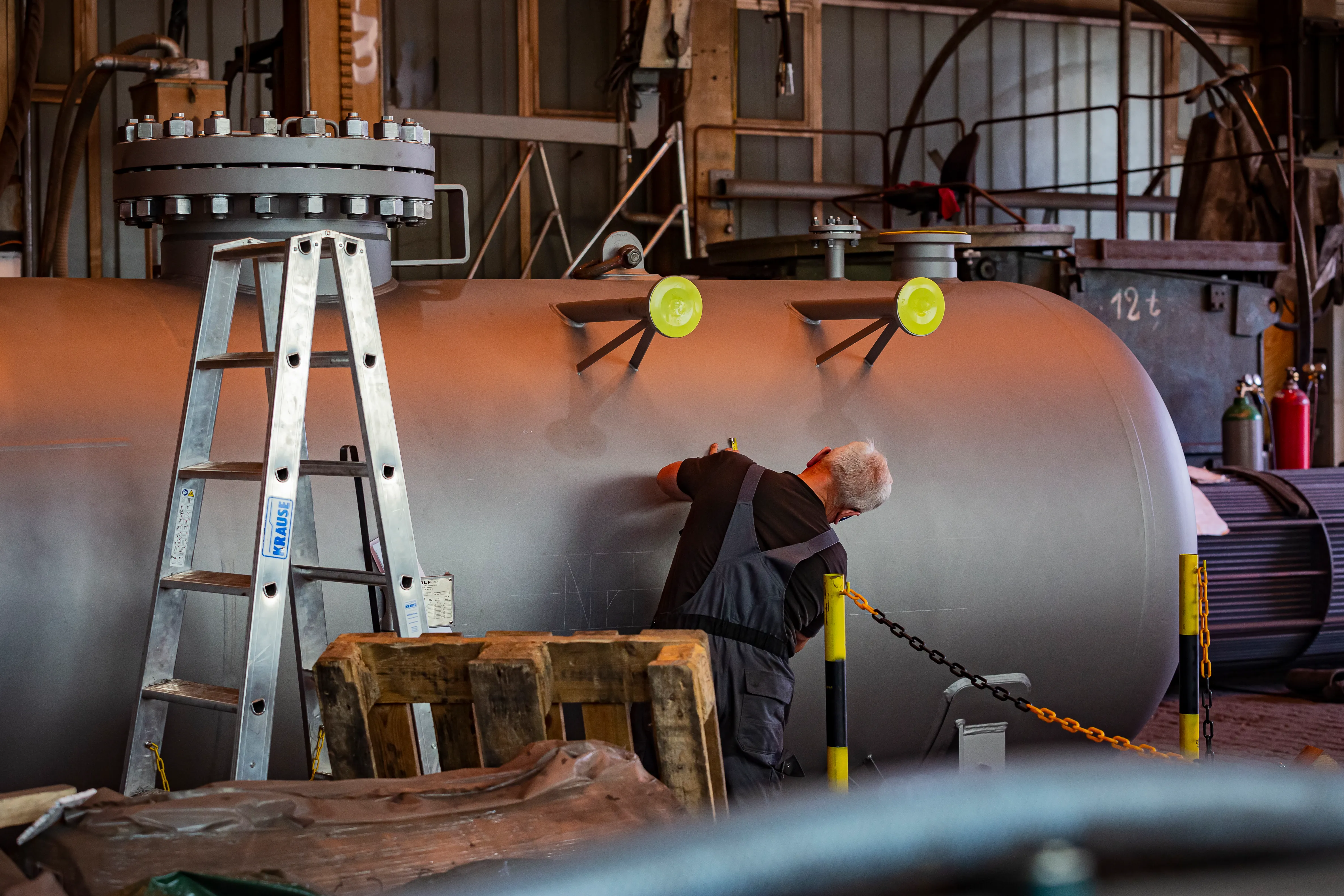
WOLF Safety Technology supports operators in planning and documenting periodic inspections of hydrogen pressure vessels. The scope and intervals are determined by the applicable regulations and the project-specific inspection plan.
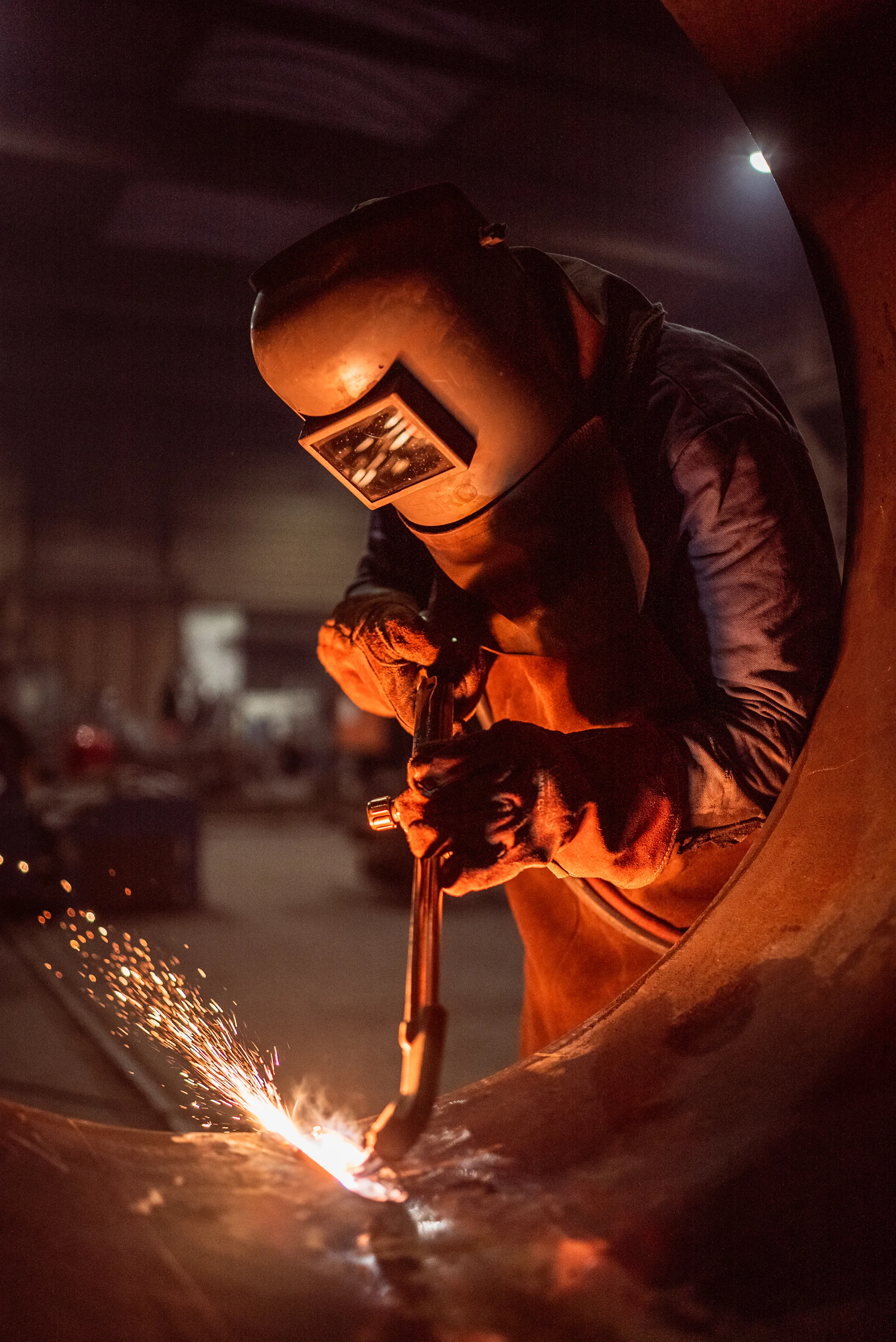
P355 for many hydrogen pressure storage tanks
Approximately 95 percent of our H2 storage tanks and hydrogen pressure storage tanks are made from fine-grained carbon steel of grade P355 (P355NH, P355NL1). When properly welded and subjected to stress relieving heat treatment, this material is suitable for the specified pressure ranges. We use stainless steel and other alloys when the medium or purity requirements necessitate it.
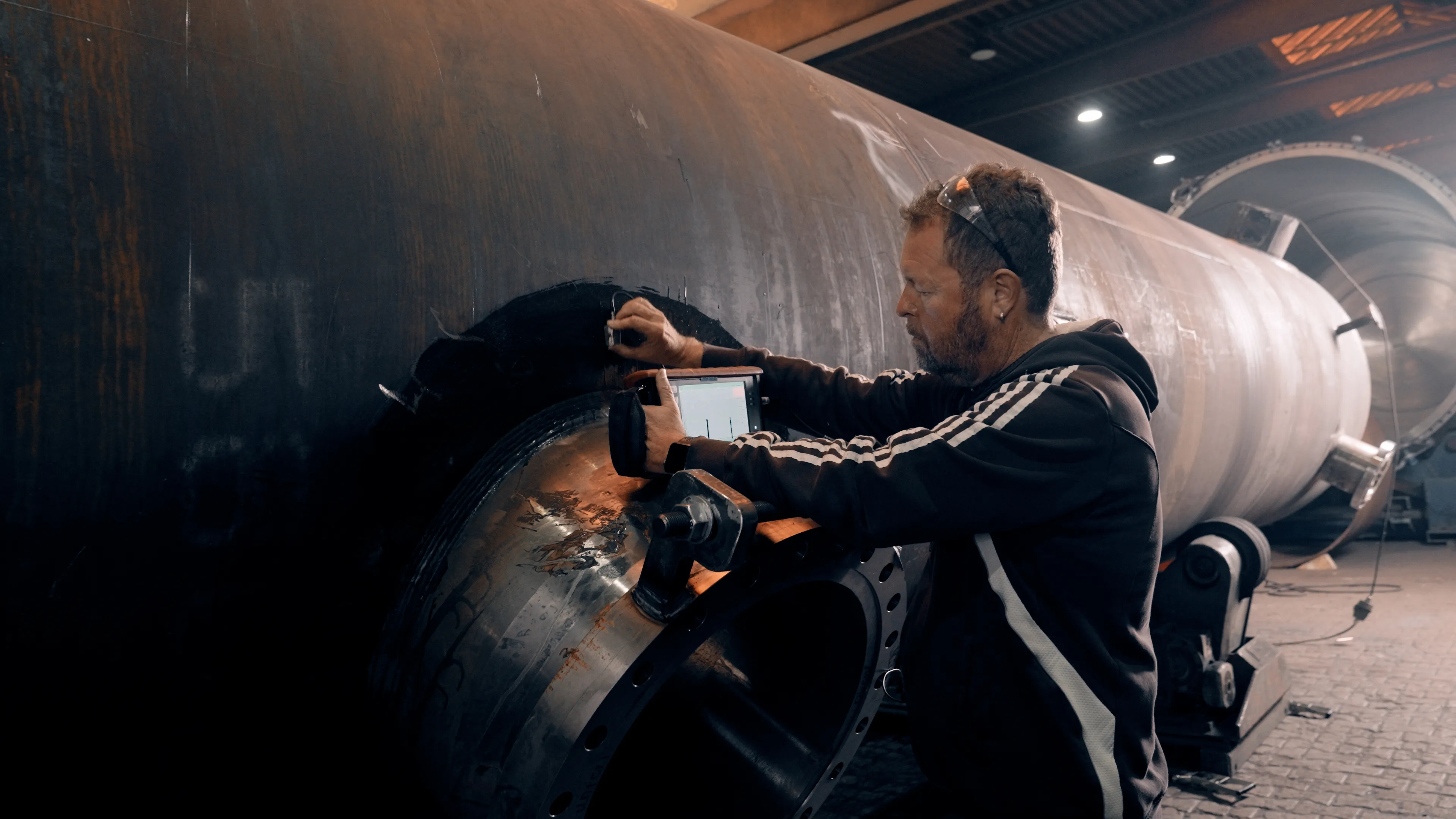
In-house quality assurance (QA)
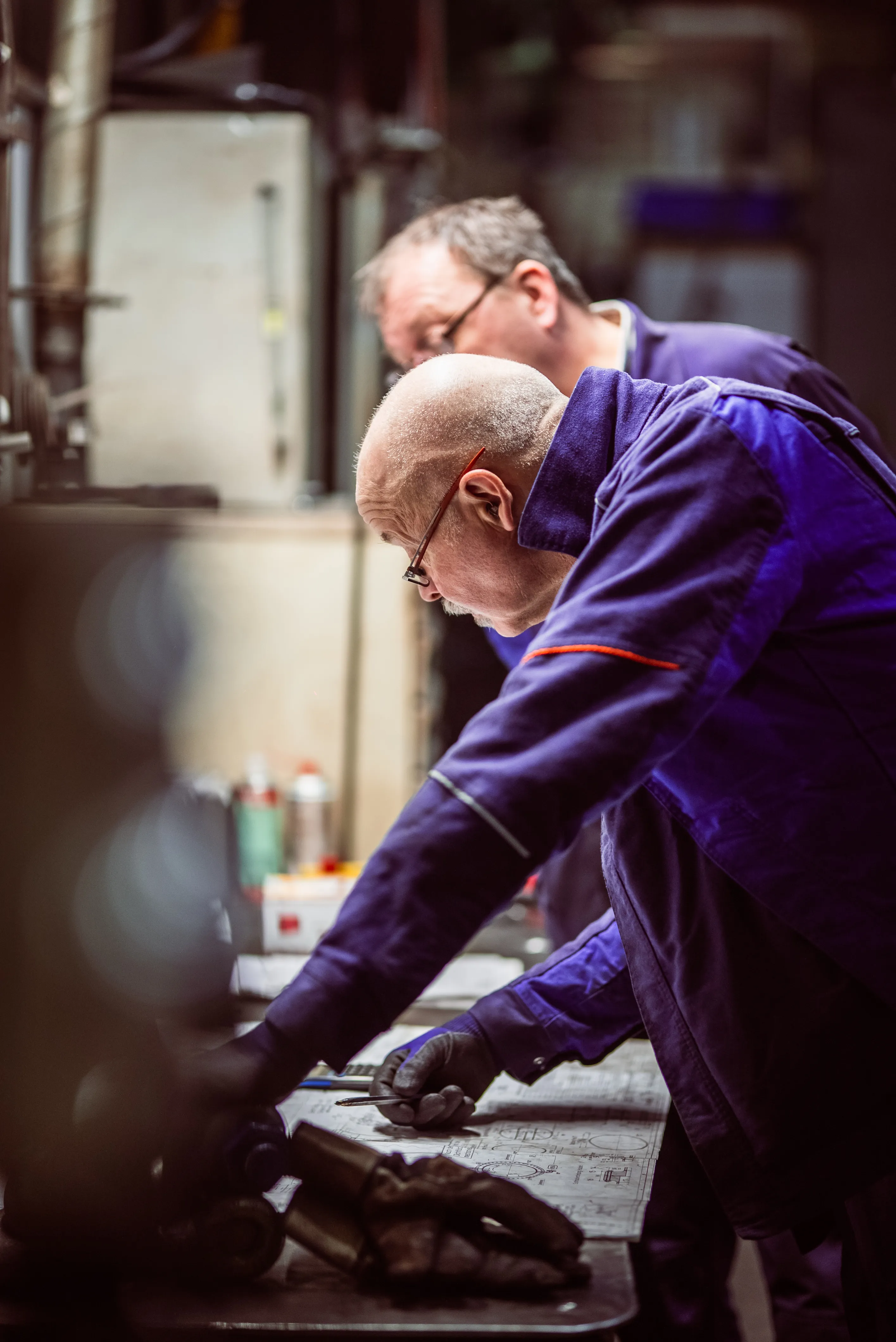
Our quality assurance team inspects production in-house. The specified testing procedures and 3D measurements are defined on a project-by-project basis. Our documentation team compiles material certificates, manufacturing records, and test results into comprehensive project documentation.
Certificates and Approvals
Technical Questions About Your Hydrogen Project
Daniel Wolf
CTO & Wasserstoff-Experte
Frequently Asked Questions About Hydrogen Technology
Here we answer technical questions about hydrogen pressure storage tanks, their design, and the required tests.
Do you offer complete packages that include steel construction and insulation? + − Yes. Upon request, we supply the storage tank with platforms, ladders, and pipe supports in accordance with EN 1090, along with heating systems, coatings, fire protection, insulation, and preservation. This eliminates the need for you to coordinate with multiple suppliers.
Yes. Upon request, we supply the storage tank with platforms, ladders, and pipe supports in accordance with EN 1090, along with heating systems, coatings, fire protection, insulation, and preservation. This eliminates the need for you to coordinate with multiple suppliers.
How quickly can WOLF deliver a hydrogen storage vessel? + − Standard volumes up to 400 bar: If capacity is available, the delivery time is 12 to 20 weeks from the date of order, provided the required material is in stock. If new material must be procured, the delivery time is 8 to 12 months.
Custom-made high-pressure products, such as tube bundle hydrogen storage vessels up to 500 bar: The delivery time, including material procurement, manufacturing, testing, and documentation, is 9 to 13 months.
A binding delivery commitment will be provided after the technical specifications have been clarified.
Standard volumes up to 400 bar: If capacity is available, the delivery time is 12 to 20 weeks from the date of order, provided the required material is in stock. If new material must be procured, the delivery time is 8 to 12 months.
Custom-made high-pressure products, such as tube bundle hydrogen storage vessels up to 500 bar: The delivery time, including material procurement, manufacturing, testing, and documentation, is 9 to 13 months.
A binding delivery commitment will be provided after the technical specifications have been clarified.
Which standards do your H2 pressure vessels comply with? + − AD 2000, EN 13445 (including cyclic loading verification according to EN 13445-3, Sections 17 and 18), ASME Code Section VIII Div. 1 and Div. 2 with U and U2 stamps, and PED 2014/68/EU. Upon request, we manufacture in accordance with ISO 11120 for seamless large-diameter steel cylinders with a water capacity of 150 to 3,000 liters, as well as in accordance with other international standards.
AD 2000, EN 13445 (including cyclic loading verification according to EN 13445-3, Sections 17 and 18), ASME Code Section VIII Div. 1 and Div. 2 with U and U2 stamps, and PED 2014/68/EU. Upon request, we manufacture in accordance with ISO 11120 for seamless large-diameter steel cylinders with a water capacity of 150 to 3,000 liters, as well as in accordance with other international standards.
How does WOLF prevent hydrogen embrittlement? + − Through four coordinated steps: fine-grained, H2-compatible materials such as P355NH and P355NL1 with batch-by-batch qualification, certified TIG and UP welding processes with controlled heat input, consistent stress relieving heat treatment in our own heat treatment facility, and comprehensive inspection of all weld seams using TOFD, phased array, and X-ray.
Through four coordinated steps: fine-grained, H2-compatible materials such as P355NH and P355NL1 with batch-by-batch qualification, certified TIG and UP welding processes with controlled heat input, consistent stress relieving heat treatment in our own heat treatment facility, and comprehensive inspection of all weld seams using TOFD, phased array, and X-ray.