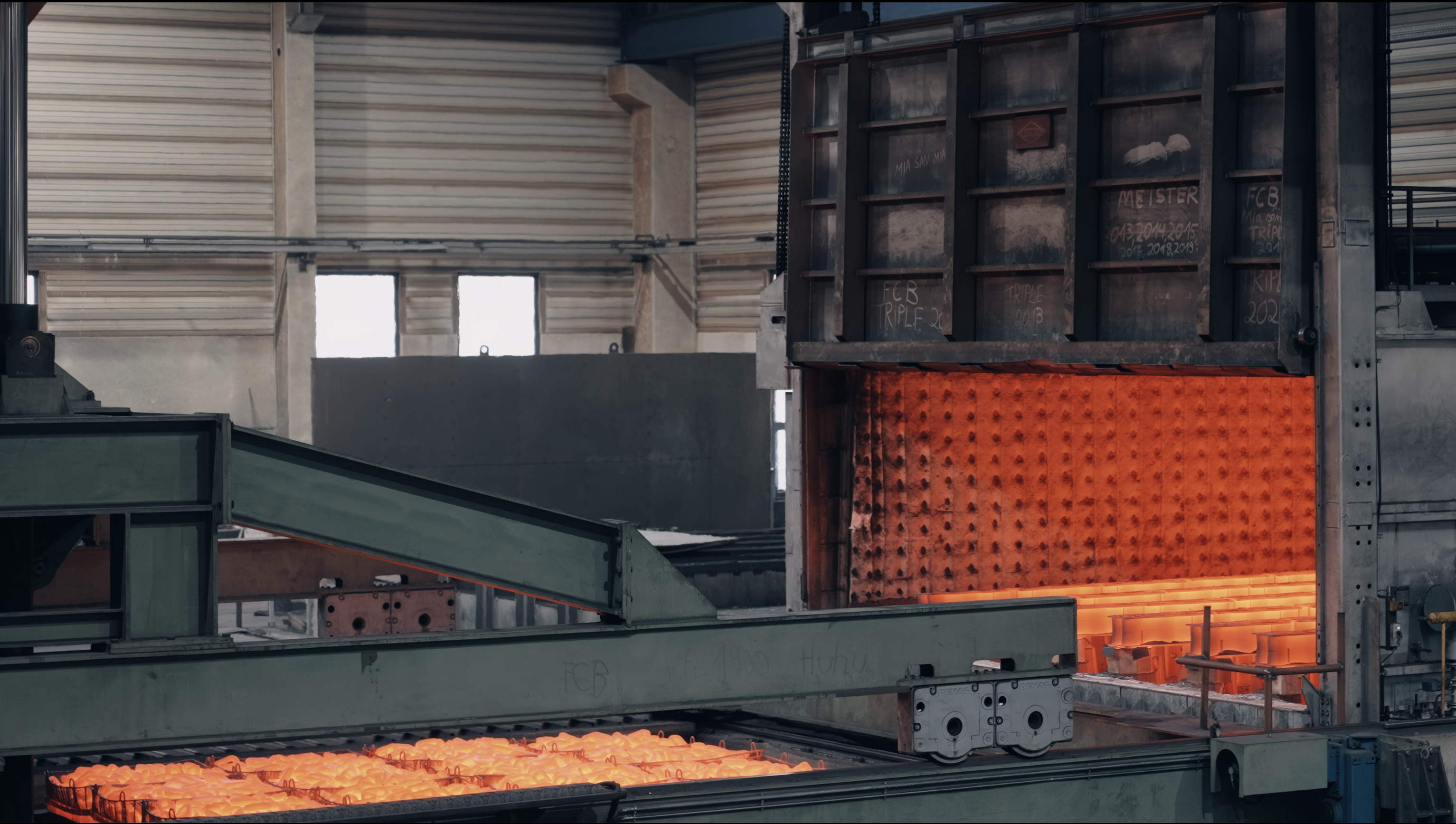
stress relieving heat treatment
The most important step after welding large, heavy structures. We relieve residual stresses in the material, thereby reliably preventing warping and cracking during subsequent machining and under operational loads.
Relieve residual stresses and maintain dimensional accuracy
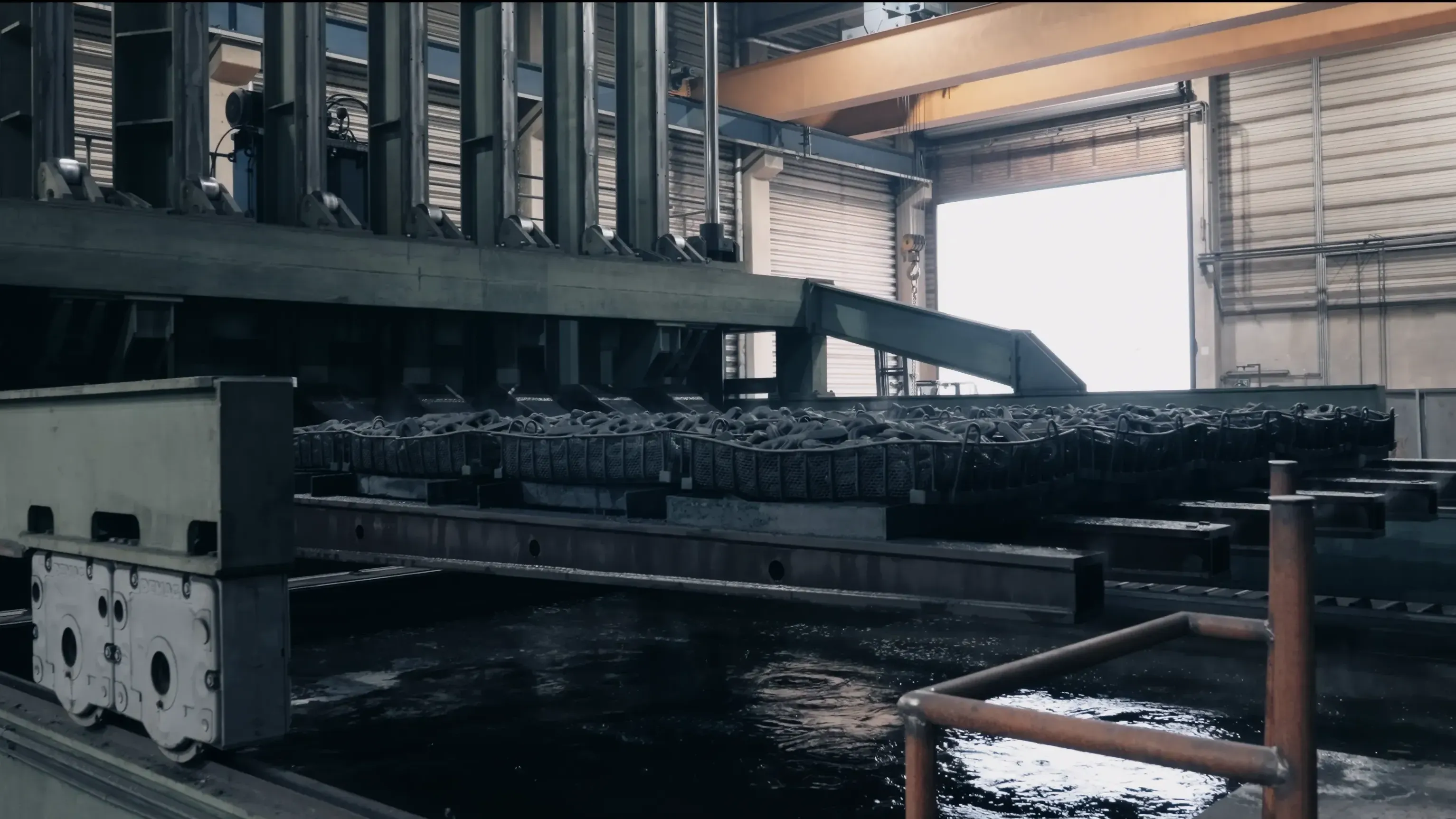
Welding generates residual stresses that can manifest as distortion during machining or operation. In stress relieving heat treatment, the component is heated according to the material properties and then slowly cooled. This helps ensure dimensional stability for subsequent machining.
stress relieving heat treatment
Stress relieving heat treatment is the process of annealing at a sufficiently high temperature—determined by the material—followed by slow cooling. It largely eliminates residual stresses without significantly altering other properties of the microstructure.
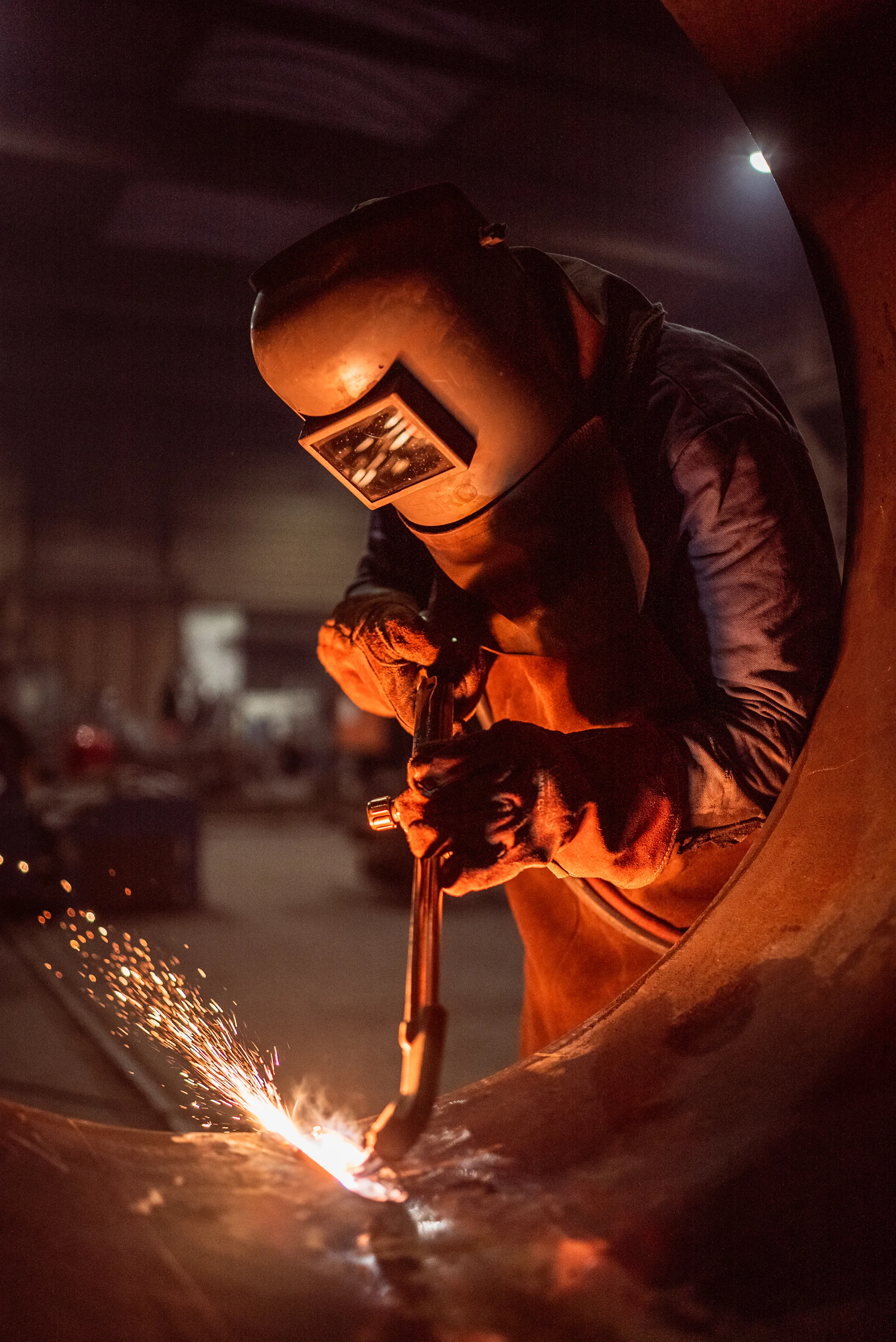
In-house quality assurance (QA)
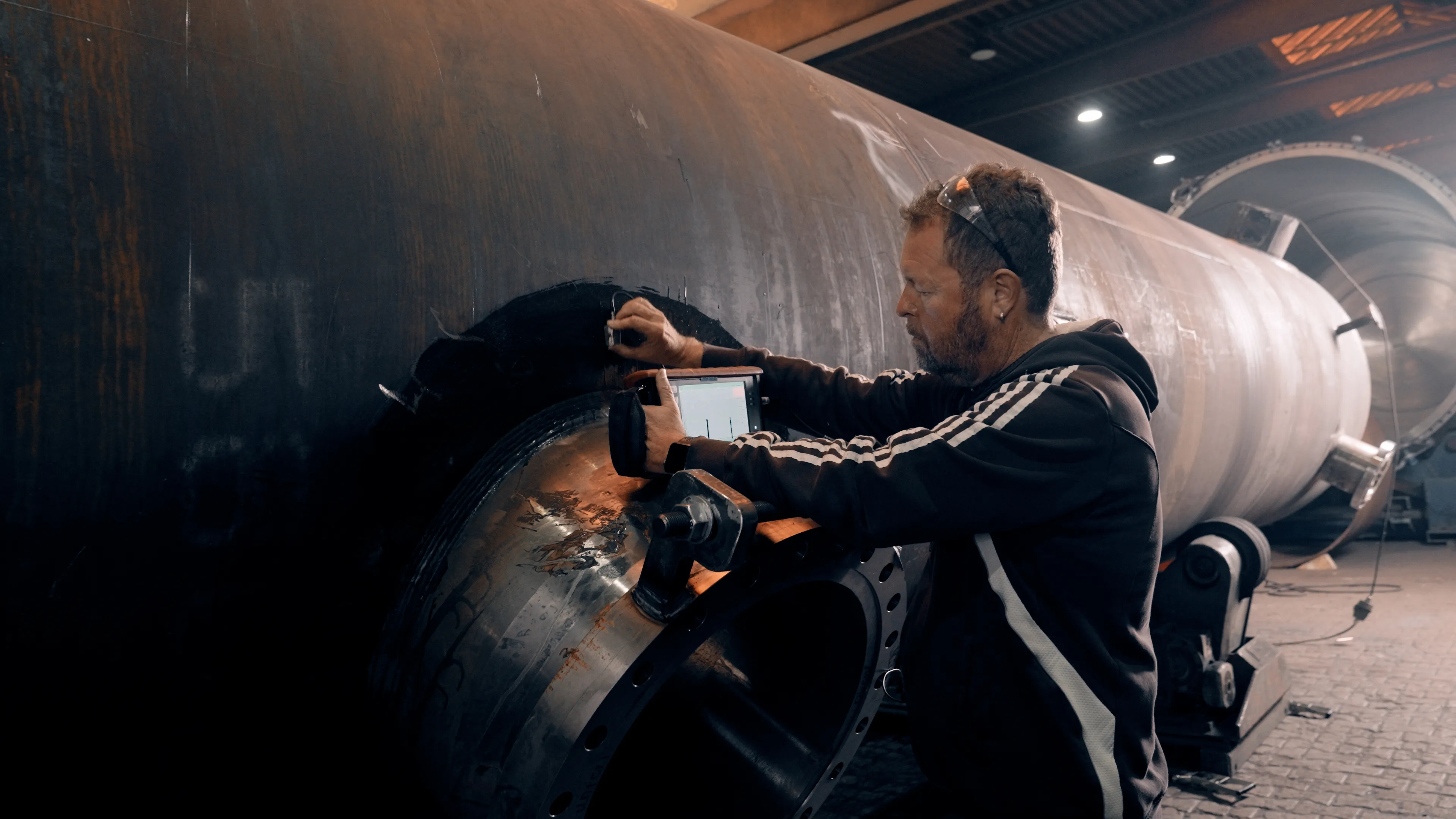
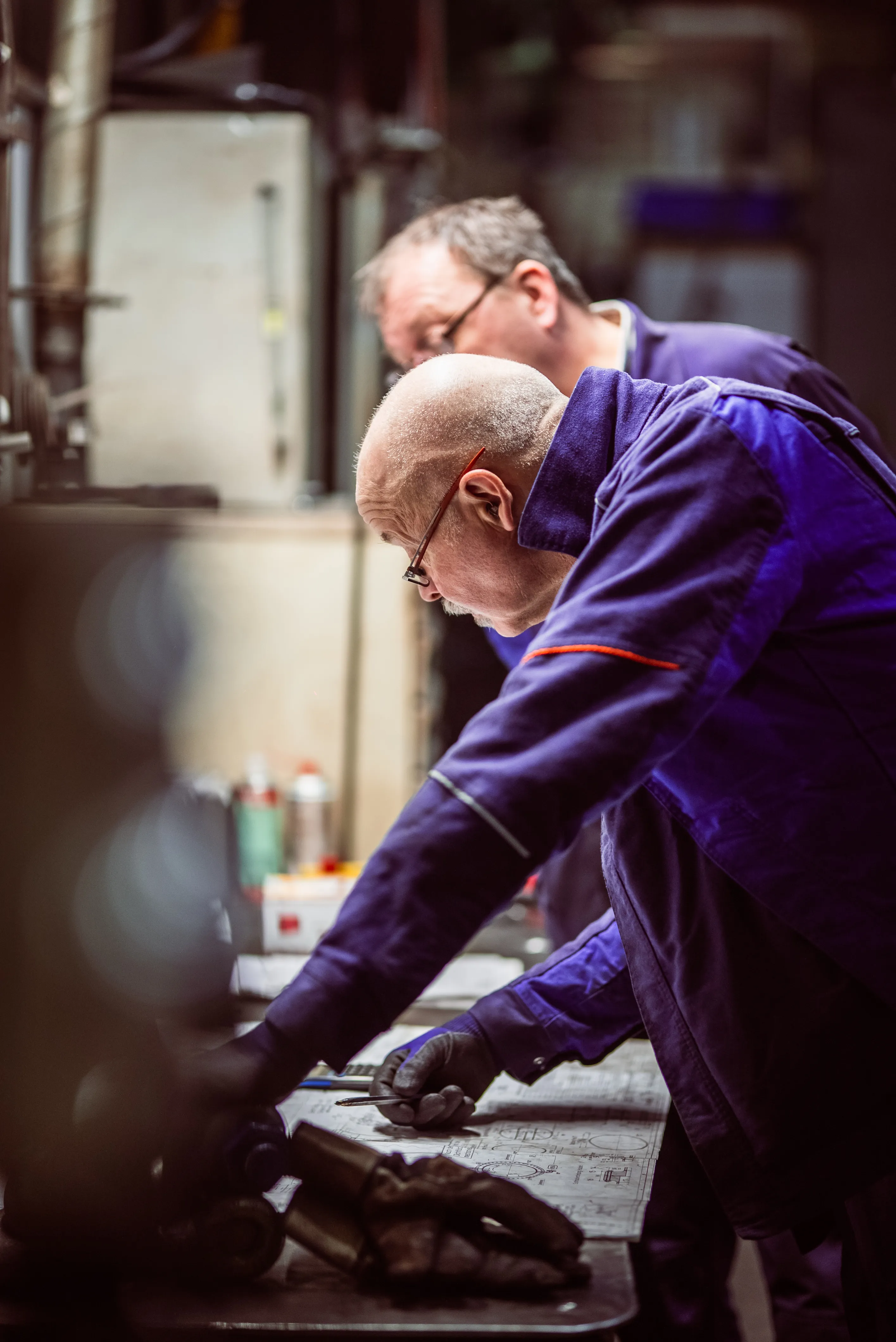
Our quality assurance team inspects production in-house. The specified testing procedures and 3D measurements are defined on a project-by-project basis. Our documentation team compiles material certificates, manufacturing records, and test results into comprehensive project documentation.
Technical questions regarding heat treatment
If you have technical questions regarding heat treatment, please contact our dedicated team directly. We will work with you to clarify the necessary details.
Volker Ermert
Werksleiter/Leiter Wärmebehandlung
Frequently Asked Questions About Stress Relieving Heat Treatment
Here we answer technical questions about stress relieving heat treatment after welding.
What component sizes are possible? + − Up to 7,000 × 7,000 × 2,000 mm of usable space and 40 metric tons per unit, as individual components or in batches.
Up to 7,000 × 7,000 × 2,000 mm of usable space and 40 metric tons per unit, as individual components or in batches.
At what temperatures is stress-relief annealing performed? + − Depending on the material, typically between 550 and 650 °C, held for a time dependent on wall thickness and followed by slow, controlled cooling.
Depending on the material, typically between 550 and 650 °C, held for a time dependent on wall thickness and followed by slow, controlled cooling.
Why is stress relieving heat treatment after welding so important? + − Welding generates residual stresses that can manifest as warping or cracks during machining or under operational loads. Stress relieving heat treatment reduces these stresses in a controlled manner.
Welding generates residual stresses that can manifest as warping or cracks during machining or under operational loads. Stress relieving heat treatment reduces these stresses in a controlled manner.