Non-destructive testing (NDT)
To ensure the highest level of safety and reliability for your components, we test materials and weld seams using state-of-the-art non-destructive testing methods...that reveal even the smallest defects without damaging the material.
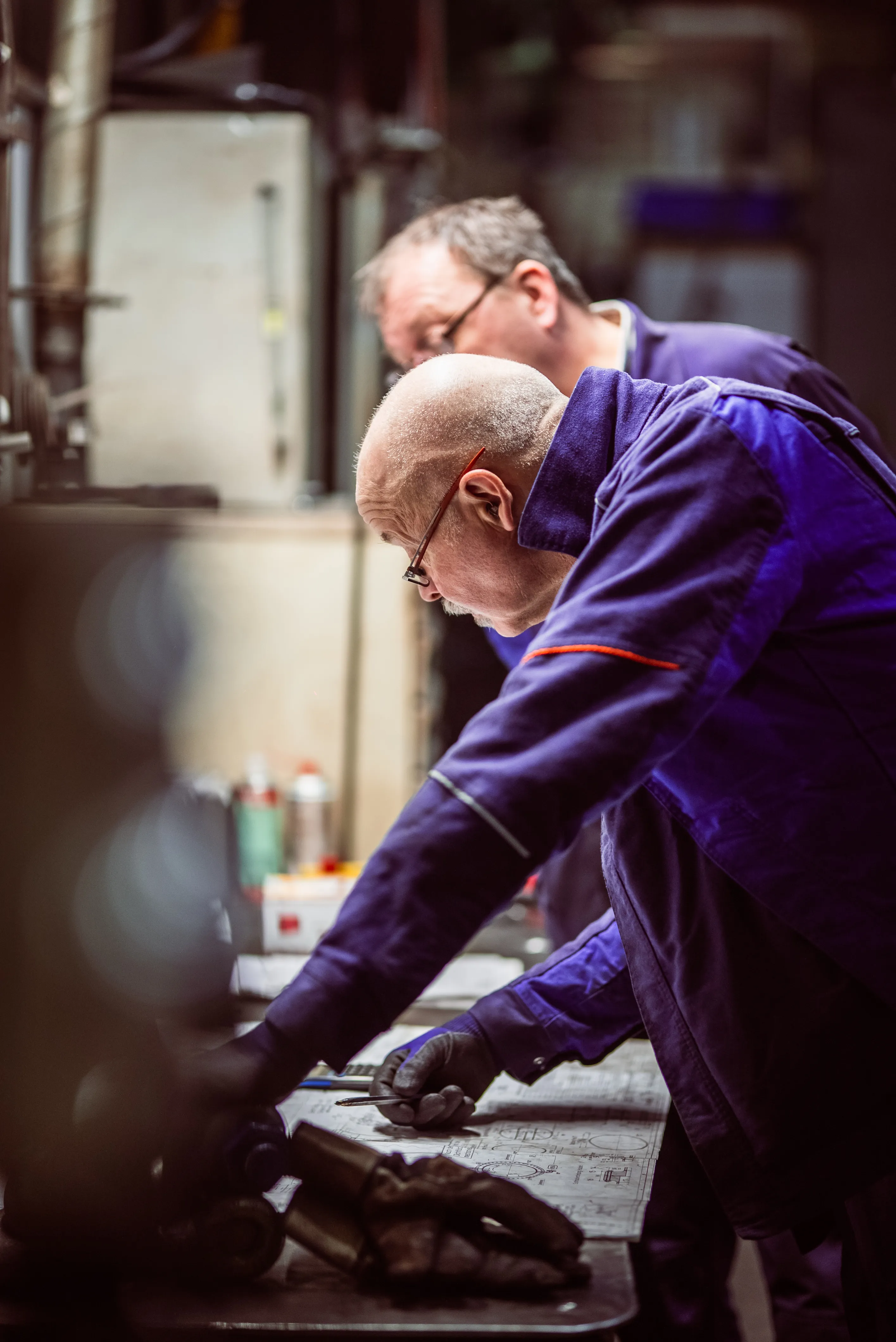
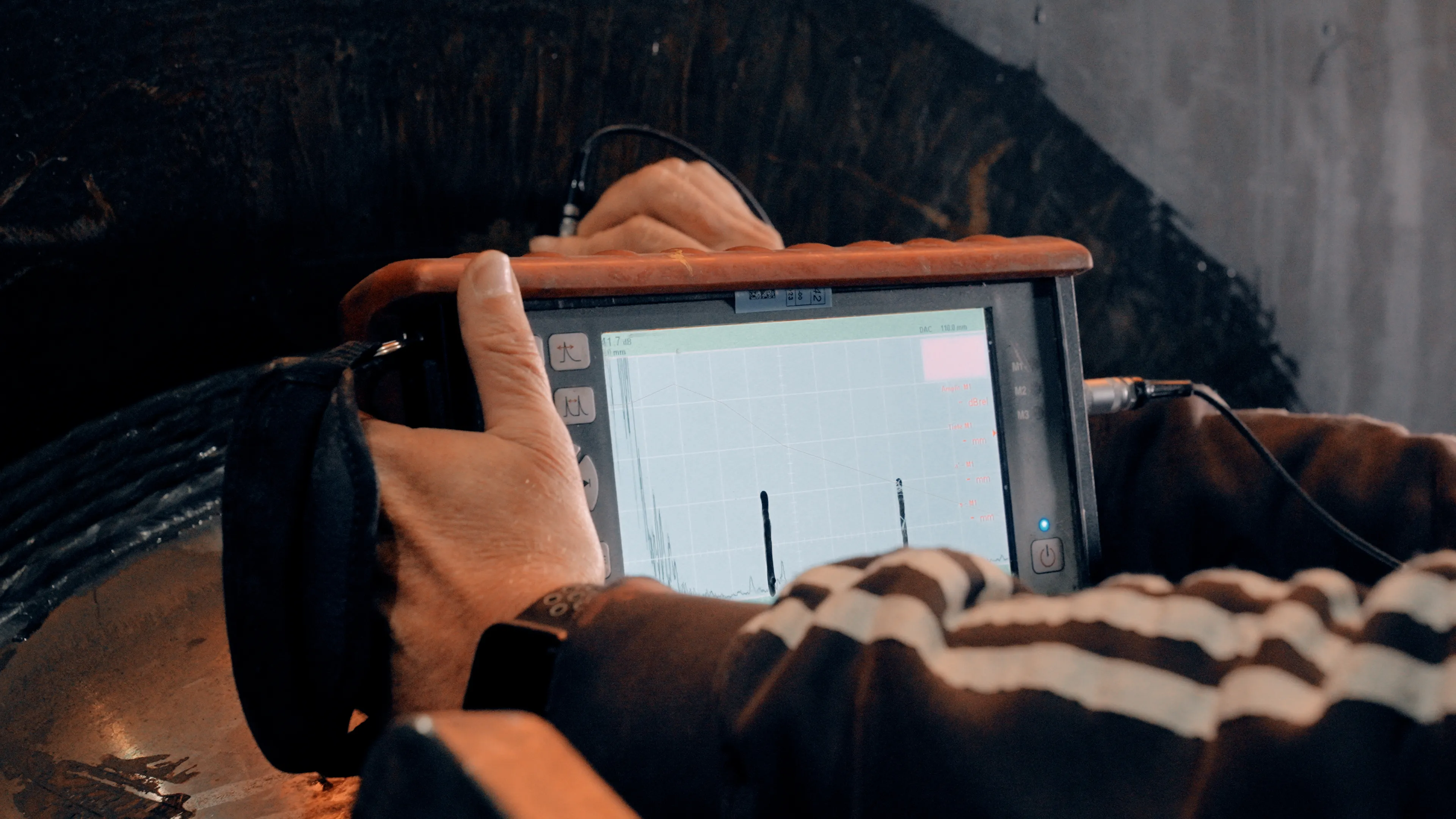
Our Quality Assurance Team
- 3 certified inspectors for visual testing (VT), magnetic particle testing (MT), penetrant testing (PT), X-ray testing, time-of-flight detection (TOFD), and phased-array ultrasonic testing (UT)
- 1 Level 3 examiner and 2 Level 2 examiners
- 1 Welding Engineer (IWE/EWE)
- Comprehensive NDT (UT, RT/X-ray, PT, MT, TOFD, phased-array)
- 2 welding technicians for the project-specific development of WPS/PQR and process control
- 2 specialized Documentation Specialists For seamless project traceability and customer audits
Non-destructive testing methods
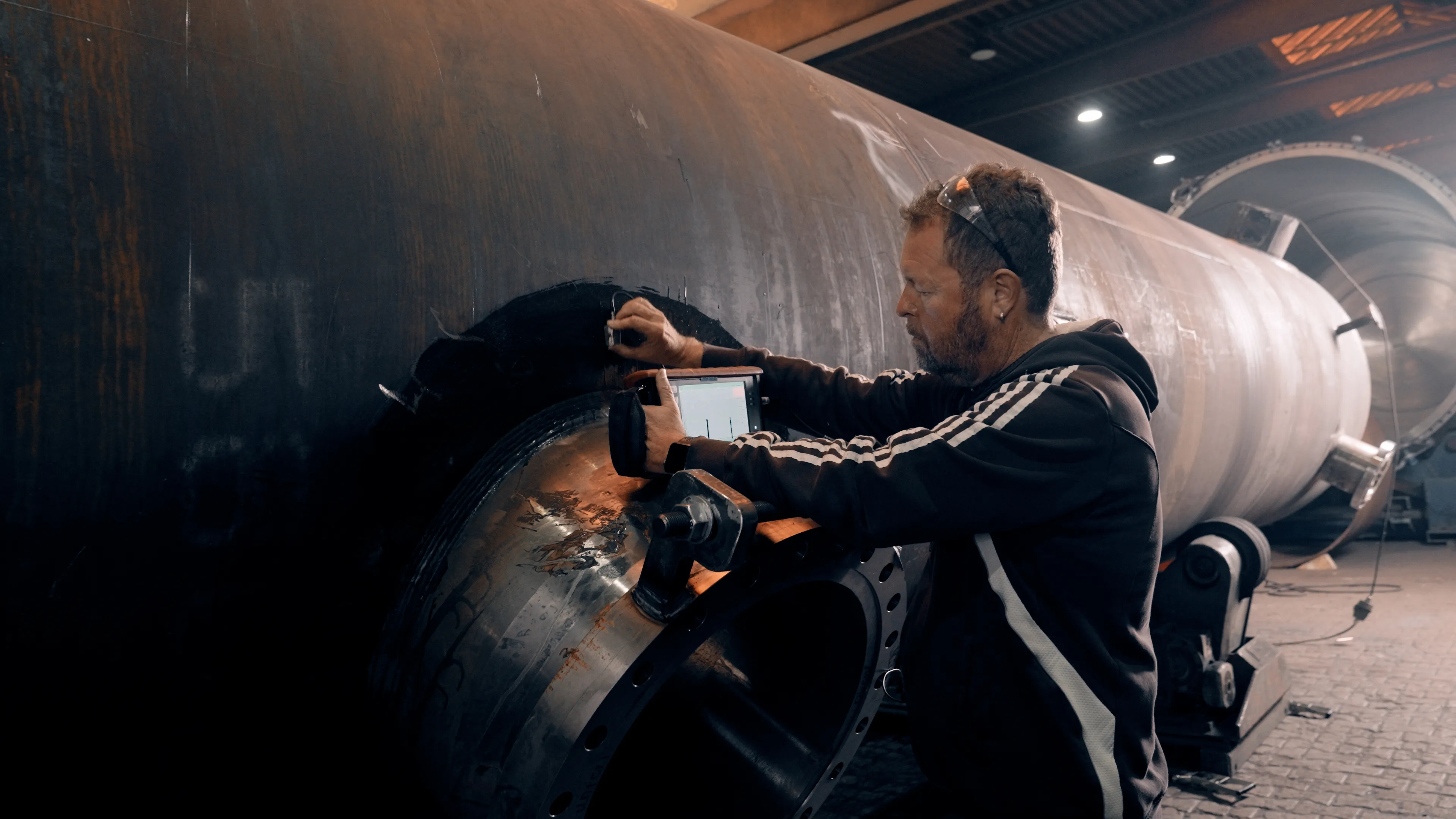
ultrasonic testing (UT)
Ultrasonic testing of components to detect internal and near-surface defects:
- Detection of internal defects
- Wall thickness measurement
- weld inspection
- Crack, bonding defect, and porosity testing
- Suitable for metallic materials
- High level of testing thoroughness
- Results available immediately
- Documentation with test reports available
Full Matrix Capture
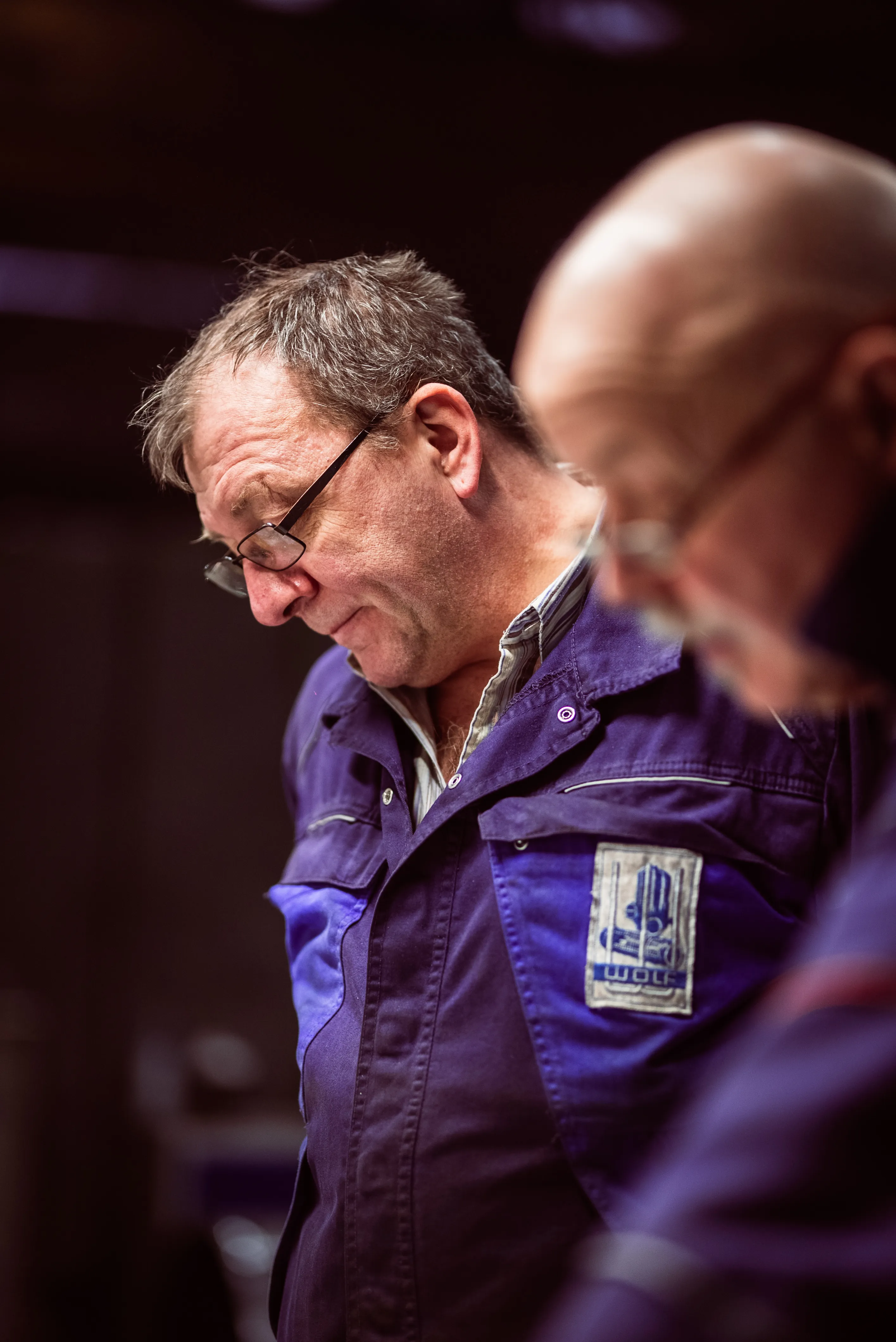
Full Matrix Capture (FMC) is a highly advanced process of Non-destructive testing (NDT) in the field of ultrasonic testing technology. It enables the complete capture of all signals within a phased-array probe. Each individual element alternately transmits a signal while all others receive simultaneously—the result: a complete matrix of all possible transmitter-receiver combinations.
Total Focusing Method
This comprehensive data collection is then analyzed using modern reconstruction methods. This results in a high-resolution, focused ultrasonic image of the test area with impressive accuracy, even for complex geometries or hard-to-reach areas.
Your benefits at a glance:
- Highest image resolution through full data capture
- Reliable defect detection even for small or deep-seated defects
- Flexibility: Retrospective analysis using different focus strategies
- Ideal for complex components such as Weld seams, welded joints, composite materials, or 3D structures
Any questions?
We’re here to help you personally.
We’d be happy to answer your questions in a in-person interview and support you with personalized consulting for your project.
Mohamed Elbardan
Qualitätssicherung
Frequently Asked Questions About Quality Assurance
Do you have further questions about how we ensure the highest quality standards in vessel and equipment manufacturing, hydrogen technology, and heat treatment? From certified processes to state-of-the-art testing methods, right through to Complete documentation – We demonstrate how we guarantee safety, efficiency, and durability in every project.
What qualifications do your test engineers have? + − Our inspection engineers are highly qualified and certified to the highest industry standards. These include, among others, Level 2 and Level 3 inspection certificates for various non-destructive testing methods (such as UT, RT, MT, PT, TOFD) and welder qualifications in accordance with international standards.
Our inspection engineers are highly qualified and certified to the highest industry standards. These include, among others, Level 2 and Level 3 inspection certificates for various non-destructive testing methods (such as UT, RT, MT, PT, TOFD) and welder qualifications in accordance with international standards.